
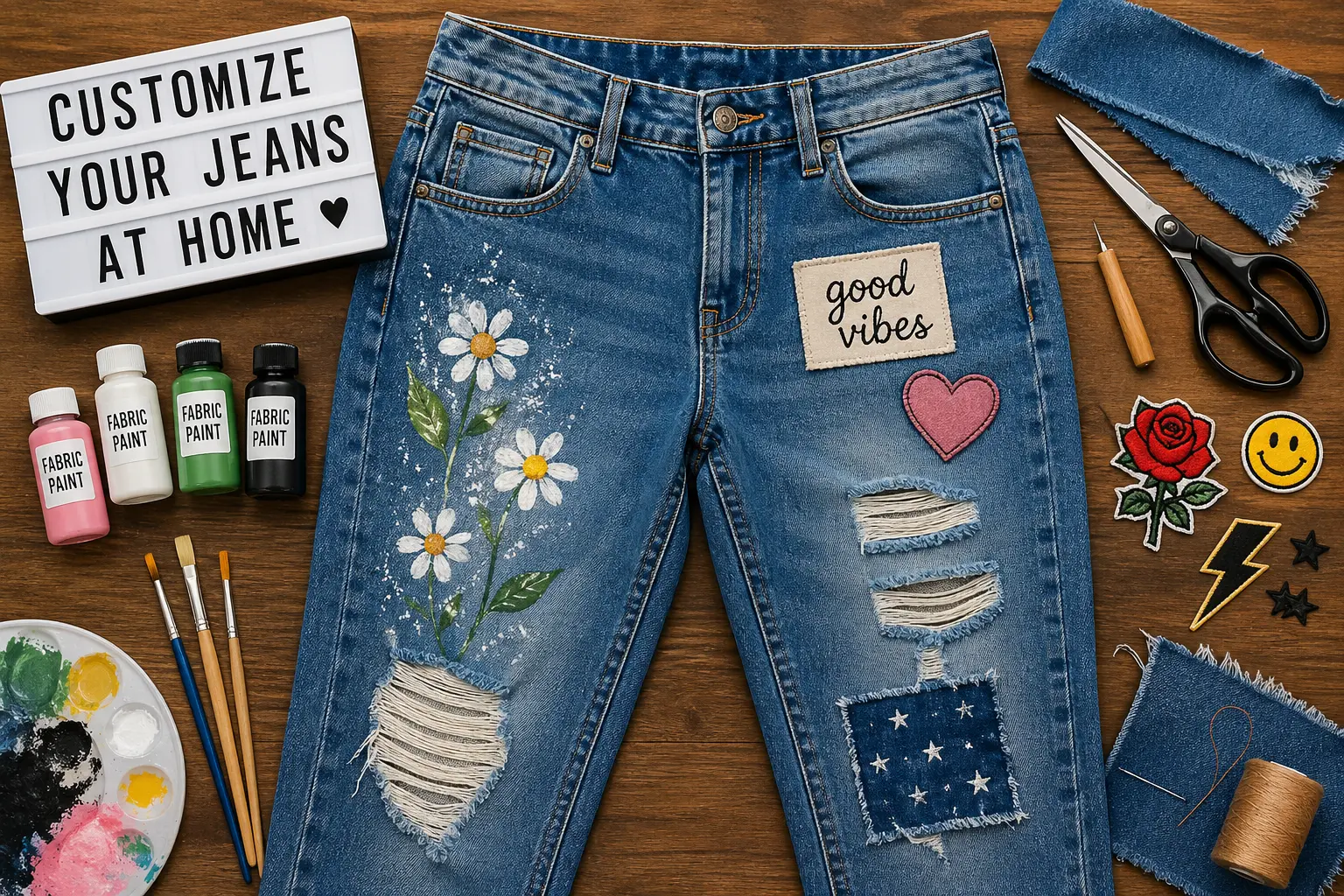
Old jeans often sit forgotten in closets for years. Some no longer fit the way they once did, others have faded colors, worn knees, or outdated cuts that make them feel unusable. In many Canadian households, denim is one of the most common clothing items people own in excess, which makes it one of the best materials for creative clothing customization projects at home.
The good news is that transforming old jeans does not require industrial sewing machines, professional tailoring equipment, or expensive fashion design tools. Many people assume denim customization is complicated because jeans are made from thick fabric and often include strong seams, metal buttons, and structured cuts. While denim can be challenging compared to lighter fabrics, it is also incredibly forgiving. Minor imperfections often add character, making customized denim feel more authentic and unique.
In recent years, clothing customization has become increasingly popular across Canada as consumers look for sustainable alternatives to fast fashion. Instead of discarding old clothing, many people are learning how to repair, redesign, and personalize garments they already own. Old jeans are especially ideal because denim can be painted, cut, distressed, dyed, embroidered, patched, reshaped, and repurposed in countless ways.
This guide explores how to customize old jeans at home using basic household tools and affordable materials. Whether your goal is to modernize outdated denim, create fashionable statement pieces, or simply extend the lifespan of your clothing, this article will walk you through everything you need to know.
Why Old Jeans Are Perfect for DIY Customization
Denim remains one of the most durable fabrics in fashion. Unlike delicate fabrics that can tear easily during experimentation, denim can withstand cutting, stitching, bleaching, painting, and repeated adjustments.
Older jeans often have thicker material than many modern fast-fashion alternatives. This makes them ideal for projects that involve structural modifications. Even if mistakes happen during customization, denim often hides imperfections well through distressing techniques or decorative additions.
Another reason old jeans are excellent for DIY projects is their versatility. A single pair of outdated jeans can be transformed into:
- distressed skinny jeans
- denim shorts
- patchwork jeans
- painted jeans
- embroidered denim
- skirts
- bags
- jackets accessories
Because denim rarely goes out of style completely, updated versions of older jeans can become wardrobe staples again.
Evaluating Your Old Jeans Before Starting
Before making any modifications, carefully inspect your jeans.
Look at the condition of the fabric. Areas that are excessively thin may tear during customization. If the inner thigh area has severe wear, consider using the jeans for shorts or smaller projects instead.
Examine the fit. Ask yourself whether the jeans are too large, too small, too long, or simply outdated in style. The answer will determine your customization direction.
Pay attention to stains. Certain permanent stains may be hidden through dyeing, patching, or fabric painting.
Check the seams and zippers. Broken zippers may require replacement, while loose seams may need reinforcement.
Understanding the current condition of your jeans prevents wasted time and helps you choose realistic customization options.
Basic Tools You Probably Already Have at Home
One of the biggest misconceptions about denim customization is the belief that specialized equipment is necessary. In reality, many projects can be completed with simple household items.
You may already have:
sharp scissors
sandpaper
chalk
measuring tape
needles
thread
fabric glue
old toothbrushes
tweezers
razors
pins
markers
paintbrushes
If you want to invest in additional affordable tools, stores such as Walmart, Michaels, and Dollarama often carry inexpensive customization supplies throughout Canada.
Turning Jeans Into Distressed Denim
Distressed denim remains one of the most popular customization methods.
Start by identifying where natural wear would normally occur. Knees, thighs, pockets, and hems are common areas.
Mark the desired distressed sections using chalk.
Use scissors to create small horizontal cuts. Avoid cutting too deeply on your first attempt.
Take tweezers and begin pulling vertical blue threads while leaving white horizontal threads exposed. This creates the classic distressed denim appearance.
Sandpaper can soften edges and create natural fading. An old razor can also help fray fabric gradually.
Wash the jeans after distressing to create a more natural worn appearance.
Avoid over-distressing. Too many cuts can weaken the structure of the jeans.
Adding Fabric Paint for a Unique Look
Fabric painting allows you to create completely personalized denim.
Wash your jeans before painting to remove dirt or fabric softener residue.
Insert cardboard inside the pant leg to prevent paint from bleeding through.
Use fabric paint to create designs such as:
flowers
abstract art
minimalist lines
quotes
symbols
custom logos
Allow each layer to dry fully before adding additional details.
Heat-setting may be required depending on the paint brand. Always read instructions carefully.
Hand-painted jeans often become statement fashion pieces because no two designs are identical.
Using Patches to Cover Damage
Patches are practical and stylish.
If your jeans have holes or stains, patches can restore wearability while adding personality.
Iron-on patches are beginner-friendly, but sewn patches often last longer.
Popular patch styles include:
vintage patches
band logos
minimalist designs
floral patterns
cartoon art
Place patches strategically around knees, pockets, or back panels.
Layering multiple patches can create a modern streetwear-inspired look.
Transforming Jeans Into Shorts
Many old jeans become more useful when converted into shorts.
Try the jeans on first and mark your desired length.
Leave extra length initially because fabric can always be trimmed later.
Cut each leg carefully and evenly.
Fold hems for a cleaner appearance or leave raw edges for distressed summer shorts.
Fray the edges slightly for a relaxed look.
This is especially practical for Canadians preparing wardrobes for warmer months.
Bleaching Denim Safely
Bleaching creates dramatic transformations.
Work in a well-ventilated area.
Wear gloves and protect surrounding surfaces.
Mix bleach carefully according to product instructions.
You can create patterns by:
splattering bleach
dip-dyeing sections
creating gradient fading
using rubber bands for patterns
Wash jeans thoroughly after bleaching.
Never combine bleach with other cleaning chemicals.
Embroidery Without a Machine
Hand embroidery adds premium detail.
Simple stitches can create initials, flowers, geometric designs, or personalized artwork.
Start with small areas like back pockets.
Use embroidery hoops if available, but they are not mandatory.
Patience is important because hand embroidery takes time.
The final result often feels far more valuable than mass-produced denim.
Resizing Loose Jeans Without Professional Tailoring
Loose jeans can often be adjusted at home.
Temporary fixes include:
adding belts
elastic waistband adjustments
rolling hems
Permanent resizing may involve hand stitching along side seams.
Always test fit gradually before cutting fabric permanently.
Denim mistakes can be difficult to reverse.
Common Mistakes Beginners Make
Many beginners rush projects.
They cut too aggressively, use excessive bleach, or skip planning.
Another common mistake is copying trends without considering personal style.
Customization should improve wearability, not create clothing that sits unused again.
Testing techniques on scrap denim first reduces mistakes.
How to Maintain Customized Jeans
Customized denim requires proper care.
Wash jeans inside out.
Use cold water.
Avoid harsh dryers when possible.
Hand-painted or embroidered jeans may benefit from hand washing.
Proper maintenance preserves your work and extends the life of your customized pieces.
Why DIY Denim Customization Is Growing in Canada
Consumers across Canada are increasingly interested in sustainability, affordability, and individuality.
Rising clothing prices have encouraged more people to repair and personalize existing wardrobes instead of constantly buying new items.
DIY fashion allows people to reduce waste while expressing creativity.
Old jeans become opportunities rather than clutter.
Final Thoughts
Customizing old jeans at home without professional equipment is far more accessible than many people realize. With basic tools, patience, and creativity, worn-out denim can become stylish, modern, and deeply personal.
Instead of throwing away old jeans, consider them blank canvases. Every faded pair has the potential to become something entirely new, whether that means distressed denim, painted artwork, embroidered fashion, or practical shorts.
The most rewarding part of DIY clothing customization is that your finished product reflects your own creativity rather than mass-market trends. In a world dominated by fast fashion, creating something original from what you already own is both financially smart and environmentally responsible.
