
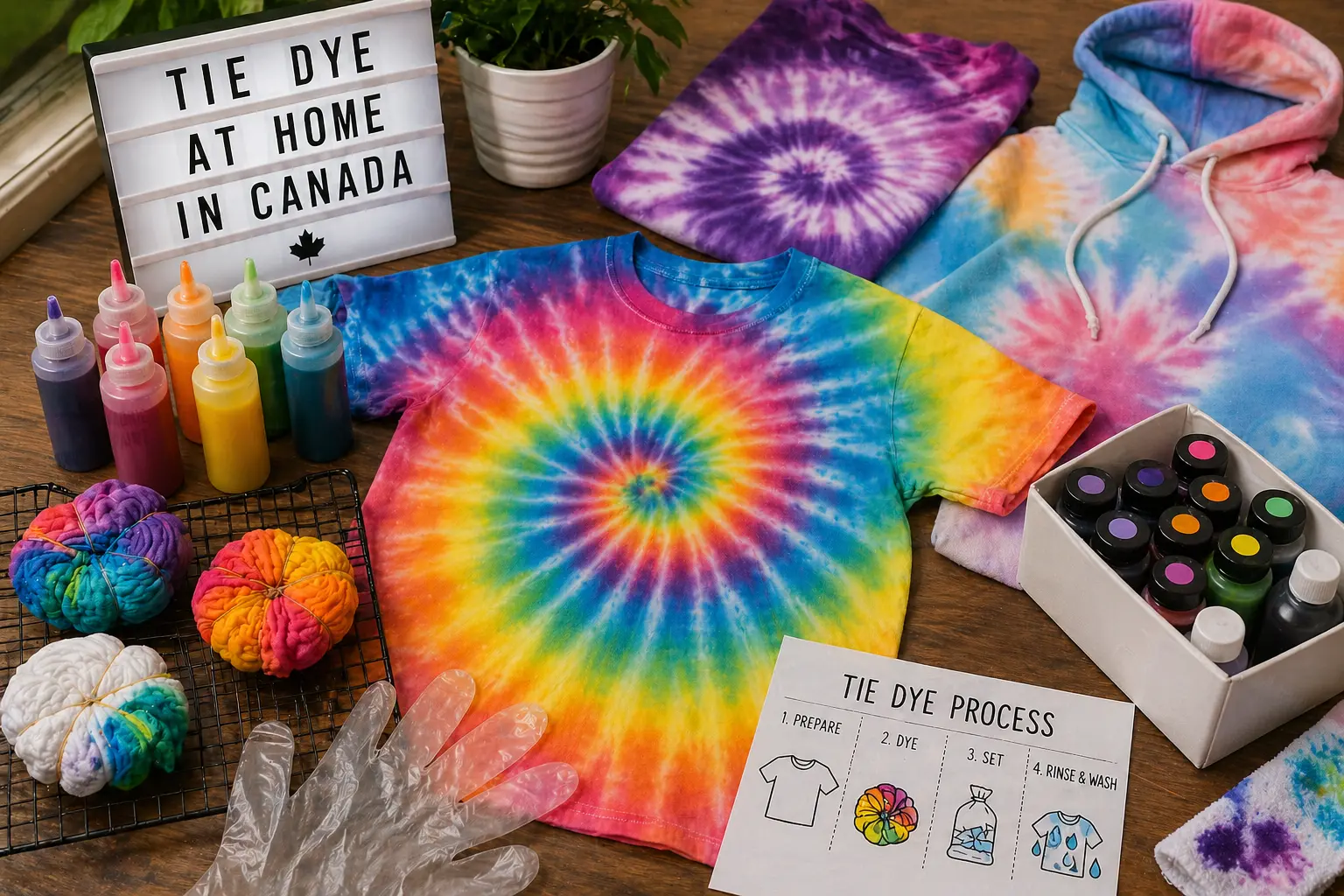
Tie dye has evolved far beyond the colorful spiral shirts many people remember from childhood summer camps. What was once viewed as a casual craft activity has become a major trend in modern fashion, appearing in streetwear collections, independent clothing brands, handmade marketplaces, and social media fashion communities across Canada.
For many Canadians, tie dye offers a practical way to refresh old clothing while reducing unnecessary spending on fast fashion. With inflation affecting clothing prices and growing awareness of textile waste, more people are searching for creative ways to reuse garments they already own. Tie dye allows individuals to transform plain shirts, hoodies, socks, sweatpants, denim, and even winter accessories into unique pieces that reflect personal style.
One of the reasons tie dye remains popular is accessibility. You do not need expensive machinery or professional fashion training to create high-quality results. Most projects can be completed from home using affordable materials available through retailers such as Walmart, Michaels, Amazon, and Dollarama.
However, many online tutorials oversimplify the process. They often show quick results without explaining fabric selection, dye chemistry, washing preparation, temperature concerns in colder Canadian climates, and long-term garment maintenance. This guide takes a deeper approach and explains how to create professional-looking tie dye clothing at home while avoiding common mistakes that ruin projects.
Why Tie Dye Has Become Popular Again
Fashion trends often move in cycles, and tie dye has experienced a major resurgence due to social media platforms like TikTok, Pinterest, and Instagram. Consumers increasingly want clothing that feels personal and different from mass-produced retail products.
Tie dye aligns perfectly with several modern consumer priorities. It supports sustainability by extending the life of older garments. It allows for self-expression because every design becomes unique. It also offers affordability because a basic shirt can be transformed into something entirely new without purchasing expensive designer clothing.
In Canada, seasonal weather also contributes to tie dye demand. During winter, many people enjoy indoor creative projects, and tie dye becomes a practical activity when outdoor hobbies are limited by snow and freezing temperatures.
Choosing the Right Clothing for Tie Dye
Not every fabric responds well to dye.
Cotton remains the best material because natural fibers absorb dye efficiently. Shirts made with 100 percent cotton typically produce the most vibrant results.
Cotton blends can still work, but synthetic fibers may reduce color intensity. Polyester-heavy garments often create faded or uneven finishes because synthetic materials resist traditional dye absorption.
Before starting your project, examine clothing labels carefully.
Good tie dye items include:
cotton t-shirts
hoodies
sweatpants
socks
denim shorts
canvas tote bags
cotton dresses
Many Canadians also experiment with tie dye on winter accessories like scarves and cotton beanies.
Avoid waterproof fabrics, heavy polyester athletic clothing, and garments with stain-resistant coatings.
Best Dye Products Available in Canada
Canadian shoppers have several accessible dye options.
Rit Dye remains one of the most recognized brands for beginners. It is widely available and relatively affordable.
Tulip tie dye kits are especially popular for beginners because they include squeeze bottles, gloves, and pre-measured dyes.
Professional crafters may prefer fiber reactive dyes from specialized suppliers because they often create brighter and longer-lasting colors.
When shopping online, many Canadians purchase supplies through Amazon Canada or craft retailers like Michaels.
Budget-conscious shoppers sometimes find basic materials at Dollarama.
Preparing Your Workspace
Tie dye can become messy very quickly.
Protect floors, countertops, and furniture with plastic sheets or garbage bags.
Wear old clothing that you do not mind staining.
Have paper towels available for spills.
Use gloves to protect your hands.
If working indoors during Canadian winters, ensure proper ventilation.
If weather allows, outdoor tie dye projects can reduce cleanup challenges.
Keep pets and children away from active dye stations.
Organization before starting significantly improves results.
Washing Clothing Before Dyeing
One of the most overlooked steps in tie dye is pre-washing clothing.
New garments often contain chemicals, softeners, or manufacturing residues that block proper dye absorption.
Older clothing may contain oils, detergent buildup, or dirt.
Wash garments without fabric softener before beginning your project.
Do not dry with dryer sheets because residue can interfere with dye bonding.
Clean fabric creates more consistent results.
Popular Tie Dye Patterns
The spiral design remains iconic, but many advanced patterns offer more modern aesthetics.
The crumple technique creates abstract patterns that look organic and unpredictable.
The stripe method creates cleaner horizontal or vertical lines.
Ice dye techniques produce artistic watercolor-style effects.
Ombre dyeing creates elegant gradients that appeal to minimalist fashion audiences.
Reverse tie dye uses bleach on dark clothing to create dramatic patterns.
Many Canadian creators are moving toward more subtle neutral-toned tie dye styles rather than overly bright rainbow designs.
How to Apply Dye Properly
Apply dye slowly and intentionally.
Oversaturating fabric can cause colors to blend excessively and become muddy.
Under-saturating fabric may leave large white spaces.
Rotate garments while applying dye to ensure balanced coverage.
Consider color theory when combining shades.
Certain combinations such as blue and yellow may create green.
Red and blue may create purple.
Too many competing colors often reduce visual appeal.
Professional-looking tie dye usually uses fewer colors with stronger planning.
Setting the Dye
After dye application, garments need time for chemical bonding.
Most projects require resting periods between six and twenty-four hours depending on dye type.
Seal garments in plastic bags to maintain moisture.
Temperature matters significantly.
Canadian winters can create challenges because cold temperatures slow dye reactions.
Store garments in warmer indoor spaces while dye sets.
Avoid freezing environments like garages during winter.
Rinsing and First Wash
Rinse garments under cold water until excess dye begins to disappear.
Gradually increase water temperature.
Wash dyed garments separately during their first few cleaning cycles.
Use mild detergent.
Avoid bleach-based products.
Proper rinsing prevents color bleeding onto other clothing.
Common Mistakes Beginners Make
Many beginners rush their projects.
They skip fabric preparation.
They choose low-quality synthetic fabrics.
They combine too many colors.
They fail to let dye set long enough.
Others underestimate Canadian winter temperatures and leave projects in cold basements or garages where dye reactions slow dramatically.
Patience produces better results.
Selling Tie Dye Clothing in Canada
Many people begin tie dye as a hobby and eventually build small businesses.
Platforms like Etsy have helped independent creators sell handmade tie dye clothing across Canada.
Local artisan markets and pop-up events also provide selling opportunities.
Custom tie dye hoodies, socks, and minimalist designs often perform well with younger consumers.
High-quality execution matters if selling professionally.
Sustainability Benefits
Textile waste continues growing globally.
Tie dye allows consumers to extend garment life instead of contributing to unnecessary landfill waste.
Older shirts, faded hoodies, and stained clothing can become wearable again.
This aligns with growing sustainability values across Canada.
Final Thoughts
Tie dye clothing at home is far more than a temporary trend. It offers creativity, sustainability, affordability, and the opportunity to create genuinely unique fashion pieces.
With proper fabric selection, careful preparation, and thoughtful design choices, Canadians can transform ordinary clothing into personalized wardrobe pieces without spending large amounts of money.
The most successful tie dye projects are rarely rushed. They come from patience, experimentation, and learning how fabric, color, and technique work together.
Whether you want to refresh your personal wardrobe or eventually launch a small handmade clothing business, tie dye remains one of the most accessible entry points into DIY fashion customization.
