
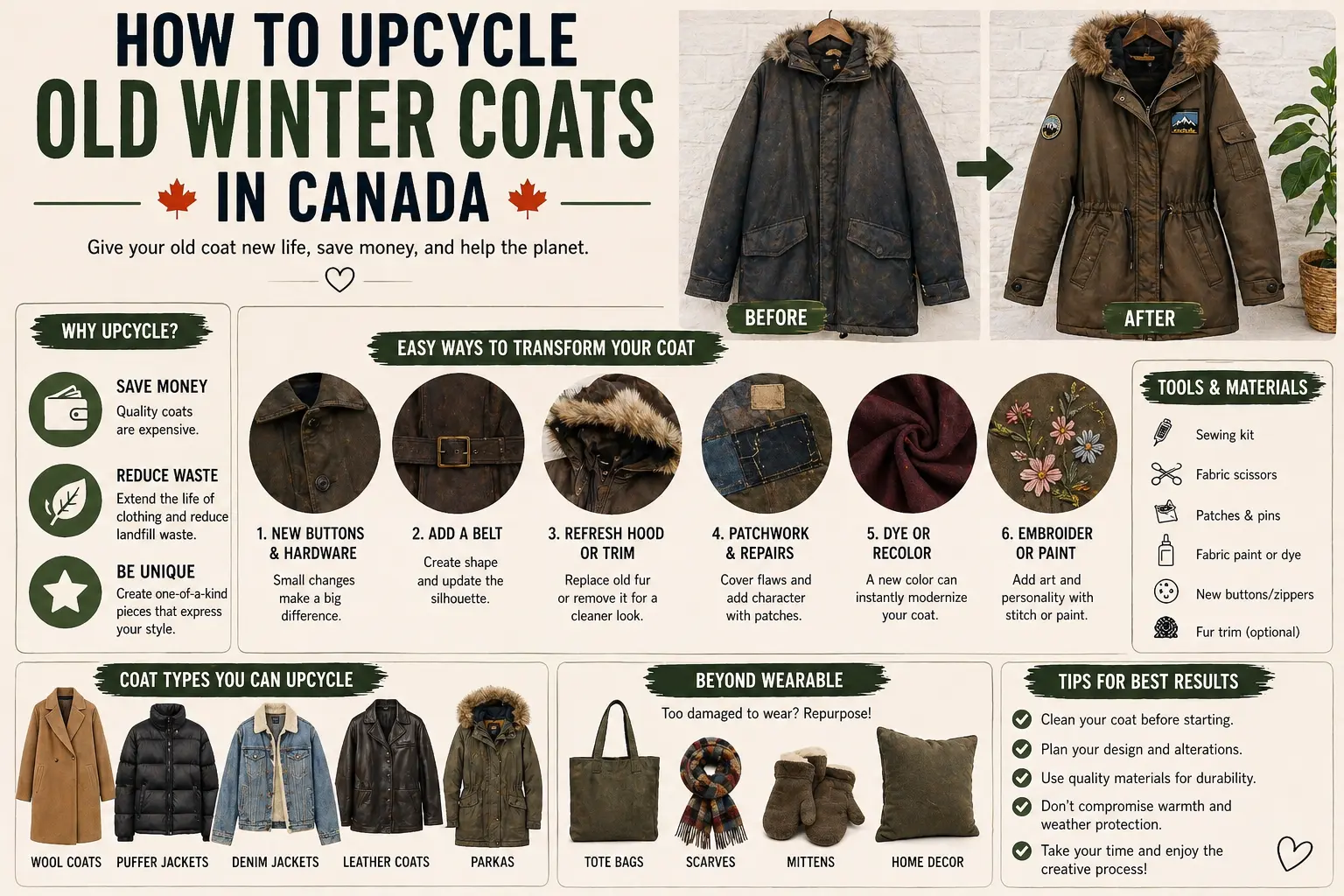
Winter coats occupy a very different role in Canada compared to many other countries. In warmer regions of the world, coats may function primarily as seasonal fashion items that people wear occasionally. In Canada, however, winter outerwear often becomes one of the most important pieces in a person’s wardrobe because it directly affects comfort, mobility, and even safety during long periods of extreme cold. In cities such as Toronto, Montreal, Ottawa, Calgary, and colder rural regions, people often wear winter coats daily for several months each year. Because of this constant use, consumers frequently invest large amounts of money in quality outerwear from brands such as Canada Goose, The North Face, Patagonia, Columbia, and Arc’teryx.
The problem is that many winter coats are discarded long before they are truly unusable. A coat may still provide excellent warmth, but people stop wearing it because the style feels outdated, the fit no longer matches current preferences, the color feels old-fashioned, or minor cosmetic damage makes the garment look worn out. This creates a significant amount of unnecessary textile waste because winter coats require large amounts of fabric, insulation materials, transportation resources, and labor to produce. Throwing them away simply because of cosmetic issues often makes little financial or environmental sense.
This is why coat upcycling has become increasingly popular across Canada. Instead of replacing expensive outerwear every few years, many consumers are learning how to redesign, repair, modernize, and repurpose older coats. Some people do this to save money. Others do it because they care about sustainability. Many fashion entrepreneurs have even built businesses around restoring and reselling vintage winter coats through platforms such as Etsy and Depop.
The reality is that old winter coats often contain far more value than people realize. The key is learning how to identify that value and transform older garments without compromising their original functionality.
Why Winter Coats Are Worth Upcycling
Unlike basic t-shirts or fast-fashion seasonal pieces, winter coats are usually built with significantly stronger materials. High-quality outerwear often includes durable zippers, heavy-duty stitching, insulated lining, weather-resistant shells, reinforced pockets, and premium materials designed to survive years of harsh conditions.
Many vintage coats were built with even stronger construction standards than some modern alternatives. Older wool coats often contain higher percentages of genuine wool. Vintage leather jackets may feature thicker leather than modern mass-market products. Older parkas sometimes contain stronger hardware and more durable stitching.
This means many discarded coats are structurally stronger than brand-new budget alternatives sold today.
When people throw away these garments because of outdated styling, they often replace them with lower-quality products. Upcycling helps preserve durability while improving visual appeal.
Understanding Different Types of Winter Coats
One of the biggest mistakes beginners make is treating all winter coats the same way.
Wool coats are among the easiest garments to upcycle because they respond well to tailoring, button replacement, dyeing, and structural adjustments. These coats often become outdated because of fit rather than material failure.
Puffer jackets require more caution because aggressive alterations may damage insulation chambers. Cutting or sewing through insulated sections can create cold spots.
Technical outdoor jackets from brands like Patagonia or Arc’teryx require special care because waterproof membranes can be damaged during customization.
Leather winter coats may need restoration rather than redesign. Cleaning, conditioning, and replacing hardware can often create dramatic improvements.
Denim winter jackets with fleece lining offer strong customization flexibility through painting, patchwork, embroidery, and distressing.
Understanding the garment type determines how aggressive your upcycling strategy should be.
Modernizing Outdated Coat Styles
Many old winter coats remain highly functional but feel visually outdated.
Large shoulder pads, oversized cuts, outdated faux fur trims, old-fashioned buttons, and unusual color combinations often make coats feel difficult to wear.
Removing shoulder pads can dramatically modernize vintage wool coats.
Replacing buttons is one of the easiest upgrades available. Premium buttons can completely change how expensive a coat looks.
Removing low-quality faux fur trim often creates cleaner, more minimalist aesthetics.
Replacing old belts or adding modern waist belts can create more flattering silhouettes.
These changes often require far less effort than complete redesigns but can produce dramatic visual improvements.
Recoloring Old Winter Coats
Color is another major reason people abandon winter coats.
Faded black coats may look gray and tired. Bright colors from previous fashion trends may feel difficult to style today.
Professional dye services can restore wool coats into modern neutral colors such as black, charcoal, navy, camel, or olive.
Fabric paint may work for smaller artistic details on denim or canvas jackets.
However, waterproof technical jackets should be approached cautiously because dye may interfere with performance materials.
Sometimes even simple deep cleaning can restore original colors enough to eliminate the need for full recoloring.
Repairing Visible Damage
Minor damage often causes people to discard otherwise valuable coats.
Small tears, damaged elbows, broken zippers, ripped linings, and worn cuffs can often be repaired affordably.
Patchwork repairs have become especially popular among younger fashion consumers because visible repairs now feel intentional and stylish.
Decorative patches can cover damage while creating unique visual identity.
Replacing zippers can dramatically extend coat lifespan.
Lining repairs often restore comfort.
Many repairs cost far less than replacing a high-quality winter coat.
Turning Oversized Coats Into Modern Pieces
Oversized vintage coats are extremely common in thrift stores across Canada.
Many younger consumers now intentionally seek oversized outerwear because relaxed silhouettes remain popular.
However, some oversized coats need structural adjustments.
Adding belts can create shape without permanent alterations.
Shortening sleeves may improve wearability.
Some long coats can be professionally shortened.
These changes should be approached carefully because mistakes can be expensive on heavy garments.
Repurposing Beyond Wearable Coats
Sometimes a coat is too damaged to remain functional as outerwear.
That does not mean the materials lack value.
Wool can become scarves, tote bags, mittens, and home decor materials.
Leather sections can be reused for accessories.
Buttons, zippers, and hardware can be saved for future projects.
Faux fur trim can be reused in smaller winter accessories.
Viewing old garments as material resources dramatically reduces waste.
Selling Upcycled Winter Coats
Many entrepreneurs now profit from coat restoration.
Customized vintage coats often perform well on Etsy.
Streetwear-inspired redesigns often sell through Depop.
Luxury vintage restoration can attract premium buyers.
Strong photography matters significantly.
Consumers pay for uniqueness when execution feels professional.
Common Mistakes to Avoid
Many beginners over-customize coats.
Others ignore weather performance.
Some damage insulation layers.
Others underestimate professional cleaning.
The best coat transformations balance creativity with practicality.
A winter coat must still perform its original purpose.
Sustainability Benefits
Winter coats require significant manufacturing resources.
Extending their lifespan reduces waste.
It lowers consumer spending.
It prevents unnecessary landfill contributions.
It encourages smarter consumption habits.
This aligns with growing sustainability values across Canada.
Final Thoughts
Upcycling old winter coats in Canada is not just a creative hobby. It is a financially smart, environmentally responsible, and highly practical response to rising clothing costs and growing textile waste.
Many old coats are far more valuable than people realize. With strategic repairs, thoughtful redesigns, and realistic planning, older outerwear can become some of the most unique and functional pieces in a wardrobe.
The next time an old winter coat feels outdated, do not assume it belongs in a donation bin or landfill. It may simply need a second life.
