
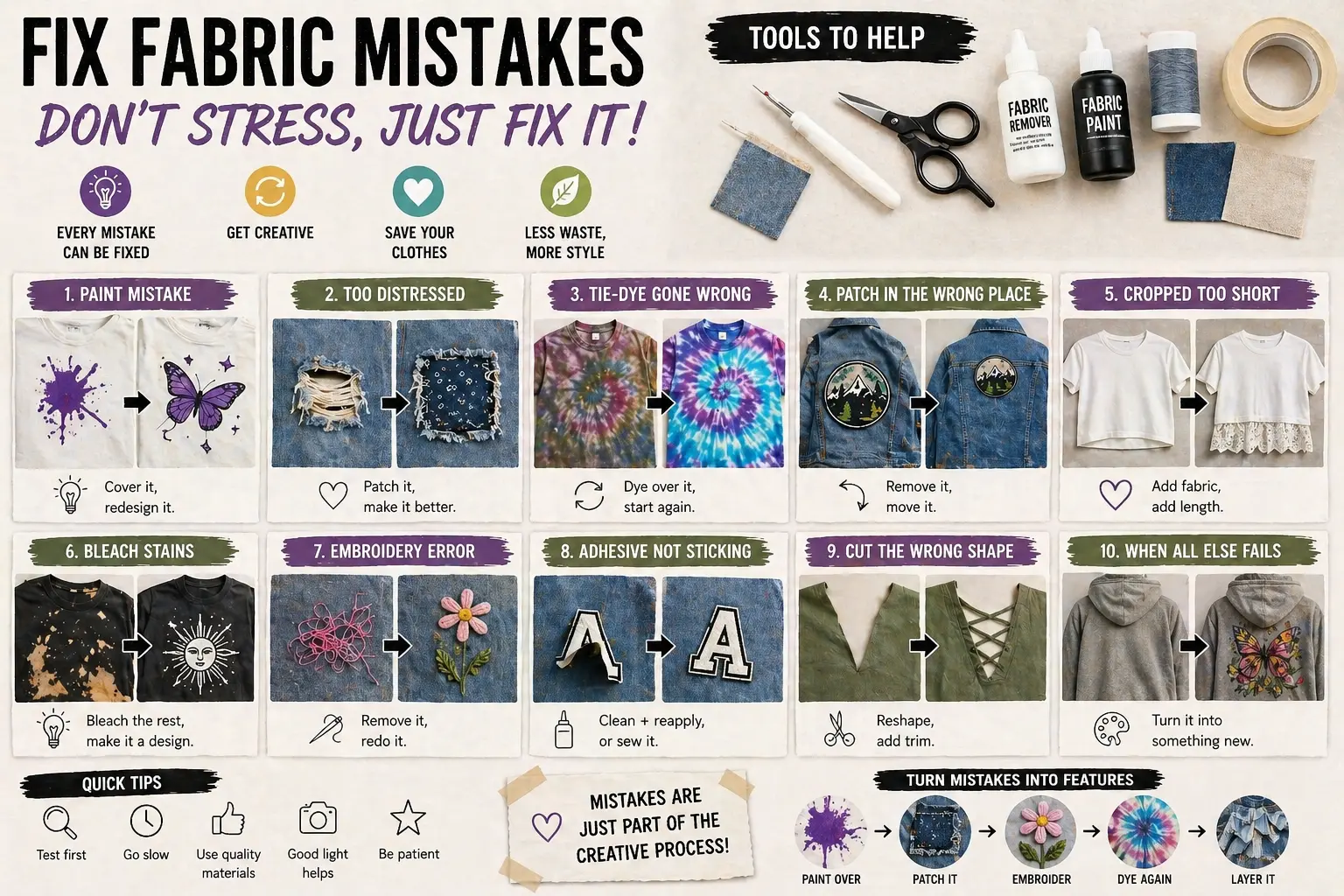
One of the biggest misconceptions in DIY fashion is the idea that customization mistakes automatically ruin a garment forever. This belief stops many beginners from experimenting because they assume a single bad cut, paint error, bleach stain, or patch placement mistake means the entire project is destroyed. Across Canada, the rise of clothing customization has encouraged more people to experiment with old garments, thrifted pieces, and basic wardrobe staples. However, many first-time creators quickly discover that mistakes are inevitable. Paint drips happen, measurements go wrong, distressing becomes too aggressive, and designs sometimes look very different in real life compared to the original idea.
Professional designers, clothing restorers, and experienced DIY creators rarely produce perfect results on every project. The difference is that experienced creators know how to recover from mistakes. In many cases, clothing errors can be repaired, redesigned, or even transformed into something better than the original concept. Some mistakes become creative opportunities that lead to more unique final products.
This is especially important in a world where consumers are becoming more conscious about waste. Throwing away clothing because of minor customization errors contributes to unnecessary textile waste. Learning how to fix mistakes helps extend garment life while improving confidence in future projects.
This guide explores the most common customization mistakes and explains how to repair them effectively. Whether you accidentally damaged denim, misplaced fabric paint, ruined a tie-dye project, or regret a design decision, there are often solutions that can save your clothing.
Why Mistakes Are Normal in DIY Fashion
Customization involves experimentation, and experimentation naturally includes failure. Social media platforms such as TikTok and Instagram often present highly polished final products without showing failed attempts behind the scenes. This creates unrealistic expectations for beginners.
Even experienced creators test materials, redesign projects midway, and recover from unexpected problems. Fabric reacts differently depending on material composition, age, washing history, and environmental conditions. Paint behaves differently on cotton compared to leather. Bleach can spread unpredictably. Adhesives may fail if surfaces are not prepared properly.
Understanding that mistakes are part of the learning process helps creators approach projects with less fear and more flexibility.
Fixing Fabric Paint Mistakes
Fabric paint mistakes are extremely common because paint dries quickly and mistakes can happen in seconds. Drips, uneven lines, accidental smudges, and incorrect colors often create panic.
If the paint is still wet, immediate action is critical. Gently blotting the area with a damp cloth may remove excess paint before it bonds with fabric. Rubbing aggressively can spread the problem.
If the paint has already dried, correction becomes more complex but still possible. In some cases, painting over mistakes with darker colors can hide errors. White paint can sometimes neutralize small mistakes on lighter fabrics.
Creative redesign often works best. A misplaced flower design may become part of a larger pattern. A paint drip can be transformed into abstract artwork.
The key is acting strategically rather than emotionally.
Repairing Over-Distressed Denim
One of the most common denim mistakes involves creating too many rips or weakening important structural areas. Beginners often become excited while distressing jeans or jackets and accidentally create tears that continue expanding.
Small tears can often be stabilized using patches placed behind the damaged area. Interior denim patches maintain the distressed appearance while preventing further ripping.
Visible decorative patches can also turn mistakes into intentional fashion elements.
If shorts or jeans become too damaged, they may be converted into shorter cuts or redesigned into bags, skirts, or patchwork projects.
Denim remains one of the most forgiving fabrics for recovery projects.
Correcting Tie-Dye Mistakes
Tie-dye projects frequently produce unexpected results. Colors may become muddy, patterns may appear uneven, or sections may remain untouched.
In many cases, poor tie-dye outcomes can be improved through additional dye sessions. Darker colors often help cover weak sections.
Reverse tie-dye methods using bleach may also create completely new effects.
Sometimes, adding minimalist fabric paint details over poor dye work creates stronger final designs.
Accepting organic imperfections is also important because tie-dye naturally contains unpredictability.
Removing Iron-On Patches
Patch placement regret happens often. A patch may feel too large, poorly positioned, or simply no longer align with personal style.
Some iron-on patches can be removed using controlled heat from an iron or hairdryer. This softens adhesive backing.
Slow peeling helps reduce fabric damage.
Adhesive residue may require fabric-safe cleaning solutions.
If minor damage remains after removal, replacing the area with a better patch often solves the issue.
Fixing Cropping Mistakes
Many beginners cut shirts too short when attempting cropped designs.
This mistake can sometimes be corrected by adding fabric extensions such as lace, layered fabric panels, or decorative fringe.
Layering the shirt over longer garments can also improve wearability.
In extreme cases, overly cropped shirts may become layered athletic pieces or festival wear.
Creative styling often saves these projects.
Bleach Mistakes
Bleach mistakes happen quickly and often feel irreversible.
Accidental bleach drips on unwanted areas may sometimes be balanced by adding additional bleach patterns to create intentional symmetry.
Fabric dye can occasionally restore certain areas.
Patches and paint may help cover bleach damage.
Working slowly with bleach prevents most problems.
Fixing Embroidery Errors
Incorrect embroidery placement or stitching mistakes can be frustrating because thread removal takes time.
Using small seam removers or embroidery scissors helps remove stitches carefully.
Patience is critical to avoid damaging fabric.
If holes remain visible, redesigning the area often works better than forcing restoration.
Adhesive Failures
Low-quality glue can cause decorative elements to fall off.
Cleaning surfaces and reapplying stronger adhesives often solves the problem.
Many creators upgrade to sewing after repeated adhesive failures.
When to Completely Redesign the Garment
Sometimes individual fixes create more problems than solutions.
In these cases, complete redesign may be smarter.
A ruined shirt can become a tote bag.
Bad jeans can become shorts.
Failed hoodies can become lounge wear.
Creative flexibility prevents waste.
Emotional Mistakes: Knowing When to Stop
Many creators worsen projects because they panic after small mistakes.
Over-correcting often causes bigger problems.
Sometimes stepping away from a project before making additional changes creates better long-term decisions.
Learning Through Mistakes
Mistakes provide valuable education.
Every failed project teaches material behavior, planning skills, and design awareness.
These lessons improve future customization quality.
Sustainability Benefits of Repairing Errors
Repairing mistakes keeps clothing out of landfills.
This supports sustainability efforts across Canada.
Consumers increasingly value restoration over replacement.
Final Thoughts
Customization mistakes do not automatically ruin clothing. In many cases, they create opportunities for better creativity, stronger problem-solving skills, and more original final products.
The most successful DIY creators are not people who avoid mistakes completely. They are people who know how to recover from them.
Learning how to fix fabric errors builds confidence and encourages experimentation, which ultimately leads to better custom fashion projects.
The next time something goes wrong, remember that the project may not be ruined—it may simply be evolving into something different.
