
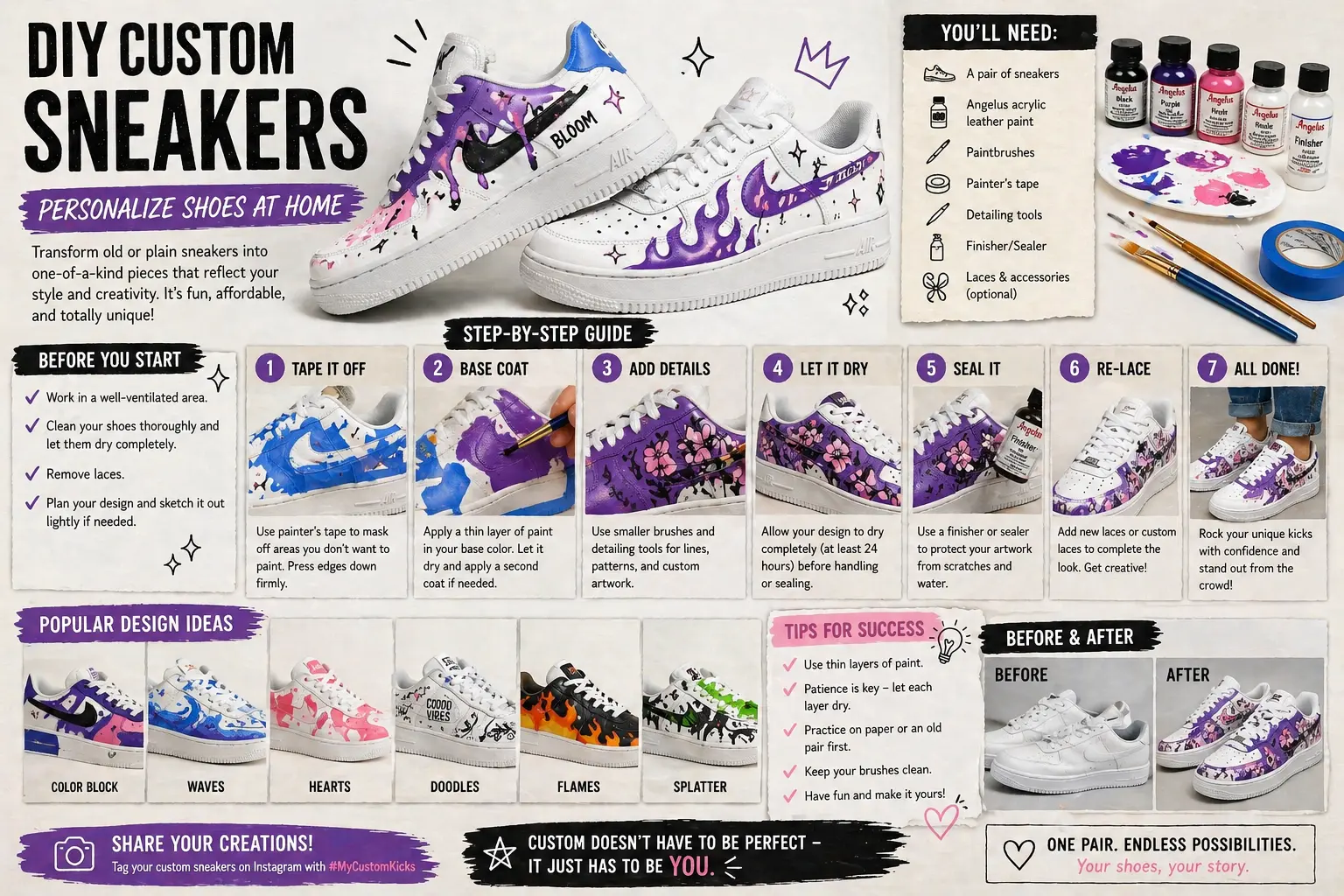
Sneakers have evolved far beyond their original athletic purpose. What was once designed primarily for sports performance has become one of the most important categories in global fashion. Limited-edition collaborations, resale markets, custom streetwear culture, and social media trends have transformed sneakers into highly personal fashion statements. Across Canada, consumers now spend significant amounts of money chasing exclusive releases from brands like Nike, Adidas, and Vans, often paying premium resale prices for designs that feel unique or difficult to obtain.
At the same time, many people own sneakers that sit unused in closets because they feel outdated, stained, too plain, or no longer align with current style preferences. Instead of replacing those shoes, many fashion enthusiasts have started customizing their own sneakers at home. DIY sneaker customization has grown rapidly because it offers creative freedom while helping people save money and reduce unnecessary consumption. Rather than competing for limited releases, individuals can create one-of-a-kind footwear that reflects their personal identity.
The rise of sneaker customization has also been fueled by platforms such as TikTok, Instagram, and YouTube, where creators regularly showcase hand-painted shoes, lace swaps, custom embroidery, sole modifications, and full artistic redesigns. However, many of these videos simplify the process and fail to explain the preparation required to create durable, wearable shoes that maintain their appearance over time.
Customizing sneakers successfully requires patience, proper materials, and a realistic understanding of how different shoe materials behave. Painting leather differs from painting canvas. Modifying running shoes requires different considerations than customizing skate shoes. This guide explores how to personalize sneakers at home while avoiding common mistakes that can permanently ruin footwear.
Why Sneaker Customization Has Become So Popular
Modern sneaker culture has become increasingly expensive. Limited-edition releases often sell out within minutes and quickly appear on resale platforms at inflated prices. Many consumers feel frustrated by this cycle and have started looking for alternatives that allow greater creative control.
DIY customization offers a direct solution. Instead of paying premium prices for exclusivity, individuals can create unique designs themselves. This appeals particularly to younger consumers who value individuality and want products that feel personal rather than mass-produced.
Sustainability has also become a major factor. Millions of shoes are discarded every year because they become visually worn long before their structural lifespan ends. Scuffed white sneakers, faded canvas shoes, and outdated colorways can often be revived through customization rather than replacement.
For many consumers in Canada, sneaker customization has become both a creative hobby and a practical financial decision.
Choosing the Right Sneakers for Customization
Not every sneaker is equally suitable for DIY projects. Material type plays a major role in determining what customization methods will work.
Leather sneakers are among the most popular choices because they provide smooth surfaces that respond well to specialized paints. Popular models from Nike and Adidas are frequently customized for this reason.
Canvas shoes, particularly styles from Vans and Converse, are also excellent because fabric absorbs paint and dye effectively.
Running shoes made from mesh materials are more difficult because flexible synthetic fabrics may not hold paint well.
Beginners should avoid expensive shoes for their first projects. Practicing on affordable sneakers builds confidence without creating unnecessary financial pressure.
Cleaning Shoes Before Starting
Preparation is one of the most overlooked parts of sneaker customization. Dirty surfaces prevent paint, adhesives, and decorative materials from bonding properly.
Shoes should be cleaned thoroughly before any customization begins. Dirt trapped in stitching, oils from skin contact, and old cleaning product residue can interfere with results.
Leather shoes may require specialized cleaning products, while canvas shoes can often be cleaned using gentle soap and water.
Allow shoes to dry completely before moving forward.
Skipping this step often leads to peeling paint and weak adhesive performance.
Painting Sneakers
Painting remains one of the most popular sneaker customization methods because it offers complete design freedom.
Solid color changes can completely transform plain sneakers. Many people convert white shoes into minimalist neutral tones or create vibrant artistic designs.
Using paint designed specifically for footwear improves flexibility and durability. Standard acrylic paint often cracks when shoes bend during walking.
Thin layers create stronger results than thick paint applications. Multiple controlled layers typically produce smoother finishes.
Popular design themes include abstract art, anime-inspired graphics, sports references, minimalist line work, and personalized text.
Custom Shoelaces
One of the easiest sneaker upgrades involves replacing standard laces.
Many shoes look significantly more premium with upgraded lace options.
Reflective laces, patterned laces, waxed laces, and contrasting colors can completely change the personality of a sneaker.
This method requires minimal risk and remains ideal for beginners.
Adding Patches and Accessories
Canvas sneakers often allow decorative patches, removable charms, and metal accessories.
Some creators attach chains or removable tags to create streetwear-inspired aesthetics.
These modifications should be balanced carefully. Too many accessories can make shoes feel impractical.
Subtle additions often create stronger long-term wearability.
Dyeing Canvas Sneakers
Fabric dye works particularly well on canvas shoes.
Older white sneakers can be refreshed with darker tones that hide stains.
Neutral colors often feel more versatile than bright experimental shades.
Proper drying time is essential for strong results.
Customizing Soles
Some advanced creators paint midsoles or add artwork to sole edges.
This requires highly durable materials because soles experience heavy friction.
Beginners should start with upper sections before experimenting with sole modifications.
Protecting Your Design
Customization means little if designs fade quickly.
Protective sealants help preserve painted surfaces.
Waterproof sprays can protect canvas modifications.
Proper curing time is essential before wearing customized shoes outdoors.
Rushing this step often ruins projects.
Common Mistakes Beginners Make
Many beginners skip preparation.
Others use incorrect paint products.
Overcomplicated designs often become difficult to execute.
Working too quickly leads to mistakes.
Simple, clean projects usually produce stronger first results.
Can Sneaker Customization Become a Business?
Many creators have built businesses selling custom sneakers through Etsy, independent websites, and social media platforms.
Custom wedding shoes, sports-themed designs, and personalized gifts often perform well.
Strong photography and branding are essential.
Sustainability Benefits
Sneaker customization extends product lifespan.
Older shoes remain usable rather than entering landfills.
This aligns with growing sustainability priorities throughout Canada.
Final Thoughts
Custom sneaker design offers one of the most exciting entry points into DIY fashion because it combines creativity, practicality, and personal style.
With proper preparation, patience, and realistic design choices, anyone can transform basic footwear into unique fashion pieces.
For many people, customized sneakers become more meaningful than expensive retail releases because they reflect personal creativity rather than mass-market trends.
The best custom sneakers are not necessarily the most complex. They are the ones people genuinely enjoy wearing because they feel completely personal.
