
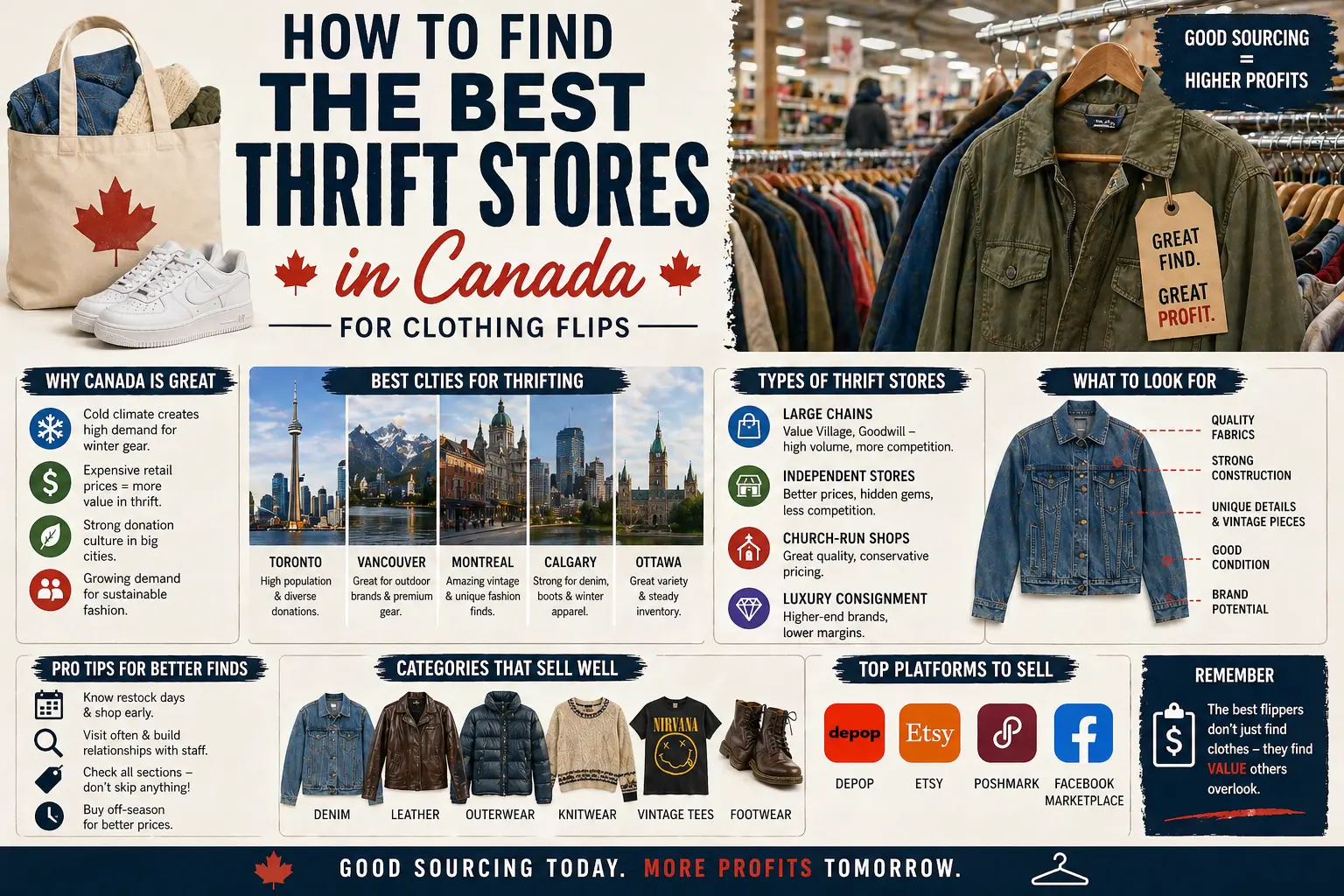
Thrift shopping in Canada has evolved far beyond its original reputation as a simple way for consumers to save money on used clothing. Over the last decade, secondhand fashion has transformed into a major industry driven by sustainability concerns, rising retail prices, social media influence, and the rapid growth of resale marketplaces. What was once viewed as an activity primarily associated with bargain hunters has become a legitimate sourcing strategy for entrepreneurs building profitable clothing-flipping businesses. Across Canada, thousands of resellers now visit thrift stores every week searching for undervalued inventory they can restore, customize, reposition, and resell for significantly higher margins. Some focus on vintage streetwear, others specialize in luxury resale, while many create entirely new products by transforming secondhand garments into customized fashion pieces. The growth of platforms such as Depop, Etsy, Poshmark, and Facebook Marketplace has created an environment where sourcing inventory from thrift stores can become a serious business model rather than a casual side hobby.
However, many beginners make the mistake of assuming success in clothing flipping starts when they list products online. In reality, profitability begins much earlier during the sourcing phase. The ability to identify the right thrift stores, understand regional inventory patterns, recognize undervalued clothing, and avoid low-quality purchases often determines whether a reseller succeeds long term. Many new flippers waste money buying items simply because they seem cheap without understanding whether there is actual resale demand. Others visit poorly selected stores with weak inventory and conclude that clothing flipping is not profitable when the real issue is sourcing strategy. Finding the best thrift stores in Canada requires understanding geography, consumer behavior, store models, fashion trends, and resale economics at a much deeper level than most beginners realize.
Why Canada Has Become a Strong Market for Clothing Flips
Canada offers unique advantages that many new resellers underestimate. One of the most important factors is climate. Canadian winters create strong demand for categories that often maintain higher resale values than lighter seasonal clothing. Premium winter jackets, wool coats, insulated boots, thermal layers, and outdoor apparel often perform exceptionally well because replacing these products through traditional retail channels can be expensive. A well-maintained jacket from Canada Goose, Patagonia, Arc’teryx, or The North Face purchased at the right thrift store can create significant profit opportunities after proper cleaning and marketing.
Canada also benefits from strong donation patterns in major urban centers. Cities with higher household incomes often generate better thrift inventory because consumers replace wardrobes more frequently. Many affluent households donate clothing that remains in excellent condition simply because trends change or closets become overcrowded. Experienced resellers frequently target stores located near wealthier neighborhoods because donation quality tends to be stronger.
Another factor is the cultural growth of sustainable fashion. Younger consumers increasingly reject fast fashion because of environmental concerns and seek vintage or secondhand alternatives. This trend continues growing across Canada, creating stronger demand for curated thrift inventory.
Understanding Different Types of Thrift Stores
One of the most common beginner mistakes is treating all thrift stores as identical. They are not.
Large chains such as Value Village receive enormous donation volumes. This creates more inventory opportunities, but competition is often much stronger because experienced flippers regularly shop these stores.
Goodwill Industries stores may vary dramatically depending on local management. Some locations aggressively price premium brands, while others remain highly inconsistent.
Independent thrift stores can be extremely profitable because they often attract fewer resellers. Their pricing knowledge may also be weaker, creating stronger opportunities for knowledgeable buyers.
Church-operated donation stores are often overlooked. These shops frequently receive excellent community donations and may price items very conservatively.
Luxury consignment stores carry stronger brands but often leave smaller profit margins because pricing already reflects much of the product value.
Understanding these differences helps resellers avoid wasting time.
Best Cities in Canada for Thrift Flipping
Toronto remains one of the strongest markets because of population size, neighborhood diversity, and high donation volume. Wealthier neighborhoods often produce stronger designer inventory.
Vancouver offers exceptional outdoor clothing inventory because of strong regional demand for hiking and outdoor gear.
Montreal often produces excellent vintage fashion because of its creative culture.
Calgary can be strong for denim, boots, western wear, and winter apparel.
Smaller cities may offer less inventory volume but often lower competition.
How to Research a Thrift Store Before Visiting
Many successful flippers do research before visiting stores.
Online reviews often reveal pricing complaints or inventory strengths.
Social media tags can show what shoppers are finding.
Google Maps helps identify stores near affluent neighborhoods.
Some flippers build spreadsheets tracking store quality, average pricing, and inventory patterns.
This level of organization creates long-term advantages.
What Clothing Categories Perform Best
Not every clothing category performs equally well.
Vintage denim often performs consistently.
Leather jackets can be highly profitable.
Premium outerwear remains strong in Canada.
Vintage sportswear, rare band shirts, and unique knitwear often attract strong demand.
Fast fashion brands usually produce weaker margins.
How to Spot Hidden Value
Many profitable items are overlooked because they require minor repairs.
Missing buttons, small stains, weak hems, or outdated styling often scare casual buyers.
Experienced flippers understand how small improvements create major value increases.
Cleaning, tailoring, and minor customization often separate successful resellers from casual shoppers.
Building Relationships With Store Staff
Many advanced flippers build respectful relationships with thrift store employees.
Staff may share restocking schedules.
They may explain discount days.
Some stores rotate inventory differently.
Being respectful matters.
Aggressive reseller behavior can damage long-term opportunities.
The Role of Seasonality
Buying winter inventory during spring or summer often creates better pricing opportunities.
Purchasing holiday clothing after major seasons can also reduce costs.
Many new flippers buy inventory at peak demand when prices rise.
Experienced resellers think months ahead.
Avoiding Beginner Mistakes
Many beginners overbuy low-quality inventory.
Others fail to calculate fees.
Some ignore shipping costs.
Many chase short-term trends.
Successful resellers focus on consistency.
Scaling Beyond Local Stores
As businesses grow, many resellers expand beyond traditional thrift stores.
Estate sales
Garage sales
Online marketplaces
Liquidation auctions
Warehouse sales
These channels can create larger inventory pipelines.
Final Thoughts
Finding the best thrift stores in Canada for clothing flips is not about luck. It requires strategy, discipline, patience, and market awareness.
The best flippers understand neighborhoods, inventory cycles, fashion trends, and resale demand at a deeper level than casual shoppers.
They do not simply buy cheap clothing—they identify hidden value before anyone else sees it.
That skill is what transforms casual thrifting into a profitable business.
