
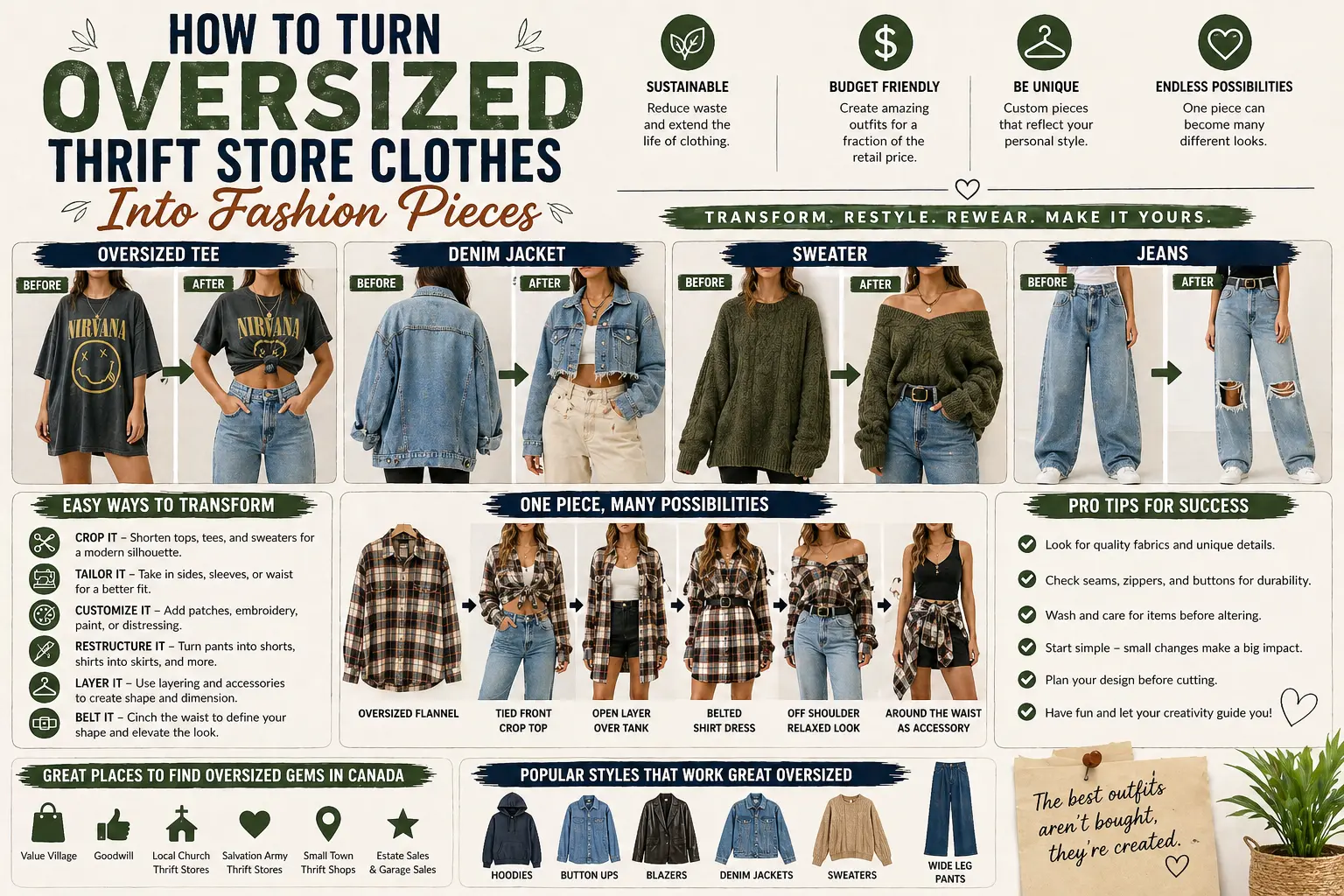
Oversized clothing has become one of the most misunderstood categories inside thrift stores, and that misunderstanding creates one of the biggest opportunities in secondhand fashion. Many casual shoppers walk through thrift stores and immediately ignore oversized shirts, oversized denim jackets, large sweaters, oversized dresses, baggy jeans, and oversized blazers because they assume poor fit automatically means low value. They often want clothing that fits perfectly the moment they try it on, which causes them to overlook garments with enormous transformation potential. Across Canada, this mindset has created a hidden niche for people who understand fashion customization, clothing flips, and creative styling. Rising retail prices, growing environmental concerns, and the increasing popularity of personalized wardrobes have pushed more consumers toward thrift stores, but oversized clothing remains one of the least understood categories despite offering some of the highest margins for both personal use and resale businesses.
The popularity of oversized fashion itself has also changed consumer behavior in major ways. Luxury brands, streetwear companies, influencers, and celebrities have normalized oversized silhouettes across nearly every clothing category. Oversized hoodies, relaxed trousers, large blazers, wide denim, oversized knitwear, and loose button-up shirts are now seen as intentional style choices rather than accidental sizing mistakes. Platforms such as TikTok, Pinterest, and Instagram constantly showcase oversized styling trends, thrift transformations, and clothing flips that have inspired more consumers to rethink how they evaluate fit. What once looked outdated may now align perfectly with modern trends when styled correctly.
This shift has created a major advantage for thrift shoppers because many stores across Canada continue receiving oversized donations from people who no longer want them. Many of these garments are extremely high quality, featuring premium fabrics, strong construction, vintage details, and durable materials that are difficult to find in modern fast fashion. The challenge is knowing how to identify potential and transform these garments into something stylish, wearable, and profitable without ruining them through unnecessary alterations.
Why Oversized Clothing Offers More Flexibility
Oversized clothing provides one advantage that fitted clothing rarely offers: excess material. That additional fabric creates significantly more possibilities for redesign. A shirt that already fits tightly offers limited options because there is little room for structural change. Oversized garments create flexibility because they can be cropped, reshaped, layered, belted, distressed, dyed, tailored, or completely reconstructed into entirely new products.
This flexibility becomes particularly valuable in thrift stores because oversized garments are often priced similarly to standard pieces despite offering greater creative potential. A large men’s blazer may become a modern oversized women’s fashion item. A long oversized dress may become a skirt set. Large denim jackets provide larger surfaces for painting, embroidery, and patchwork. Loose jeans can be transformed into modern wide-leg styles that are currently in high demand.
For clothing flippers, oversized garments often create higher margins because customization opportunities are far greater than standard pieces.
How to Identify High-Potential Oversized Pieces
Successful transformations begin with smart purchasing decisions. Not every oversized garment deserves your money.
Fabric quality should be evaluated first. Natural fibers such as wool, cotton, linen, leather, and premium denim typically offer stronger durability and better transformation potential than low-quality synthetic materials. Many vintage garments feature significantly better fabric quality than modern fast-fashion alternatives.
Construction quality matters just as much. Strong stitching, lined interiors, durable zippers, quality buttons, and reinforced seams often indicate long-term value.
Brand names can help but should never become the only decision factor. Many vintage pieces from unknown labels offer exceptional quality.
Condition also matters. Small stains or missing buttons may be easy to fix. Severe structural damage may not be worth the effort.
Transforming Oversized T-Shirts
Oversized t-shirts remain one of the easiest categories to transform because they offer multiple styling directions. Many older oversized shirts can be cropped into more modern silhouettes, but this process requires patience. One of the biggest beginner mistakes is cutting too aggressively and creating proportions that feel impractical.
Oversized graphic tees often perform well as shirt dresses, particularly when paired with belts, boots, or layered jackets. Vintage sports shirts, college apparel, and rare band shirts can generate strong resale demand.
Some oversized shirts require no permanent changes at all. Strategic knotting, layering, and tucking can dramatically change their appearance.
Reinventing Oversized Hoodies and Sweatshirts
Oversized hoodies have become extremely popular because comfort-driven fashion continues dominating younger consumer markets. Many oversized hoodies already align with current streetwear trends and may only need styling improvements.
Others may benefit from cropped hems, custom embroidery, fabric painting, distressing, or patch additions.
Vintage college sweatshirts often perform especially well on Depop because younger buyers actively search for oversized casual pieces.
The key is preserving comfort while improving visual appeal.
Reworking Oversized Denim
Oversized denim remains one of the most profitable thrift categories because of its durability and versatility. Large denim jackets can become premium statement pieces through embroidery, painting, patchwork, distressing, and structural changes.
Oversized jeans can become trendy baggy silhouettes, distressed shorts, skirts, or modern relaxed cuts.
Vintage denim often contains stronger materials than modern fast-fashion denim, making it especially attractive.
Oversized Blazers and Formalwear
Oversized blazers have become increasingly popular in modern fashion. Many vintage blazers feature stronger tailoring than current retail products.
Replacing outdated buttons can modernize appearance.
Adding belts creates shape.
Rolling sleeves creates casual elegance.
Oversized dress shirts can also become versatile layering pieces.
These garments are frequently overlooked despite strong demand.
Transforming Oversized Dresses
Oversized dresses are often ignored because they appear shapeless on racks. However, these garments frequently offer major transformation opportunities.
Belts can instantly create waist definition.
Hem adjustments modernize proportions.
Layering jackets creates additional structure.
Some oversized dresses can even be converted into matching sets.
Using Color Transformations
Sometimes oversized clothing feels outdated because of color rather than fit.
Neutral overdye techniques can modernize garments.
Fabric painting can create artistic uniqueness.
Bleach effects may create streetwear aesthetics.
Color adjustments often create dramatic improvements.
Styling Without Permanent Changes
Not every transformation requires cutting.
Belts
Layering
Accessories
Tucking techniques
These methods preserve flexibility while improving style.
Turning Oversized Menswear Into Fashion
Many women intentionally shop men’s sections for oversized blazers, shirts, hoodies, and denim jackets.
This trend continues growing across Canada because men’s sections often offer better quality fabrics and unique silhouettes.
Selling Oversized Transformations
Depop works well for younger buyers.
Etsy performs well for customized products.
Poshmark works well for branded clothing.
Strong photography improves sales performance.
Common Mistakes
Many beginners over-cut garments.
Others over-customize.
Some ignore demand.
Discipline matters.
Sustainability Benefits
Oversized transformations reduce waste and extend clothing lifespan. They help consumers reduce unnecessary purchases and support sustainable fashion habits across Canada.
Final Thoughts
Oversized thrift clothing should never be dismissed as leftover inventory. In many cases, these garments offer some of the biggest opportunities in modern secondhand fashion.
The most successful thrift shoppers are not those who only buy perfect items. They are the ones who identify hidden potential before everyone else notices it.
That skill turns oversized clothing into fashion pieces, profitable inventory, and smarter long-term wardrobe investments.
