
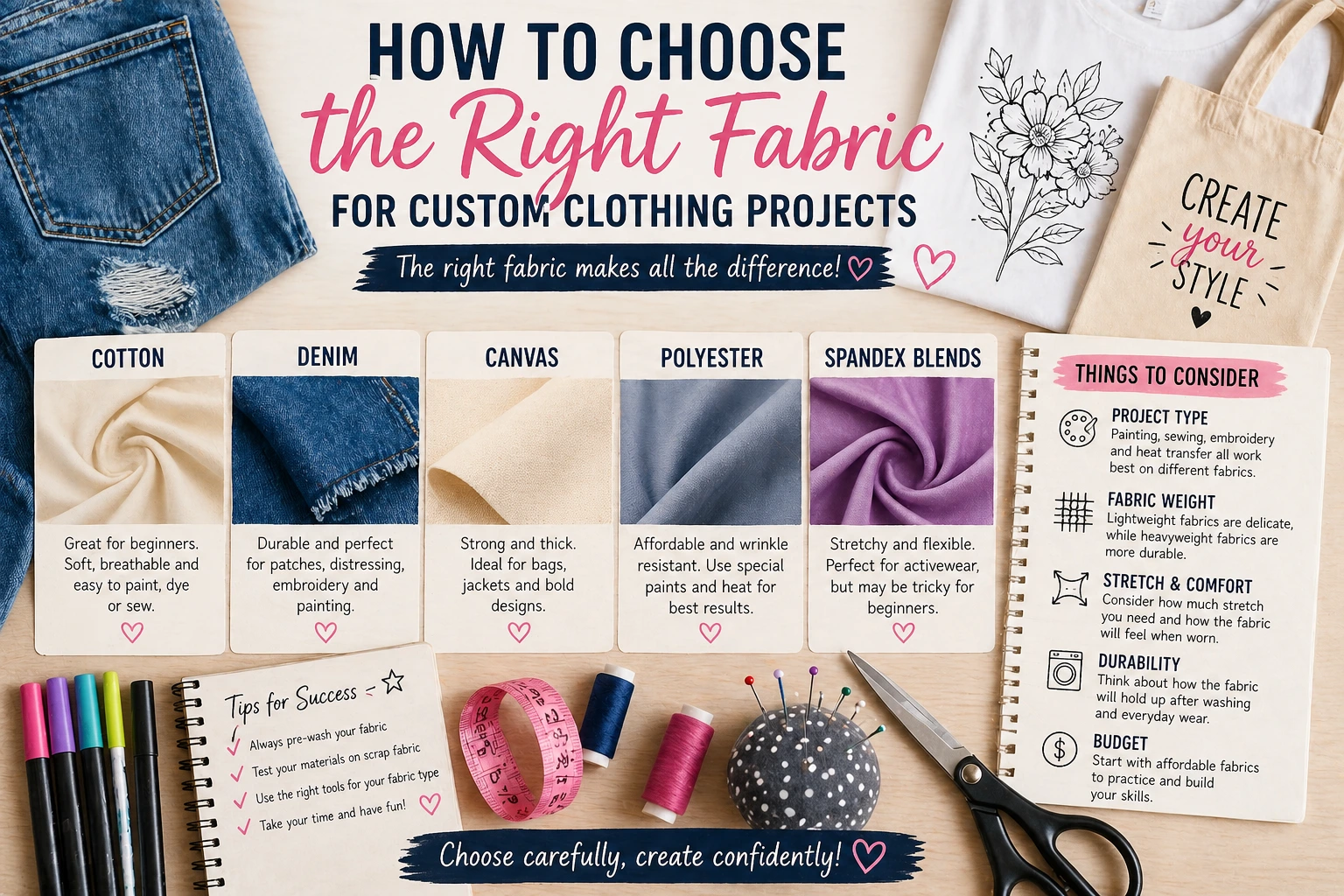
Choosing the right fabric is one of the most important decisions in any clothing customization project, yet it is often overlooked by beginners who focus primarily on design ideas. Many people become excited about painting a jacket, sewing decorative patches onto jeans, or creating handmade garments, only to discover that the fabric they selected does not behave the way they expected. Colors may not absorb properly, stitching may become difficult, or the final piece may lose its shape after a few washes.
Fabric selection directly affects durability, comfort, appearance, and the overall success of a custom clothing project. A creative design can fail if it is applied to material that stretches too much, frays easily, or cannot handle the techniques being used. On the other hand, even simple customization ideas can look highly professional when paired with the right fabric.
The growing popularity of DIY fashion has encouraged more people to experiment with custom clothing, but understanding fabric basics remains essential for achieving high-quality results. Different fabrics react differently to paint, embroidery, cutting, distressing, dyeing, and sewing techniques. Learning how each material performs can help beginners avoid frustration and wasted money.
Whether you are customizing thrift store finds, creating handmade clothing from scratch, or launching a small fashion side business, understanding how to choose the right fabric can significantly improve your creative outcomes.
Natural fabrics are often easier for beginners to work with
Many beginners find natural fabrics easier to customize because they tend to be more predictable.
Cotton remains one of the most popular choices for DIY fashion projects because it absorbs paint well, handles sewing easily, and offers a comfortable feel. Cotton t-shirts, tote bags, hoodies, and casual garments are commonly used for beginner customization projects.
Denim is another favorite because of its durability and versatility. It works well for patch applications, embroidery, distressing techniques, and painted designs. Denim jackets and jeans remain popular canvases for personal expression.
Linen can also work well for certain projects, particularly lightweight clothing or summer fashion pieces. It offers a natural aesthetic but wrinkles more easily than cotton.
Natural fibers generally respond better to fabric paint, dyes, and sewing than many synthetic alternatives.
Synthetic fabrics require extra attention
Synthetic materials can create challenges if beginners do not understand their limitations.
Polyester is widely used in modern clothing because it is affordable and durable, but it does not always absorb dyes and paints effectively. Some paints may crack or peel over time if applied incorrectly.
Nylon fabrics can be slippery during sewing and may require special needles or thread types.
Spandex and stretchy materials can also be difficult for beginners because they shift during sewing and may distort painted designs when stretched.
That does not mean synthetic fabrics should be avoided entirely. They simply require more planning and proper materials.
Understanding product labels before purchasing fabric can prevent major project failures.
Consider your customization method first
The type of customization you plan to do should heavily influence fabric selection.
If you want to create painted artwork, cotton and canvas fabrics usually provide excellent surfaces because they absorb color evenly.
For embroidery projects, medium-weight fabrics that maintain stability often work best.
If you plan to distress clothing, denim provides excellent durability while allowing creative tearing and fading effects.
For heat transfer vinyl projects, certain fabric blends perform better than others depending on heat resistance.
Beginners often make the mistake of selecting fabric based only on appearance rather than functionality.
Matching fabric to technique improves both quality and efficiency.
Fabric weight changes everything
Fabric weight plays a major role in customization success.
Lightweight fabrics such as chiffon or silk may look beautiful, but they can be difficult for beginners to sew or alter. These materials often shift during cutting and stitching.
Medium-weight fabrics such as cotton blends are usually more beginner-friendly because they provide balance between flexibility and stability.
Heavyweight fabrics like denim, canvas, and certain wool blends are highly durable but may require stronger needles and tools.
Understanding fabric weight helps prevent technical frustrations during projects.
It also helps determine whether the final garment will be practical for everyday wear.
Stretch level matters more than beginners expect
Stretch fabrics behave very differently from non-stretch materials.
Jersey fabrics used in many t-shirts contain elasticity that may affect painting, cutting, and sewing accuracy.
Highly stretchy fabrics may warp designs over time if they are not handled properly.
For beginners, fabrics with minimal stretch are often easier to control.
As skills improve, experimenting with athletic fabrics, activewear materials, and stretch blends becomes easier.
Ignoring stretch properties often leads to uneven results.
Texture influences final design quality
Smooth fabrics allow detailed artwork and clean lines.
Canvas and cotton often provide excellent surfaces for painting and fabric marker projects.
Highly textured fabrics may create challenges for detailed illustrations or heat transfers.
Fuzzy materials such as fleece may not display small details clearly.
Textures can also affect patch application and embroidery precision.
Testing customization materials on scrap fabric helps identify potential issues before committing to the final garment.
Durability matters for wearable projects
Some projects are purely decorative, while others are intended for regular wear.
If the clothing will be washed frequently, durability becomes a major factor.
Thin fabrics may wear out faster when heavily customized.
Strong materials such as denim, cotton twill, and canvas often hold up better over time.
Custom clothing should not only look good in photos but also survive real-world use.
Choosing durable fabrics helps preserve your effort.
Budget considerations are important
Expensive fabrics are not always necessary for beginners.
Many people successfully learn customization skills using thrifted clothing or affordable fabric remnants.
Practicing on lower-cost materials reduces pressure and allows experimentation.
As your skills improve, investing in premium materials may become worthwhile.
Learning through affordable projects often builds confidence faster than working with expensive fabrics too early.
Making smarter fabric choices
The right fabric can elevate a simple design into something impressive.
Successful clothing customization begins with understanding how materials interact with your creative methods.
Instead of choosing fabric based only on color or style, consider durability, texture, stretch, weight, and customization compatibility.
Beginners who take time to understand fabric selection often save money and produce far better results.
With thoughtful material choices, your custom clothing projects can become more durable, comfortable, and visually impressive while helping you develop stronger creative skills over time.
