
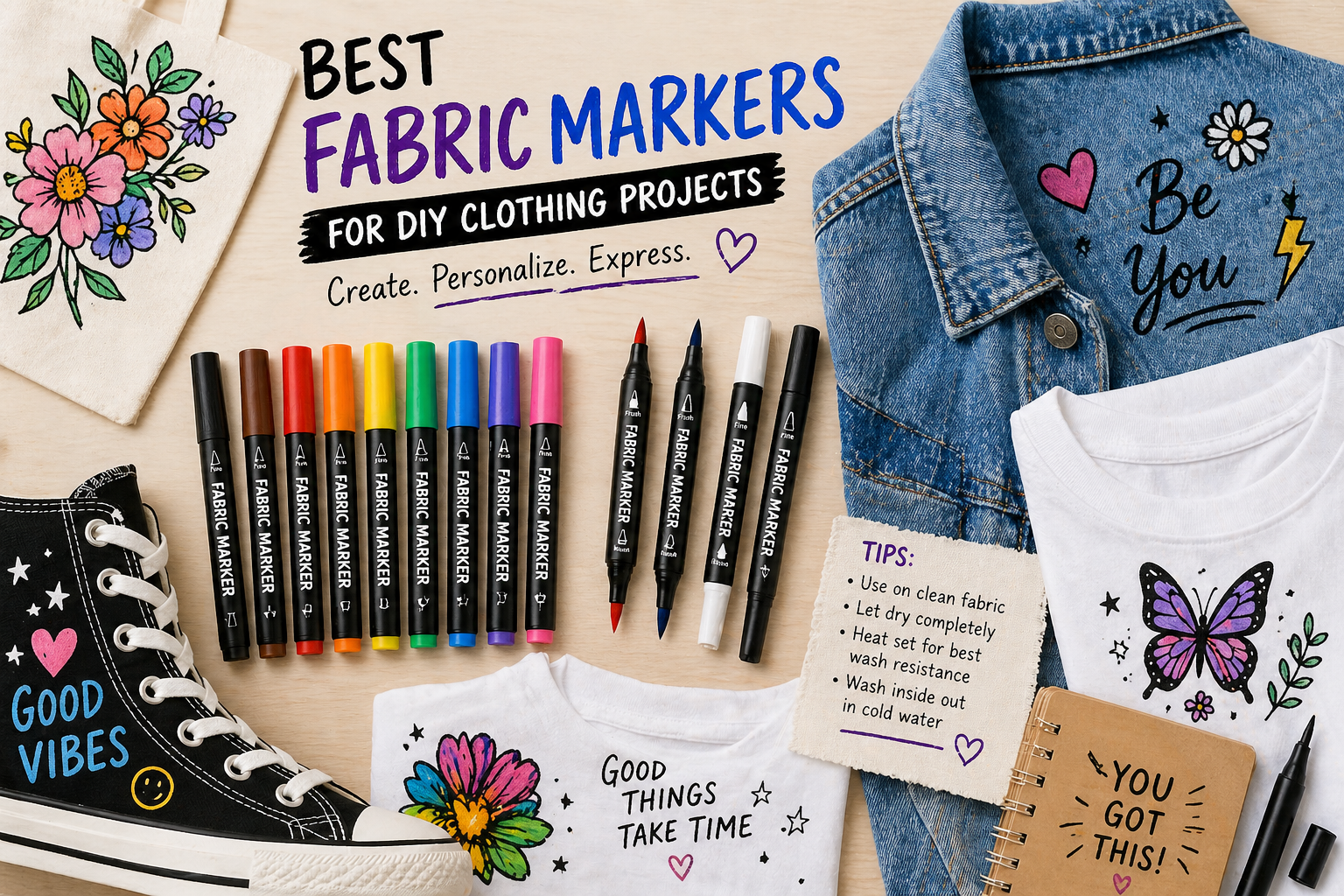
DIY clothing customization has become one of the most accessible ways for people to express creativity without spending large amounts of money on designer fashion. A plain white t-shirt can be transformed into wearable art, old denim can gain a completely new personality, and basic sneakers can become personalized statement pieces. Among the many tools available for clothing customization, fabric markers have become especially popular because they offer precision, convenience, and creative flexibility.
Unlike fabric paint that often requires brushes, mixing trays, and more preparation time, fabric markers allow creators to draw directly onto fabric surfaces. They are often easier for beginners to control and make it possible to create detailed lettering, illustrations, patterns, and personalized designs without extensive artistic experience.
However, not all fabric markers deliver the same results. Some fade quickly after washing, others bleed through thin fabrics, and certain products perform poorly on darker materials. Beginners often purchase the first marker set they find online, only to become frustrated when their designs crack, smudge, or disappear after a few washes.
Choosing the right fabric markers requires understanding your project type, fabric material, desired design style, and long-term durability expectations. Whether you want to customize jackets, tote bags, shoes, jeans, or shirts, selecting the proper markers can dramatically improve your final results.
Why fabric markers have become so popular in DIY fashion
One major reason fabric markers continue to grow in popularity is their simplicity. Unlike embroidery, sewing, or fabric painting, markers require very little setup.
You can start with a clean garment, sketch your design, and begin drawing almost immediately. This makes fabric markers ideal for beginners who want fast results without investing in complex equipment.
They are also highly versatile. Fabric markers can be used for hand lettering, cartoon illustrations, geometric patterns, floral designs, and personalized gifts. Many small clothing businesses even use them for limited-edition custom products.
Another major advantage is control. Fine-tip markers allow detailed designs that may be difficult to achieve with paintbrushes. This precision is especially useful for adding names, quotes, outlines, or intricate patterns.
For creators who enjoy spontaneous artistic projects, fabric markers offer one of the easiest entry points into fashion customization.
Permanent fabric markers offer the best long-term durability
For clothing items that will be washed regularly, permanent fabric markers are usually the best choice.
These markers are designed to bond with fabric fibers and remain vibrant after repeated washing cycles. Many require heat-setting after application, which helps lock the ink into the material.
Permanent markers are ideal for everyday wearable items such as t-shirts, hoodies, denim jackets, canvas shoes, and tote bags.
Creators should always follow product instructions carefully. Some brands recommend ironing the design after it dries, while others require a waiting period before washing.
Skipping these steps can reduce durability and lead to fading much faster than expected.
When long-term wear matters, permanent markers provide better value than cheaper temporary alternatives.
Fine-tip markers are ideal for detailed artwork
Artists who enjoy drawing small details often prefer fine-tip fabric markers.
These markers work well for outlining illustrations, creating facial details, writing text, and producing clean line art.
They are particularly useful for custom sneakers, detailed shirt graphics, and minimalist fashion designs.
Fine tips help reduce accidental ink spreading and offer greater control for beginners who are still developing confidence.
However, filling larger areas with fine-tip markers can be time-consuming. They are best paired with broader markers for larger projects.
Brush-tip markers create artistic effects
Brush-tip fabric markers offer a softer, more paint-like experience.
These markers allow users to create thicker strokes, blended effects, and more expressive artistic designs.
They are often used for abstract art, floral designs, calligraphy, and hand-painted fashion aesthetics.
Because brush tips are more flexible, they may require slightly more practice than standard markers. However, they can produce beautiful results for creators who want a more natural artistic style.
These markers work especially well on larger surfaces like jackets, oversized shirts, and canvas tote bags.
Dual-tip markers offer flexibility for beginners
Many beginners prefer dual-tip fabric markers because they combine fine and broad tips in one product.
This allows users to switch between detailed outlining and larger color fills without constantly changing tools.
Dual-tip sets are often more cost-effective because they reduce the need to buy multiple specialized marker collections.
For beginners experimenting with different design styles, dual-tip markers provide flexibility while keeping costs manageable.
They are often considered one of the safest starting points for new DIY clothing creators.
Color vibrancy matters on different fabrics
Not all markers perform equally across different fabric colors.
Bright markers often appear vibrant on white fabrics but may look dull on dark materials. Some brands specifically offer opaque markers designed for black fabrics and dark denim.
Testing markers on scrap fabric before starting a major project can prevent disappointment.
Cotton tends to absorb marker ink differently than polyester blends. Canvas fabrics often hold vibrant colors well, while stretchy materials may distort designs over time.
Understanding your fabric type helps you choose markers that produce stronger visual results.
Washability should never be ignored
Many beginners focus only on color selection and forget to consider washing durability.
A shirt may look amazing immediately after customization but become faded after one wash if low-quality markers were used.
Checking reviews, product descriptions, and wash instructions helps avoid this issue.
Turning garments inside out during washing and using cold water can help preserve designs for longer periods.
Air drying often reduces fading compared to machine drying.
Simple maintenance habits can dramatically extend the life of custom artwork.
Safety and fabric compatibility matter
Some low-quality markers contain strong chemical odors or ingredients that may irritate sensitive skin.
Choosing non-toxic fabric markers is especially important for children’s clothing projects.
Creators should also ensure the markers are intended for wearable fabrics rather than paper or general crafting.
Using the wrong product can damage clothing permanently.
Reliable craft brands typically provide clearer labeling and better performance consistency.
Choosing the best markers for your creative style
The best fabric marker ultimately depends on your personal project goals.
If you want detailed artwork, fine-tip markers may be ideal. If you prefer bold artistic expression, brush-tip markers can offer greater creative freedom. For beginners who want versatility, dual-tip markers often provide the most practical starting point.
Permanent markers remain the best choice for wearable items that need long-term durability.
Instead of purchasing large expensive sets immediately, many beginners benefit from starting with a smaller collection of high-quality colors and expanding over time.
Quality tools often create better results than large collections of low-performance supplies.
With the right fabric markers, ordinary clothing can become a canvas for creativity, allowing anyone to transform basic fashion items into unique pieces that reflect personal style.
