
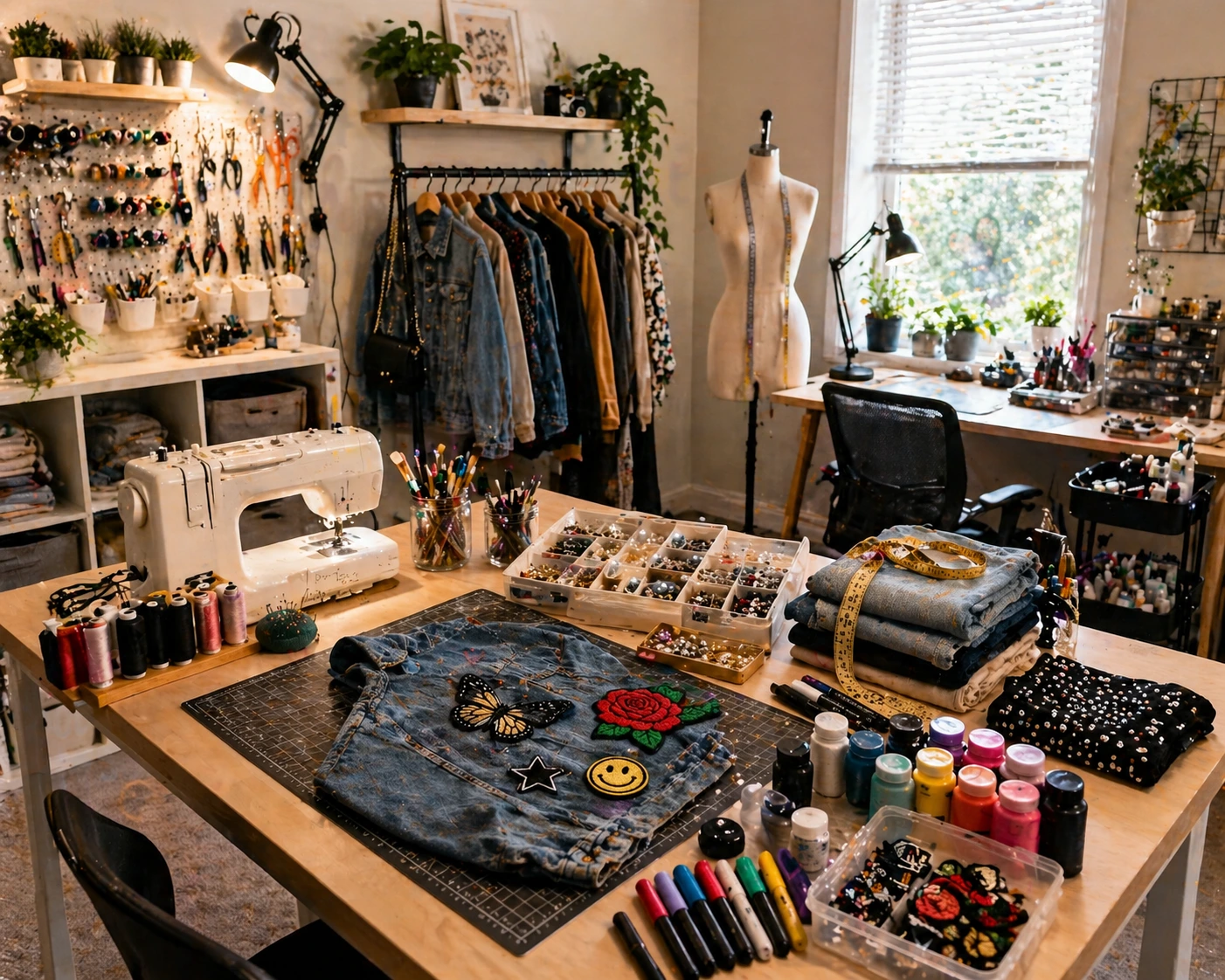
The DIY fashion industry has experienced significant growth in recent years as more people search for creative ways to personalize their wardrobes, reduce clothing waste, and even build small online businesses. Social media platforms have played a major role in this trend by showcasing custom denim jackets, hand-painted sneakers, embroidered hoodies, altered thrift-store finds, and countless other personalized fashion creations. For many beginners, clothing customization begins as a fun hobby but can quickly evolve into a serious creative pursuit.
One of the biggest obstacles new creators face is figuring out where they should actually work. Many assume they need an expensive studio, a large spare room, or professional equipment before they can start creating high-quality custom clothing. This belief often delays people from starting at all. The reality is far simpler. A productive clothing customization workspace can be created in a small apartment corner, a garage, a spare bedroom, a basement, or even a shared living space with proper organization.
What matters most is functionality. Your workspace should allow you to cut fabric comfortably, organize supplies efficiently, protect your materials, maintain safety, and stay inspired. A poorly designed setup can lead to lost materials, damaged projects, unnecessary stress, and inconsistent results. A well-planned home workspace, however, can dramatically improve both productivity and creativity.
Whether you want to customize clothing for personal use, sell handmade products online, or simply explore a new hobby, building the right workspace is an essential step toward long-term success.
Define your customization focus before building your workspace
Before purchasing furniture, storage bins, or equipment, it is important to understand the type of clothing customization you plan to do most often.
A person focused on sewing and garment alterations will need a very different setup than someone specializing in fabric painting or rhinestone application. Sewing projects may require space for sewing machines, ironing stations, measuring tools, cutting surfaces, and fabric storage. Fabric painters may prioritize drying racks, ventilation, and paint organization.
If you plan to work with embroidery, patches, vinyl printing, bleaching techniques, or distressing denim, your workspace needs will continue to vary.
Many beginners waste money buying equipment they rarely use because they copy social media studios that do not match their own creative goals. Defining your focus early allows you to create a practical setup based on your real needs rather than trends.
Your workspace should evolve around your workflow.
Choose the right location in your home
Not everyone has an extra room available for crafting. Fortunately, many successful creators begin with very limited space.
A spare bedroom offers privacy and flexibility but is not required. Dining rooms, garages, basements, office corners, and even bedroom workstations can function effectively when organized properly.
When choosing a location, consider noise levels if you use sewing machines or cutting equipment. If you live with family members or roommates, placing loud equipment in shared sleeping areas may create frustration.
You should also think about airflow, electrical outlets, natural lighting, and accessibility. Carrying heavy materials up multiple staircases regularly can become exhausting.
Choose a space that feels sustainable for your daily routine.
Invest in a reliable work surface
A dedicated work surface is one of the most important parts of any clothing customization setup.
Using your bed or couch may seem convenient initially, but these surfaces create unnecessary problems. Fabric can wrinkle easily, tools can get lost, and paint spills may permanently damage furniture.
A large desk, crafting table, adjustable workstation, or folding table can dramatically improve your workflow. Your work surface should be large enough for laying garments flat, cutting materials, organizing tools, and completing detailed projects comfortably.
Smooth surfaces are easier to clean after working with adhesives, paints, and dyes.
Some creators prefer standing desks or adjustable tables for cutting larger fabrics because standing often reduces back strain.
Even budget folding tables can work extremely well when space is limited.
Lighting can improve your results dramatically
Many beginners underestimate how much lighting impacts customization quality.
Poor lighting makes it difficult to notice stitching mistakes, paint inconsistencies, uneven patch placement, and fabric color variations.
Natural light is often ideal because it helps accurately display true colors. If natural light is limited, bright LED desk lamps can provide excellent visibility.
Task lighting becomes especially important for embroidery, sewing small details, and hand-painted designs.
Poor lighting can also cause eye fatigue during long creative sessions, reducing both comfort and productivity.
Good lighting often leads to cleaner, more professional-looking final products.
Organize tools for faster workflow
Clothing customization often involves a surprising number of tools.
Scissors, sewing needles, thread, measuring tapes, fabric markers, glue, patches, paints, cutting mats, rotary tools, and decorative accessories can quickly create clutter.
Without organization systems, creators waste time searching for materials instead of creating.
Clear plastic containers help identify supplies quickly. Drawer dividers work well for smaller tools. Wall-mounted pegboards can save desk space while keeping frequently used tools accessible.
Rolling storage carts are especially useful for small spaces because they can be moved when needed.
Organized workspaces reduce frustration and improve efficiency.
Build proper fabric storage systems
Fabric storage often becomes a major challenge as projects increase.
Leaving fabric piles exposed can lead to dust accumulation, wrinkles, fading, and accidental damage.
Shelving systems work well for folded materials. Plastic storage bins protect fabric from moisture and pets. Hanging organizers can help preserve delicate fabrics.
Sorting fabric by color, texture, or project type can make future projects much easier.
Proper storage protects your investment and reduces unnecessary fabric waste.
Create safe ventilation for chemicals
Many customization techniques involve chemicals that require proper airflow.
Fabric paints, adhesives, bleach sprays, dyes, and protective sealants may produce strong fumes.
Working in poorly ventilated areas can create headaches and discomfort over time.
Open windows improve airflow. Fans can help circulate air. For stronger chemicals, garage workspaces or outdoor setups may be safer.
Protective gloves and masks may also be helpful depending on the materials used.
Safety should never be ignored for convenience.
Set up a photography corner if selling products
Many creators eventually sell customized clothing online through platforms like Etsy, Shopify, or Depop.
If selling is part of your long-term plan, creating a small product photography space can be extremely valuable.
This does not require expensive cameras.
A clean wall, simple backdrop, ring light, and smartphone camera can produce strong product images.
Professional-looking photos help attract more customers.
Keep a separate finishing area
Finished garments should be protected from active work areas.
Fresh paint can smear. Decorative stones may fall off if placed in cluttered environments.
Creating a separate hanging rack, shelving area, or packaging station helps protect completed products.
This becomes especially important for business owners handling customer orders.
Make your space inspiring
A functional workspace should also feel motivating.
Mood boards, fashion magazines, artwork, plants, and inspirational color palettes can make your workspace feel more personal.
Creative environments often influence productivity.
When your workspace feels enjoyable, you are more likely to use it consistently.
Plan for future expansion
Your needs may change over time.
What begins as a small hobby may eventually require embroidery machines, heat presses, mannequins, inventory storage, and shipping stations.
Design your workspace with flexibility in mind.
Leave room for growth without overspending early.
Turning your home into a creative studio
A great clothing customization workspace is not defined by expensive furniture or massive square footage.
It is built through thoughtful planning, organization, safety, and creativity.
Even a small corner of your home can become a highly productive fashion studio when designed properly.
Start with basic essentials, improve your setup gradually, and focus on creating a space that supports both your creativity and long-term goals.
The right environment can transform casual experimentation into serious creative success.
