
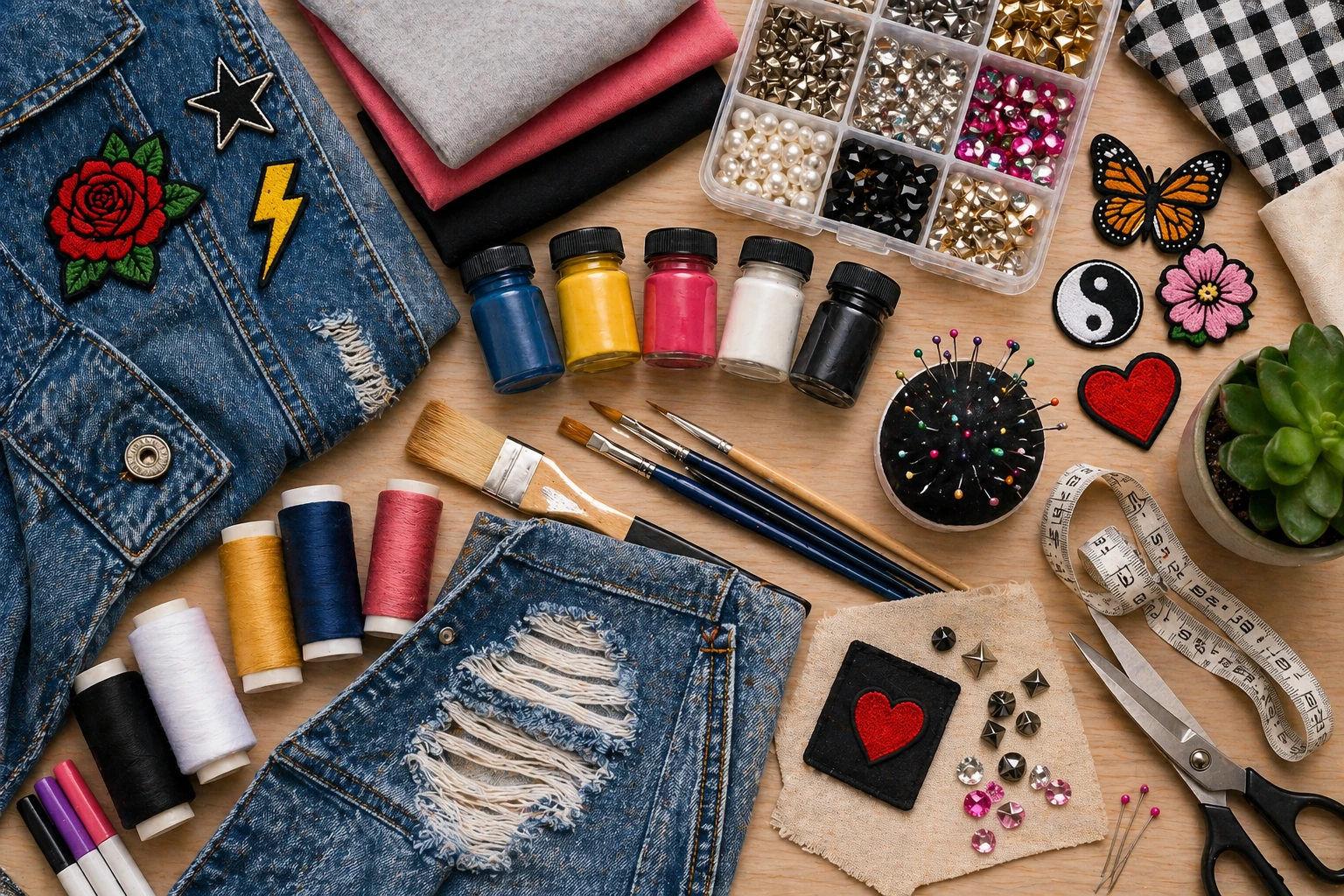
DIY fashion has become one of the most exciting ways for people to express creativity while saving money and reducing textile waste. From transforming thrifted denim jackets into statement pieces to customizing sneakers, hoodies, tote bags, and jeans, more beginners are entering the world of clothing personalization every year. Social media platforms have made the trend even more popular by showcasing impressive before-and-after transformations that make custom fashion look simple and effortless.
What many beginners do not see, however, are the mistakes that happen behind the scenes. A beautifully customized jacket posted online may have required several failed attempts before reaching the final result. One of the biggest reasons beginners become frustrated with DIY fashion is not a lack of creativity, but poor material decisions. Many projects fail because the wrong fabrics, adhesives, paints, tools, or embellishments were selected from the beginning.
Material mistakes can lead to peeling patches, cracked paint, damaged garments, wasted money, and hours of unnecessary frustration. Fortunately, most of these problems can be avoided with better planning and a stronger understanding of how materials behave.
Learning what not to do is often just as valuable as learning new techniques. By understanding the most common material mistakes beginners make, you can create stronger, longer-lasting custom clothing projects while avoiding expensive setbacks.
Choosing fabric based only on appearance
One of the most common mistakes beginners make is selecting fabric purely because it looks attractive.
A beginner may fall in love with a soft stretch fabric, delicate satin material, or lightweight decorative textile without considering whether it works well for customization techniques.
Some fabrics absorb paint poorly. Others may tear easily during distressing projects. Stretch fabrics can distort designs, while slippery materials may be extremely difficult to sew.
For example, someone attempting hand-painted artwork may choose polyester fabric without realizing that many paints perform better on cotton.
Similarly, beginners often attempt patchwork projects on fragile fabrics that cannot support heavy embellishments.
Fabric should always be selected based on both visual appeal and functional compatibility.
Buying low-quality fabric paint
Cheap fabric paint often seems attractive because of lower pricing, especially for beginners who do not want to invest heavily in supplies.
Unfortunately, low-quality paints frequently crack, fade, peel, or wash away quickly.
Some paints dry stiff and make garments uncomfortable to wear.
Others produce inconsistent color saturation that ruins detailed designs.
Investing in higher-quality fabric paint usually creates better long-term value because projects last longer and look more professional.
Testing paint on scrap fabric before applying it to finished garments can help identify performance issues.
Using the wrong adhesive
Many beginners assume any glue can work for fabric customization.
This often leads to major problems.
Standard craft glue may harden fabrics, create visible stains, or completely fail after washing.
Hot glue is sometimes used incorrectly on clothing projects and often lacks flexibility for wearable garments.
Fabric-specific adhesives are designed to remain flexible while handling movement and washing better than standard glues.
Even fabric glue should be tested before full application.
Choosing the wrong adhesive can permanently ruin clothing items.
Ignoring fabric care instructions
Many beginners become excited about customization and skip reading garment labels.
This mistake often leads to shrinkage, fading, or damaged materials.
A cotton shirt may shrink after customization if it was not pre-washed.
Certain fabrics require delicate washing conditions that may damage embellishments.
Heat-sensitive materials may be ruined during ironing or heat-transfer projects.
Understanding care instructions helps preserve your final work.
Custom designs should survive normal wear whenever possible.
Overloading garments with heavy embellishments
Rhinestones, chains, patches, pearls, and studs can create beautiful designs.
However, beginners often use too many heavy accessories on lightweight fabrics.
This can cause stretching, tearing, sagging, or discomfort.
A thin t-shirt may not support heavy metal accessories effectively.
Balanced design improves both appearance and functionality.
Choosing embellishments that match fabric strength creates better long-term durability.
Purchasing too many materials too early
Many beginners buy large quantities of supplies before learning what they actually enjoy creating.
They may purchase dozens of paint colors, expensive sewing equipment, large fabric collections, and specialty tools they rarely use.
This often creates clutter and wasted money.
Starting with basic materials allows beginners to experiment gradually.
As skills improve, purchasing decisions become more strategic.
A smaller collection of quality supplies often produces better results than large collections of unused materials.
Failing to test materials first
Skipping material testing is one of the most expensive beginner mistakes.
Paint colors may appear different on fabric.
Markers may bleed.
Adhesives may stain.
Heat transfers may peel.
Testing on scrap materials helps identify problems before ruining final garments.
Professional creators frequently test materials before large projects.
This simple habit can save significant frustration.
Using poor-quality thread
Cheap thread often breaks easily during sewing.
It may also create weak seams that fail after repeated wear.
Beginners sometimes focus heavily on fabric quality while ignoring thread quality.
Strong thread improves durability for patches, repairs, and garment alterations.
Thread should match project demands.
Heavy fabrics require stronger thread than lightweight garments.
Storing materials improperly
Poor storage habits can damage supplies over time.
Paints may dry out.
Fabric can collect dust.
Markers may lose ink.
Metal embellishments may rust in humid environments.
Proper storage extends material lifespan and protects your investment.
Organized storage also improves efficiency.
Rushing the creative process
Many beginners rush projects because they feel excited to see final results quickly.
They may skip drying times, ignore adhesive curing instructions, or rush sewing work.
This often leads to preventable mistakes.
Allowing proper drying, measuring carefully, and slowing down often creates significantly better results.
Patience is one of the most valuable skills in DIY fashion.
Learning from mistakes creates better projects
Every experienced fashion creator has made material mistakes.
Failed projects are part of learning.
The key difference is that experienced creators adapt quickly and improve their decision-making over time.
Understanding fabric behavior, testing materials, investing in quality supplies, and planning carefully can dramatically improve results.
DIY fashion should be fun, creative, and rewarding.
Avoiding these common material mistakes allows beginners to focus more on creativity and less on frustration.
With better material choices, your custom clothing projects can become more durable, professional, and enjoyable as your skills continue to grow.
