
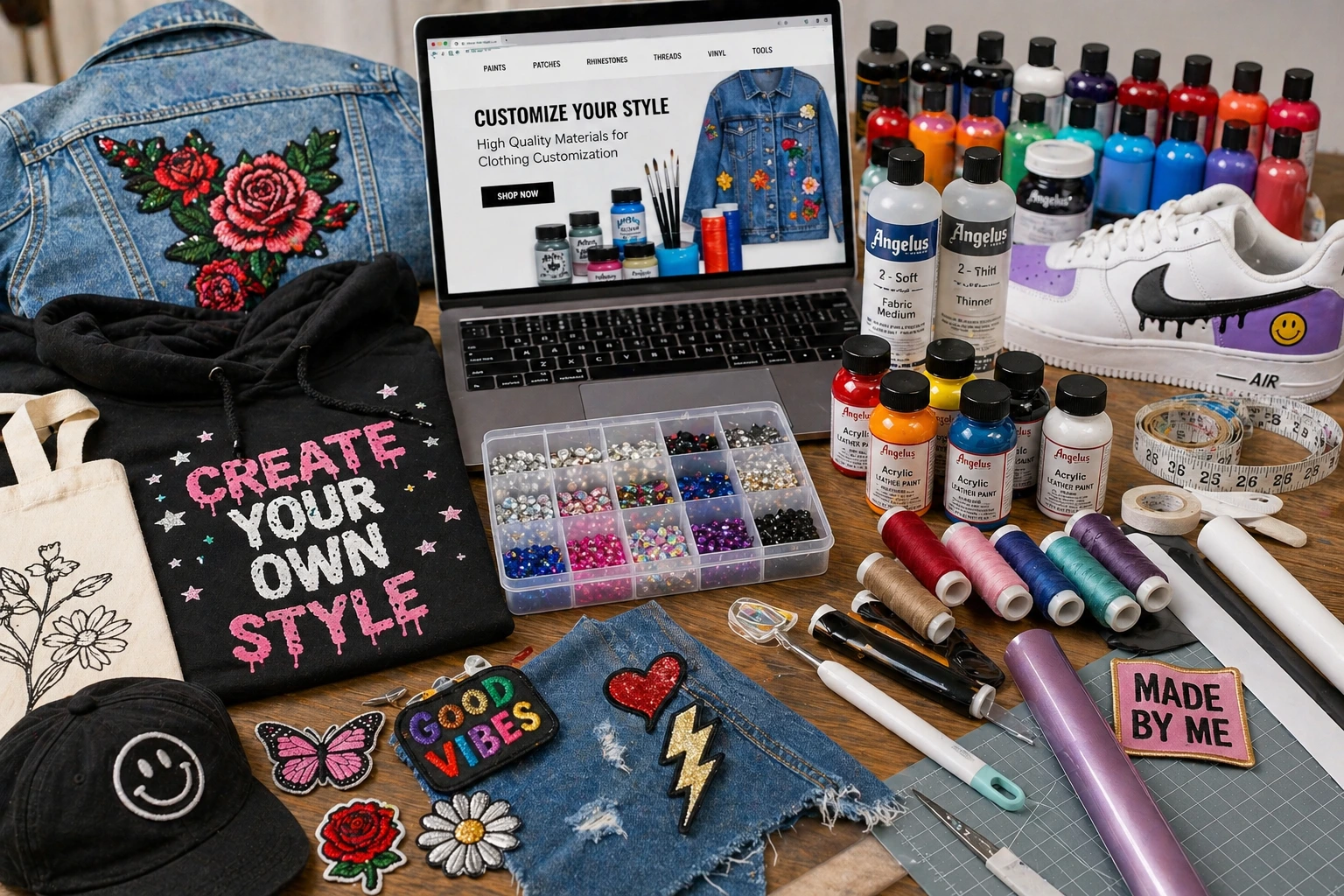
Clothing customization has evolved from a small creative hobby into a rapidly expanding business opportunity across Canada. More consumers are moving away from mass-produced fashion and looking for ways to create clothing that feels more personal, unique, and aligned with their own style. Some people customize clothing simply because they enjoy creative expression. Others are motivated by sustainability and want to transform thrifted clothing rather than constantly buying new products. A growing number of entrepreneurs are also building profitable side businesses by selling customized hoodies, painted denim jackets, personalized sneakers, embroidered hats, patched jeans, and handmade accessories through platforms such as Etsy, Depop, Facebook Marketplace, and independent e-commerce stores.
This growth has been heavily influenced by social media. Platforms such as TikTok, Instagram, Pinterest, and YouTube constantly expose users to customization tutorials that make the process appear simple and highly profitable. Viewers regularly see creators painting sneakers, redesigning thrifted jackets, applying rhinestones, printing custom graphics, and creating premium handmade products from inexpensive materials. While these videos often inspire beginners to start quickly, they rarely discuss one of the most important parts of long-term success: finding reliable online suppliers.
Many beginners assume buying materials online is easy because there are endless product listings available. The reality is far more complicated. Canadian buyers often face unique challenges compared to consumers in the United States. Many popular customization suppliers operate primarily in the U.S., which can create major issues related to shipping costs, currency conversion, customs fees, delivery delays, and limited product availability. Something that appears inexpensive at checkout can become significantly more expensive after international shipping charges are added.
For people building clothing businesses, poor sourcing decisions can destroy profit margins. For hobbyists, unreliable materials can ruin projects and create unnecessary frustration. Finding strong online suppliers is one of the most overlooked skills in clothing customization.
Why Material Suppliers Have a Bigger Impact Than Most Beginners Realize
Many beginners focus almost entirely on creative ideas while ignoring material sourcing strategy. This often creates long-term problems.
Low-quality suppliers may offer products that look impressive in photos but perform poorly in real-world use. Fabric paint may crack after washing. Rhinestones may fall off after minimal wear. Cheap heat transfer vinyl may peel. Weak blank hoodies may shrink or fade quickly.
These failures become expensive because creators must replace damaged products, issue refunds, or completely restart projects.
Reliable suppliers create consistency. Consistency is essential for both hobbyists and entrepreneurs because repeatable quality improves confidence and reduces wasted money.
Amazon
Amazon remains one of the most popular options for Canadian buyers because of convenience and inventory variety.
Creators frequently purchase fabric paints, sewing tools, cutting mats, heat transfer vinyl, storage systems, blank tote bags, rhinestones, fabric markers, embroidery tools, and beginner kits.
Prime shipping can be especially useful when businesses need urgent inventory replacements.
However, the biggest challenge with Amazon is inconsistent product quality. Many third-party sellers operate with varying standards.
Successful buyers spend time reviewing customer photos, ratings, and long-term durability feedback before purchasing.
Michaels
Michaels remains highly accessible for beginners across Canada.
Its online store offers paints, brushes, embroidery thread, beads, patches, vinyl tools, decorative accessories, and adhesives.
Frequent coupons help reduce costs significantly.
Many customers also appreciate local pickup options that eliminate shipping fees.
For beginners testing new customization styles, this flexibility is extremely valuable.
Fabricland
Fabricland remains one of Canada’s most important suppliers for fabric-focused creators.
Its online inventory includes fabrics, thread, zippers, elastic, sewing patterns, and garment construction materials.
This becomes especially valuable for creators in smaller communities that lack physical fabric stores.
Higher-quality fabrics often lead to better final products.
Etsy
Etsy helps creators find highly unique materials.
Vintage patches, custom labels, handmade accessories, rare fabrics, decorative buttons, and niche materials often help brands create stronger product differentiation.
These materials can be expensive, but they may help businesses charge premium prices.
eBay
eBay remains useful for discontinued products, vintage materials, and bulk purchasing opportunities.
Experienced buyers often find strong deals through patient searching.
Specialty Sneaker Supply Stores
Sneaker customizers often need specialized products such as Angelus paints, finishers, and preparation products.
These niche stores often provide stronger expertise than general marketplaces.
Wholesale Suppliers for Scaling Businesses
Many growing businesses eventually move toward wholesale suppliers.
This reduces per-unit costs.
However, buying too much inventory too early creates financial risk.
Businesses should scale gradually.
Shipping Costs Across Canada
Shipping is one of the biggest operational challenges in Canada because of geographic size. Someone ordering materials in Toronto may receive packages far faster than someone living in smaller rural communities or remote provinces. These differences can significantly affect production schedules for people running customization businesses.
Many creators make the mistake of placing frequent small orders because they want to avoid large purchases. This often creates higher cumulative shipping expenses over time. Strategic buyers typically consolidate orders when possible, wait until they reach free shipping thresholds, and forecast future inventory needs more carefully. Businesses that regularly ignore shipping costs often believe they are profitable while slowly losing margin through repeated delivery charges.
Cross-border ordering introduces additional complications. Customs fees can surprise Canadian buyers who assume the listed product price represents their final cost. Currency fluctuations can also increase expenses when buying from U.S.-based suppliers. Experienced creators build these costs into their budgets before making large purchases.
Buying Blank Apparel Online
Many customization businesses depend on blank products such as hoodies, t-shirts, tote bags, hats, denim jackets, and sweatpants. The quality of these blank products directly impacts customer satisfaction.
Cheap blank apparel may appear profitable because of low upfront costs, but poor stitching, weak fabric, shrinking, fading, and inconsistent sizing can quickly damage a brand’s reputation. Customers buying customized clothing expect products that feel premium.
Many successful sellers spend significant time testing blank apparel suppliers before committing to large purchases. They wash products multiple times, evaluate stitching durability, and study customer feedback before scaling inventory.
Why Following Social Media Trends Can Be Expensive
Social media often creates unhealthy purchasing habits. New tools, decorative accessories, and viral customization products appear constantly.
Many beginners buy trendy products because influencers make them look essential. Weeks later, those tools often sit unused.
This behavior creates clutter and weakens cash flow.
Successful creators usually focus on reliable core materials rather than constantly chasing temporary trends.
Building Long-Term Supplier Relationships
One of the biggest differences between hobbyists and serious businesses is supplier consistency.
Reliable suppliers help businesses maintain predictable quality standards. This improves efficiency because creators know exactly what to expect from their materials.
Some businesses eventually negotiate better pricing through repeat purchases.
Others gain early access to new inventory.
Long-term supplier relationships often become a major competitive advantage.
Final Thoughts
The best online stores for clothing customization materials in Canada depend on your business model, budget, and creative goals. Beginners may prioritize affordability and convenience, while advanced creators often prioritize consistency and scalability.
The most successful clothing customizers understand that great products begin long before the design process starts. They begin with smart sourcing decisions that protect both creativity and profitability over the long term.
