
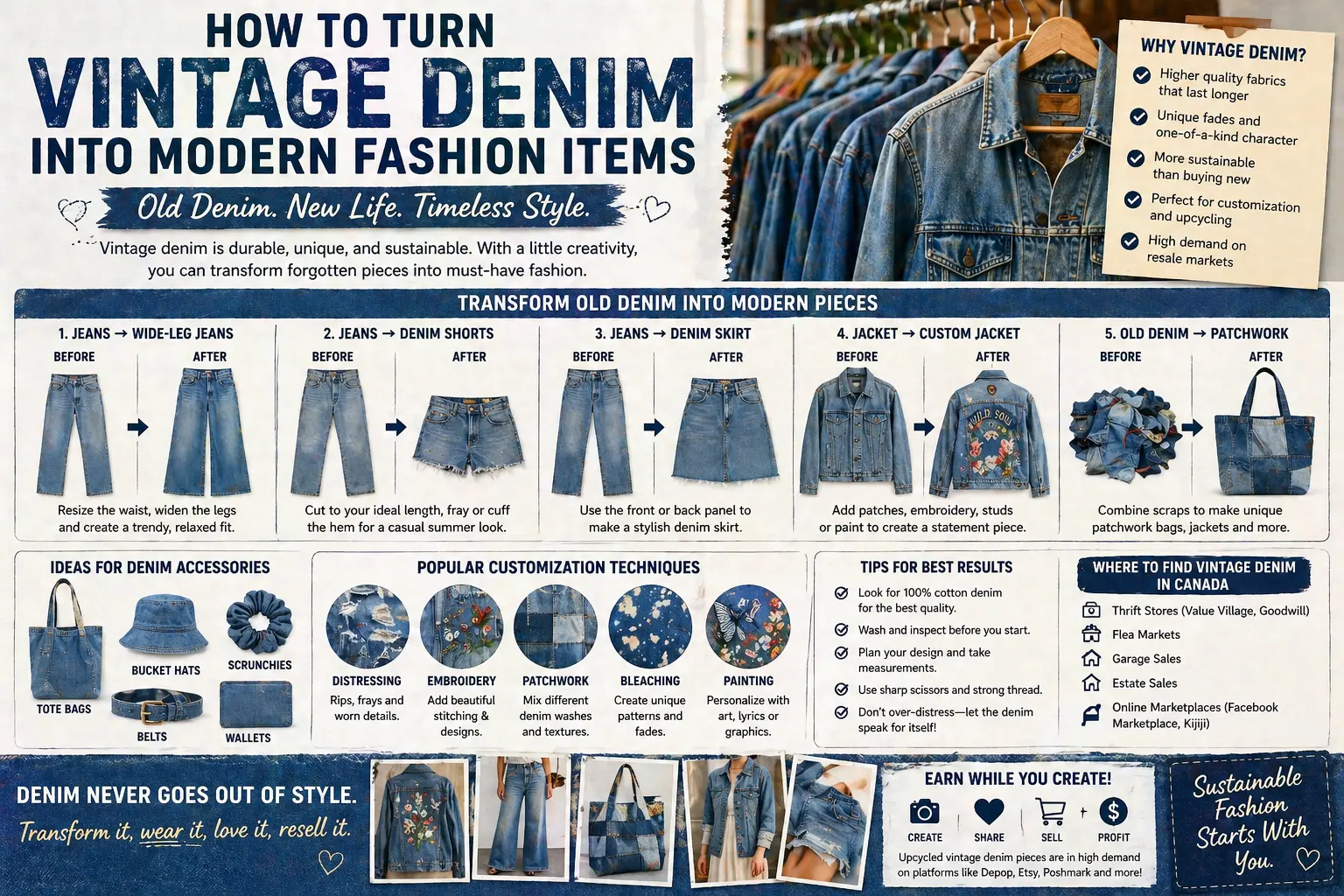
Vintage denim has become one of the most valuable categories in modern fashion, yet many consumers still misunderstand its true potential. Across Canada, thousands of vintage denim pieces sit inside thrift stores, estate sales, garage sales, flea markets, warehouse liquidation stores, and family closets waiting to be rediscovered. Many people see oversized denim jackets, outdated jeans, old denim skirts, overalls, and workwear pieces and immediately assume they belong to another generation. They often believe these garments are too old, too rigid, too faded, or too outdated to fit current fashion trends. That assumption has created a major opportunity for fashion resellers, clothing flippers, independent designers, and sustainability-focused consumers who understand how valuable vintage denim can be when approached correctly.
One of the main reasons vintage denim continues gaining popularity is because many older denim garments were built with significantly higher-quality materials than modern fast-fashion alternatives. Older products from brands such as Levi’s, Wrangler, Lee, and vintage workwear brands often feature heavier cotton fabrics, stronger stitching, more durable hardware, and natural fading patterns that modern brands often try to artificially recreate. Consumers are increasingly willing to pay premium prices for authenticity, especially when those garments feel unique and impossible to replicate through mass production.
The rise of resale platforms such as Depop, Etsy, and Poshmark has accelerated demand for vintage denim transformations. Social media platforms like TikTok, Instagram, and Pinterest have also exposed consumers to dramatic before-and-after denim transformations that inspire more people to experiment with upcycling. However, many short-form videos oversimplify the process and fail to explain how to protect value, avoid costly mistakes, and make strategic design decisions.
The biggest mistake beginners make is assuming every vintage denim item should immediately be cut, distressed, or painted. Some vintage denim pieces may already carry significant resale value in their original condition. Others require only minor upgrades to become highly desirable. The most successful denim transformations preserve the unique characteristics that make vintage denim special while adapting those pieces to modern consumer preferences.
Why Vintage Denim Is Often Better Than Modern Denim
Modern fast-fashion brands frequently prioritize lower production costs, trend speed, and mass distribution. This often results in thinner denim fabrics, weaker stitching, lower-quality hardware, and shorter product lifespans. Vintage denim was often built differently. Many older jeans and jackets were designed for work environments, long-term use, and repeated washing.
This is particularly true for older workwear denim. Farmers, factory workers, mechanics, and labor-intensive industries relied on denim that could survive heavy wear. These garments often developed authentic fading patterns that modern brands attempt to imitate through artificial distressing processes.
Vintage denim also ages differently. Natural wear creates personalized fading, whiskering patterns, and texture changes that make each piece unique. This individuality has become increasingly attractive in a world dominated by mass-produced clothing.
How to Identify Valuable Vintage Denim Before Altering It
Before making any permanent changes, it is critical to determine whether the garment may already have significant value.
Certain vintage Levi’s collections can attract collectors willing to pay premium prices. Older Wrangler western pieces may also carry value. Selvedge denim, rare tags, discontinued washes, and original manufacturing details can significantly increase resale potential.
Many beginners make irreversible mistakes by cutting rare jeans into shorts or aggressively distressing collectible jackets.
Research product tags, model numbers, manufacturing dates, and resale market demand before making modifications.
Sometimes the smartest decision is leaving the item untouched.
Transforming Vintage Jeans Into Modern Fits
One of the biggest reasons people ignore vintage jeans is outdated fit. Older cuts may feel too loose, too narrow, too high-waisted, or too rigid compared to current preferences.
However, modern fashion trends have made many previously undesirable fits popular again. Wide-leg jeans, relaxed denim, straight-leg fits, and high-waisted silhouettes are all trending.
Many oversized vintage jeans require only minor tailoring to become highly desirable.
Hem adjustments often modernize proportions.
Waist tailoring can improve wearability.
The goal should be preserving vintage character while improving practicality.
Turning Vintage Jeans Into Shorts
Converting jeans into shorts remains one of the most common denim transformations, but many people do this poorly.
Cutting too high often creates awkward proportions.
Uneven hems create amateur-looking results.
Testing lengths while wearing the garment helps create better outcomes.
Frayed hems may create casual aesthetics, while clean hems create polished looks.
Vintage denim shorts often perform well during spring and summer resale seasons.
Reinventing Vintage Denim Jackets
Vintage denim jackets offer some of the highest customization potential because they provide larger design surfaces.
Back panels can be painted.
Embroidery can create premium aesthetics.
Patchwork can cover damage.
Hardware upgrades can modernize appearance.
Distressing can create streetwear appeal.
However, restraint matters. Over-customization can destroy versatility.
Creating Denim Skirts
Y2K fashion trends have revived denim skirts.
Old jeans can be reconstructed into skirts using strategic sewing techniques.
Long denim skirts have also returned to mainstream fashion.
These products perform well among younger buyers.
Patchwork Denim Trends
Patchwork has become one of the strongest trends in sustainable fashion.
Multiple damaged denim pieces can be combined into entirely new garments.
Patchwork jackets, jeans, bags, and accessories often command premium pricing because they feel highly original.
This approach also reduces textile waste.
Recoloring Vintage Denim
Sometimes denim feels outdated because of wash color rather than structure.
Overdye techniques can modernize older denim.
Black, charcoal, dark indigo, and neutral washes often attract wider audiences.
Bleach effects can create modern streetwear looks.
Creating Accessories From Damaged Denim
Not every denim item remains wearable.
Heavily damaged pieces can become bags, hats, aprons, wallets, and home products.
This ensures fabric continues serving useful purposes.
Selling Modernized Vintage Denim
Depop remains strong for younger fashion buyers.
Etsy works well for handmade denim products.
Strong photography significantly impacts conversion rates.
Common Mistakes Beginners Make
Many people over-distress denim.
Others destroy collectible pieces.
Some ignore current market demand.
Patience creates better results.
Sustainability Benefits
Denim production requires enormous water consumption and raw materials.
Reusing vintage denim reduces environmental pressure.
It extends product lifespans.
This aligns with sustainability trends across Canada.
Final Thoughts
Vintage denim offers some of the best opportunities in modern fashion because it combines durability, individuality, history, and strong resale potential.
The most successful creators understand how to preserve authenticity while adapting older garments for modern consumers.
That balance creates products that feel both timeless and highly profitable.
