
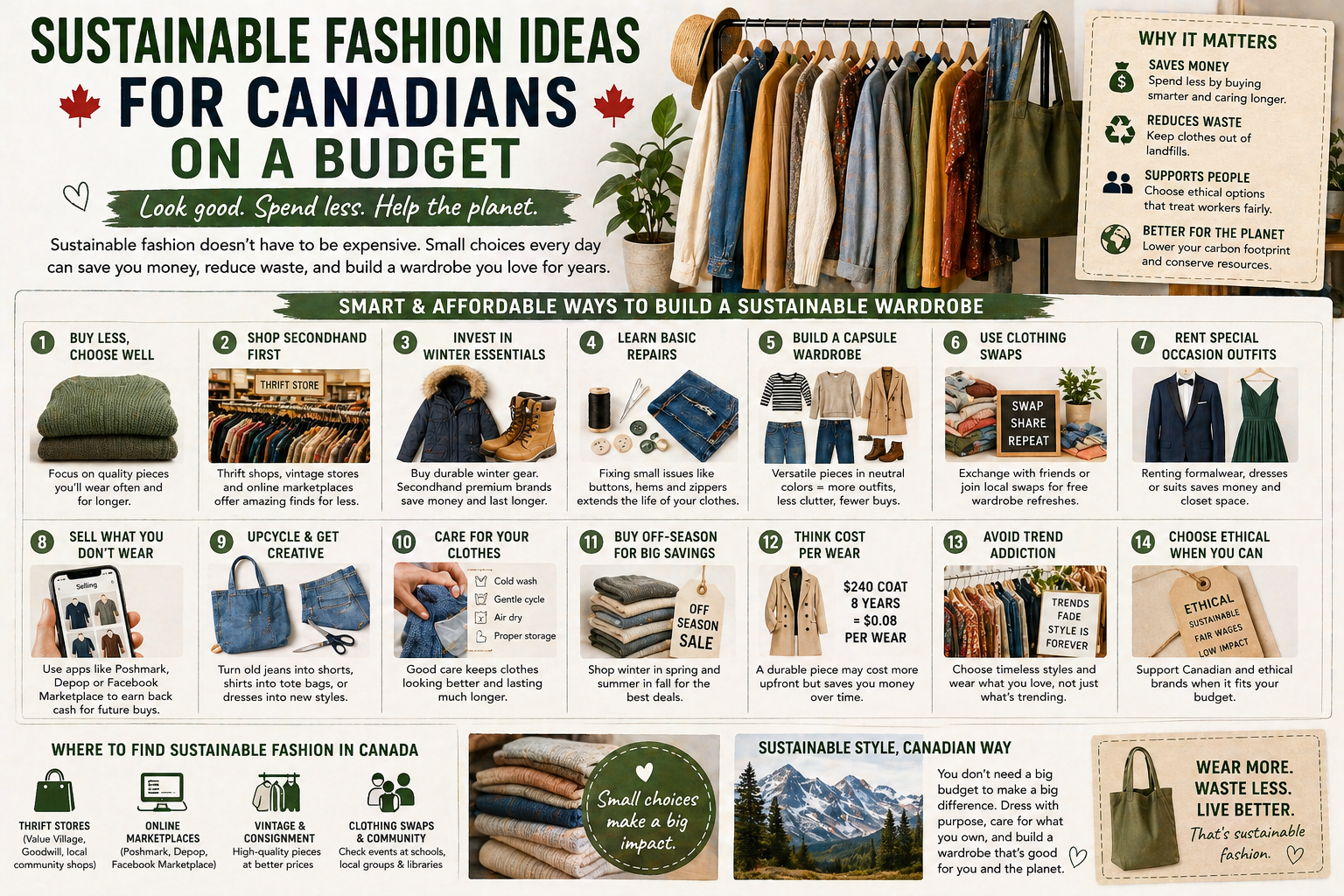
Sustainable fashion is often marketed in a way that unintentionally excludes the very people who could benefit from it most. Across Canada, consumers are frequently exposed to polished campaigns promoting eco-conscious clothing through luxury basics, organic fabrics, ethically sourced designer collections, and minimalist wardrobes curated by influencers who appear to have unlimited budgets. While some of these brands genuinely prioritize ethical labor practices and environmentally responsible production methods, the price tags attached to these products often make sustainable fashion feel unrealistic for students, young families, young professionals, and middle-income households already dealing with financial pressure. Many consumers assume that if they cannot afford expensive “ethical fashion” brands, they have no meaningful way to participate in sustainability.
That belief is inaccurate and often discourages people from making practical changes that could significantly reduce both waste and personal spending. In reality, sustainable fashion is frequently less about buying premium eco-labeled products and more about changing consumption habits. Buying fewer unnecessary items, extending the lifespan of clothing, shopping secondhand, repairing damaged garments, renting formalwear, reselling unused items, and resisting trend-driven shopping habits are often far more effective than purchasing expensive “green” alternatives. Many of these habits actually save money, which makes sustainable fashion especially valuable for budget-conscious Canadians.
This topic has become even more relevant as the cost of living continues rising across Canada. Housing costs in major cities such as Toronto and Vancouver remain high, grocery costs continue increasing, fuel prices fluctuate, and many households are more cautious with discretionary spending. Clothing often becomes an area where consumers try to cut costs, which frequently pushes them toward low-priced fast-fashion retailers. While these products appear affordable initially, they often wear out quickly, lose shape after repeated washing, and create a constant cycle of replacement spending that becomes expensive over time.
The environmental consequences are also significant. The global fashion industry remains one of the largest contributors to water waste, carbon emissions, textile pollution, and landfill growth. Millions of garments are discarded every year because they no longer feel trendy, require minor repairs, or were purchased impulsively and rarely worn. Many consumers feel frustrated by this cycle but believe sustainable fashion requires expensive sacrifices.
Canada presents unique challenges because sustainability must also be practical in extreme climates. Consumers in places like Calgary, Ottawa, Winnipeg, and Montreal often need winter coats, boots, thermal clothing, waterproof outerwear, and layered seasonal wardrobes. These are legitimate needs that can become expensive if approached poorly. However, Canada also offers strong secondhand shopping opportunities, active resale platforms, and growing interest in clothing repair and upcycling.
Platforms such as Poshmark, Depop, Facebook Marketplace, and Etsy have made secondhand shopping more accessible. Social media platforms such as TikTok, Pinterest, and Instagram have normalized thrift flips, outfit repeating, wardrobe challenges, and clothing repair tutorials.
The most sustainable wardrobe is rarely the most expensive one. It is often the wardrobe built through patience, discipline, and smarter purchasing decisions.
Stop Buying Clothes Out of Boredom
Many people underestimate how often emotional shopping drives unnecessary purchases. Stress, boredom, social media influence, and sales promotions encourage people to buy clothing they do not actually need. Fast fashion companies understand this behavior and constantly create urgency through limited-time discounts and trend cycles.
A low-cost purchase may feel harmless in isolation, but repeated impulse purchases create major annual expenses. Many consumers own dozens of low-quality items they rarely wear.
Creating personal rules can reduce this behavior. Some consumers implement 30-day waiting periods for non-essential purchases. Others create shopping lists and only buy items that solve specific wardrobe gaps.
These habits reduce waste and protect budgets.
Master Secondhand Shopping
Thrift shopping remains one of the most powerful tools for affordable sustainability.
Value Village and Goodwill Industries are common options, but local independent stores often provide better pricing.
Thrift shopping allows consumers to access better materials such as wool, leather, and premium denim at significantly lower prices.
This becomes especially valuable for winter clothing.
Buy Winter Clothing Strategically
Winter clothing is one of the largest clothing expenses in Canada.
Cheap winter boots often fail quickly.
Low-quality coats lose insulation.
Buying secondhand premium products from brands such as Canada Goose, Patagonia, Columbia, and The North Face can create major savings.
Durability matters more than trends.
Learn Basic Clothing Repairs
Many garments are thrown away because of minor issues.
Missing buttons
Loose hems
Small tears
Broken zippers
These problems are often inexpensive to fix.
Repair skills dramatically extend clothing lifespan.
Build a Functional Capsule Wardrobe
Many people overspend because they own too many pieces that only work in specific situations.
Capsule wardrobes prioritize versatility.
Neutral colors improve outfit flexibility.
Fewer items can create more combinations.
Rent Formalwear
Weddings, galas, and graduations often create wasteful purchases.
Renting formalwear prevents one-time spending.
This reduces clutter.
Sell Unused Clothing
Unused clothing can become future shopping budgets.
Poshmark and Depop help consumers recover money.
Learn Basic Upcycling
Old jeans can become shorts.
Shirts can become bags.
Dresses can be redesigned.
Creativity extends product life.
Wash Clothing Correctly
Improper washing destroys clothing faster.
Cold washing, air drying, and proper storage matter.
Buy Off-Season
Winter clothing purchased in spring often costs less.
Summer items purchased in fall may also be discounted.
Timing matters.
Think About Cost Per Wear
A $300 coat worn for eight years may be cheaper than replacing multiple cheap jackets.
Long-term thinking creates smarter wardrobes.
Final Thoughts
Sustainable fashion for Canadians on a budget is not about perfection or expensive branding. It is about making smarter decisions that protect both your finances and the environment.
Buying less, repairing more, shopping secondhand, and resisting trend pressure can dramatically improve long-term financial health while reducing waste.
Sustainability becomes much more achievable when consumers realize that many of the smartest environmental decisions are also the cheapest ones.
