
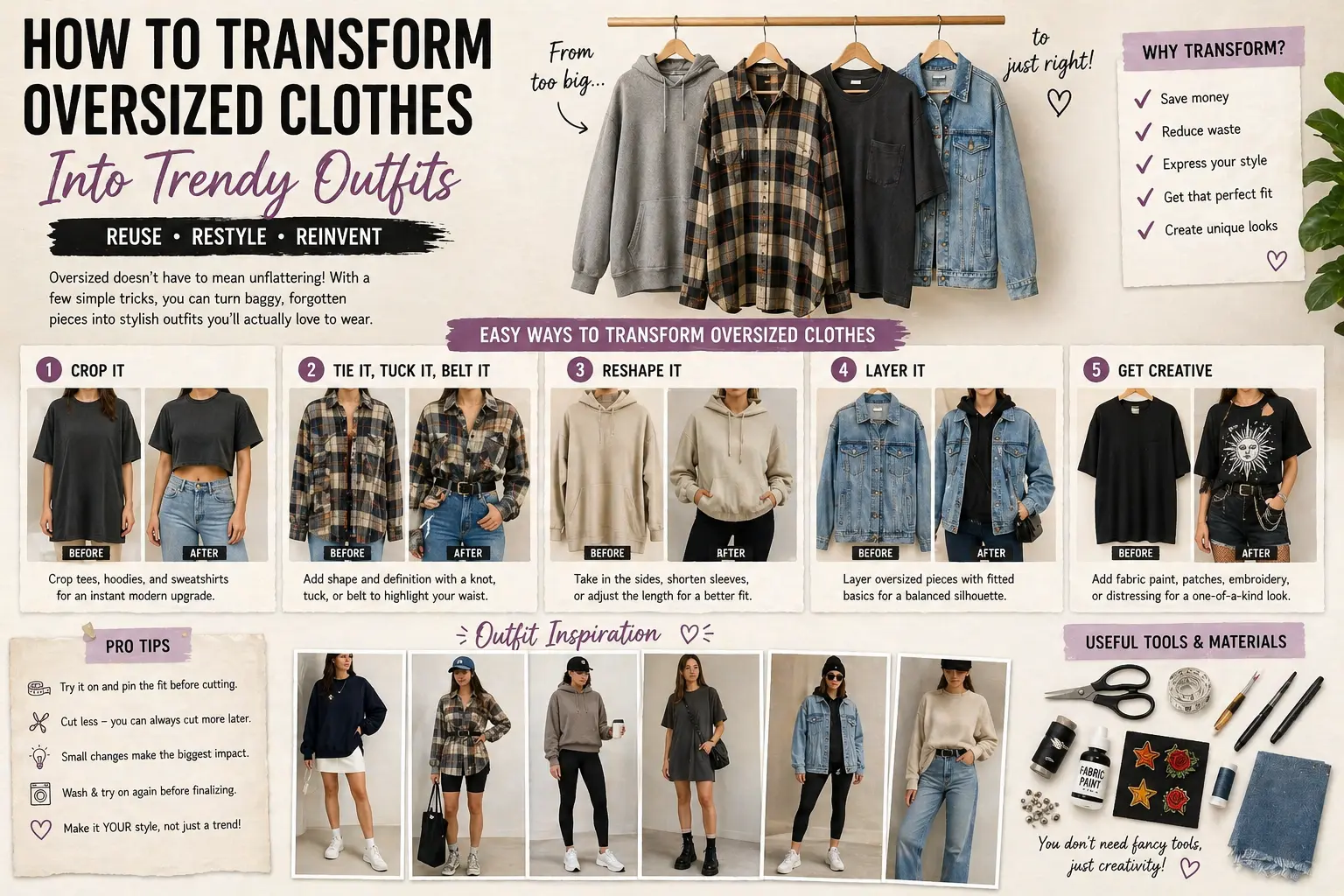
Oversized clothing has become one of the most interesting contradictions in modern fashion. On one side, intentionally oversized garments dominate global streetwear trends and appear regularly in collections from luxury brands and independent designers. On the other side, millions of people have closets filled with oversized clothes they never wear because those pieces feel accidental rather than stylish. Many garments become oversized because of weight loss, poor online shopping decisions, hand-me-downs, thrift store purchases, or outdated fashion trends. Instead of looking effortlessly fashionable, these items often feel shapeless, unflattering, or disconnected from someone’s current personal style.
Across Canada, consumers are increasingly looking for ways to reuse oversized clothing rather than discard it. Rising clothing costs, growing sustainability concerns, and the influence of DIY fashion content on platforms such as TikTok, Pinterest, and Instagram have encouraged people to rethink what they already own. Instead of viewing oversized garments as mistakes, many fashion-conscious consumers now see them as opportunities for customization.
The reason oversized clothing works so well for transformation projects is simple: extra fabric creates flexibility. A shirt that feels too wide can be cropped. A hoodie that looks too long can be reshaped. A dress that lacks structure can be modernized with styling adjustments. Loose jeans can become trendy wide-leg silhouettes or be redesigned entirely. The possibilities are far greater than most people realize.
This guide explores how to transform oversized clothing into stylish, wearable outfits without wasting money on replacements. Whether you want subtle improvements or complete fashion reinventions, learning how to work with oversized garments can dramatically improve your wardrobe while reducing unnecessary spending.
Why Oversized Clothing Has Become So Common
The rise of online shopping has played a major role in the growing number of oversized garments sitting unused in closets. Many people purchase clothing without trying it on, relying on inconsistent sizing charts that vary between brands. A medium-sized hoodie from one retailer may fit like an extra-large from another. This inconsistency leads to frequent sizing mistakes.
Weight fluctuations also contribute to oversized wardrobes. Many people experience body changes over time, leaving them with clothing that no longer fits the way it once did. Instead of immediately replacing these items, customization offers an affordable alternative.
Thrift shopping has also become increasingly popular across Canada, particularly among younger consumers interested in sustainability. Thrift stores often carry oversized vintage pieces that may have excellent quality but require modernization.
In many cases, oversized garments are not low-quality items. They simply need better proportions.
Understanding the Difference Between Stylish Oversized Fashion and Poor Fit
One of the biggest mistakes people make is assuming that all oversized clothing looks fashionable simply because oversized styles are trending. Intentional oversized fashion still relies on balance, proportion, and structure.
Fashion brands carefully design oversized silhouettes by adjusting shoulder placement, sleeve length, fabric drape, and garment proportions. Randomly wearing clothing that is simply too large often creates very different results.
A shirt that is oversized in the shoulders, sleeves, and torso may feel sloppy rather than stylish. Pants that sag excessively may lose their shape. Dresses that hang without structure may feel outdated.
Successful transformations focus on improving proportion while maintaining comfort.
Cropping Oversized Shirts and Hoodies
Cropping remains one of the easiest ways to modernize oversized clothing. Many old t-shirts, sweatshirts, and hoodies become more wearable when excess length is removed.
The biggest mistake beginners make is cutting too much fabric too quickly. Once material is removed, it cannot be reversed.
Trying the garment on and marking potential lengths helps create better proportions. Some people prefer shorter cropped styles, while others prefer more conservative cuts.
Raw hems can work well for casual streetwear aesthetics, especially with cotton garments. More polished looks may require fabric adhesive hemming or professional tailoring support.
Oversized hoodies can also be cropped while preserving their relaxed upper silhouette, creating trendy proportions that remain comfortable.
Turning Oversized T-Shirts Into Dresses or Two-Piece Looks
Extremely oversized shirts often offer opportunities beyond simple cropping. Longer shirts can become casual dresses when styled correctly.
Adding belts creates waist definition without permanently altering the garment. Layering oversized shirts with biker shorts has become especially popular through TikTok trends.
Some oversized shirts can also be converted into matching two-piece sets by separating top and bottom sections and using fabric creatively.
Even simple knotting techniques can dramatically change how oversized shirts fit.
Reshaping Oversized Denim
Oversized denim presents unique opportunities because denim remains highly durable and versatile. Loose jeans can be transformed into wide-leg fashion pieces, distressed shorts, skirts, or layered patchwork designs.
Some oversized jeans may simply need better styling through belts, rolled hems, or layered tops. Others may require more dramatic redesigns.
Vintage oversized denim jackets remain especially valuable because they provide large surfaces for painting, patch applications, embroidery, and distressing.
Rather than discarding oversized denim, many consumers actively search for it.
Using Belts and Accessories for Instant Transformation
Not every transformation requires permanent changes.
Belts remain one of the most effective tools for reshaping oversized clothing instantly. Oversized blazers, dresses, coats, and long shirts can all benefit from strategic waist definition.
Chains, layered jewelry, scarves, and bags can also help create stronger outfit structure.
Accessories often solve styling problems that people mistakenly try to fix through permanent alterations.
This approach works particularly well for expensive garments where preserving resale value matters.
Layering Oversized Pieces Properly
Layering allows oversized clothing to feel intentional.
An oversized flannel over fitted basics can create balance. Large hoodies paired with structured outerwear often feel more polished. Oversized sweaters can work well with fitted bottoms.
The key is contrast. When every garment in an outfit lacks structure, the final result often feels messy.
Successful layering creates visual balance.
Fabric Dye and Painting Transformations
Some oversized clothing feels outdated because of color rather than fit. Old shirts with faded colors can be revitalized through fabric dye.
Tie-dye, neutral overdye techniques, and fabric painting can completely change how garments feel.
Minimalist painted details often modernize basic pieces without overwhelming them.
This approach works especially well for blank oversized hoodies and shirts.
Converting Oversized Dresses
Oversized dresses often appear outdated because of shapeless cuts.
Adding belts, cutting hems, adjusting sleeves, or layering jackets can completely modernize them.
Some dresses can be converted into skirts when paired creatively with sweaters or cropped tops.
This versatility makes oversized dresses highly underrated.
Turning Oversized Menswear Into Women’s Fashion Trends
Oversized menswear has become increasingly popular in women’s fashion. Large blazers, button-down shirts, hoodies, and denim jackets often provide premium materials and unique silhouettes.
Many consumers actively shop in men’s sections for oversized styling opportunities.
This trend continues growing across Canada.
Selling Transformed Oversized Clothing
Many entrepreneurs have built successful businesses by transforming oversized thrift clothing into modern fashion pieces.
Platforms such as Etsy help creators reach buyers looking for unique handmade products.
Social media platforms provide strong marketing opportunities.
Customized oversized clothing often performs well because each piece feels unique.
Common Mistakes to Avoid
One of the biggest mistakes is following trends that do not match personal style.
Another major issue is over-cutting garments.
Poor planning often ruins otherwise valuable clothing.
Rushing customization usually creates regret.
Subtle improvements often create stronger long-term results than dramatic transformations.
Sustainability Benefits
Transforming oversized clothing reduces waste significantly.
Millions of garments are discarded each year simply because of poor fit.
Customization extends garment lifespan while reducing unnecessary purchases.
This aligns with growing sustainable fashion values.
Final Thoughts
Oversized clothing should not automatically be viewed as wasted wardrobe space. In many cases, these garments offer some of the best opportunities for creative reinvention.
With thoughtful styling, strategic alterations, and realistic planning, oversized clothing can become some of the most fashionable pieces in your wardrobe.
For many people across Canada, transforming oversized garments represents a smarter approach to fashion—one that values creativity, sustainability, and individuality over constant consumption.
