
Winter clothing in Canada is not just about fashion. It is primarily about survival, comfort, and practicality. Temperatures in many regions can drop far below freezing, and clothing must provide insulation, durability, and protection against wind, snow, and moisture. Because of this, many people assume that winter garments cannot be customized without compromising their functionality. There is a common belief that modifying jackets, coats, or thermal clothing will reduce their ability to retain heat or resist harsh weather conditions.
However, that assumption is not entirely accurate. With the right approach, winter clothing can be customized in ways that preserve its performance while adding personality and style. In fact, customizing winter garments has become increasingly popular, especially among individuals who want to stand out during colder months when most people rely on similar neutral-colored coats and repetitive seasonal fashion trends. Instead of purchasing expensive new winter outfits every year, many Canadians are choosing to upgrade and personalize what they already own.
Customizing winter clothing requires a different mindset compared to working with lightweight fabrics like t-shirts or denim. Every modification must be intentional. Materials must be chosen carefully, and techniques should avoid damaging insulation layers or waterproof coatings. This guide explores how to safely and effectively customize winter clothing at home while maintaining warmth, comfort, and durability.
Understanding the Structure of Winter Clothing
Before making any modifications, it is important to understand how winter garments are constructed. Most winter jackets and coats contain multiple layers designed to trap heat while protecting against external conditions. The outer layer is often made from materials that resist wind and moisture. Beneath that, insulation layers—such as synthetic fibers or down—help retain body heat. The inner lining provides comfort and sometimes moisture-wicking properties.
Customizing winter clothing without understanding this structure can lead to problems. For example, puncturing waterproof outer layers may allow water to penetrate the garment. Damaging insulation layers can reduce warmth. This is why certain customization methods, such as heavy cutting or deep stitching, should be approached carefully or avoided entirely.
Instead of thinking about winter customization as altering structure, it is more effective to focus on surface-level modifications and removable enhancements that do not interfere with the garment’s core function.
Choosing the Right Winter Garments to Customize
Not all winter clothing is equally suitable for customization. Heavily technical jackets designed for extreme outdoor activities may be more difficult to modify safely. On the other hand, everyday winter coats, hoodies, and casual jackets often provide more flexibility.
Wool coats, denim jackets with lining, and heavy cotton hoodies are among the easiest options. These materials allow for decorative additions without significantly affecting performance. Puffer jackets, while popular, require more caution because their insulation can be unevenly distributed if punctured.
Many Canadians begin by customizing older winter garments that they already own. This approach reduces risk because there is less pressure to preserve a brand-new item. Thrift stores across Canada are also excellent places to find affordable winter pieces that can be transformed into something unique.
Adding Patches Without Damaging Insulation
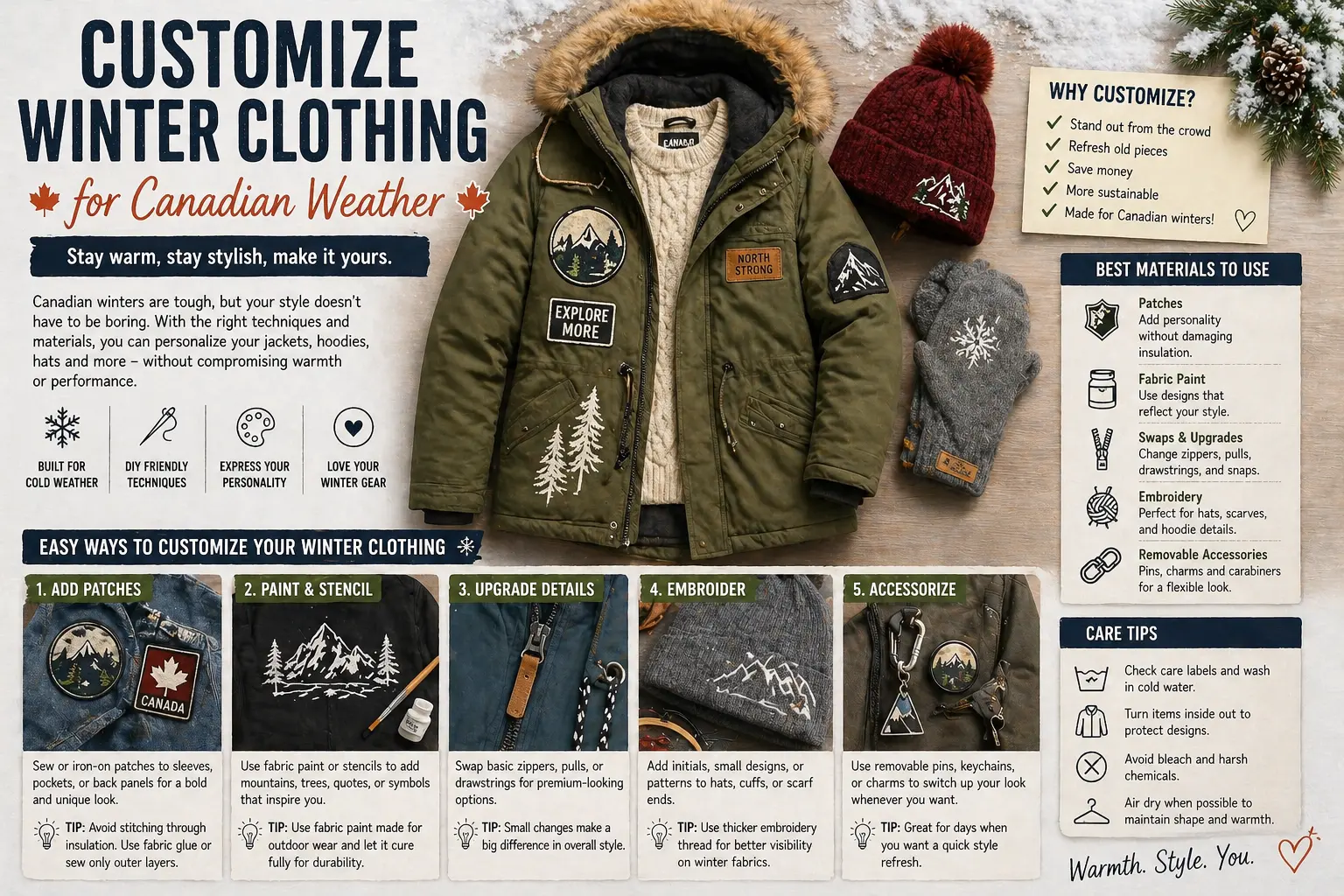
Patches remain one of the safest ways to customize winter clothing, especially when applied correctly. Instead of sewing directly through thick insulated layers, many people use high-quality adhesive patches or carefully stitch only through outer layers when possible.
Placement matters significantly. Areas such as sleeves, pockets, and outer chest panels are often safer because they involve fewer internal layers compared to heavily insulated sections. Large back patches can also work well on certain coats, but they should be applied cautiously.
Patches allow for personal expression without altering the structure of the garment. They can represent hobbies, travel experiences, artistic interests, or simple aesthetic preferences. Many individuals purchase unique patches through platforms like Etsy or find affordable options at stores such as Michaels.
Using Fabric Paint on Winter Garments
Fabric painting can also be applied to winter clothing, but it requires careful material selection. Not all winter fabrics absorb paint in the same way as cotton or denim. Some outer layers may resist paint or cause uneven results.
Before painting directly onto a jacket or coat, testing on a small hidden area is essential. This helps determine how the fabric reacts and whether the paint adheres properly. Using paints specifically designed for fabric ensures better durability.
Minimalist designs often work best for winter garments. Subtle patterns, small logos, or simple artwork can enhance appearance without overwhelming the piece. Large, heavy paint applications should be avoided because they can stiffen fabric and reduce comfort.
Customizing Accessories Instead of Core Layers
One of the smartest approaches to winter customization is focusing on accessories rather than the main garment. Hats, scarves, gloves, and removable hoods provide excellent opportunities for personalization without affecting the functionality of the coat itself.
Adding decorative elements to beanies, replacing pom-poms, or attaching subtle embroidery to scarves allows for creative expression with minimal risk. These accessories can also be rotated easily, allowing for different styles throughout the season.
This approach is especially useful for people who rely on high-performance winter jackets but still want to introduce unique style elements into their outfits.
Replacing Small Details for a Premium Look
Sometimes, the most effective customization comes from small upgrades rather than dramatic changes. Replacing basic drawstrings on hoodies with thicker, higher-quality cords can instantly improve appearance. Changing zipper pulls, adding metal accents, or upgrading buttons on wool coats can create a more refined look.
These small modifications require minimal effort but often produce noticeable improvements. They also avoid interfering with insulation or structural components, making them ideal for beginners.
Layering for Visual Customization
Layering is another method of customization that does not involve altering the garment itself. Wearing customized hoodies under neutral winter coats, combining textures, and mixing colors can create visually interesting outfits without modifying outerwear directly.
This approach allows individuals to maintain the performance of their winter clothing while still achieving a personalized style. Many fashion-conscious individuals in Canada rely on layering as a primary method of winter styling.
Avoiding Common Mistakes
One of the most common mistakes in winter clothing customization is prioritizing aesthetics over functionality. While creativity is important, warmth and protection should never be compromised. Cutting into insulated jackets, using low-quality adhesives that fail in cold temperatures, or applying heavy materials that restrict movement can all reduce the effectiveness of winter clothing.
Another mistake is rushing the process. Winter garments are often more expensive than summer clothing, so taking time to plan and test ideas is essential. Making small, reversible changes first allows for adjustments before committing to permanent modifications.
Maintaining Customized Winter Clothing
Proper care ensures that customized winter garments last for multiple seasons. Following manufacturer washing instructions is important, especially for insulated or waterproof items. Turning garments inside out before washing can help protect painted or decorated areas.
Avoiding excessive heat during drying helps preserve both the original fabric and any added customization elements. Storage also plays a role. Keeping winter clothing clean and properly stored during off-seasons prevents damage and extends lifespan.
Final Thoughts
Customizing winter clothing for Canadian weather requires a balance between creativity and practicality. Unlike lighter garments, winter pieces serve a critical functional purpose, and any modifications must respect that role. However, this does not mean personalization is impossible. With thoughtful techniques, careful material choices, and a focus on surface-level enhancements, winter clothing can become both functional and uniquely expressive.
For many people across Canada, customizing winter garments represents a shift toward more intentional fashion choices. Instead of constantly replacing clothing, they are choosing to improve and personalize what they already own. This approach not only saves money but also supports more sustainable habits.
Ultimately, winter fashion does not need to be repetitive or impersonal. Even in the coldest months, it is possible to create clothing that reflects individual style while still providing the warmth and protection needed to face Canadian winters with confidence.
