
Old t-shirts are among the most commonly discarded clothing items in modern households, yet they are often thrown away long before they reach the end of their useful life. Across Canada, millions of consumers regularly clean their closets and remove basic shirts that feel outdated, stretched, stained, faded, or no longer align with their personal style. Because t-shirts are relatively inexpensive compared to winter coats, denim jackets, or premium footwear, many people treat them as disposable products. Fast fashion has reinforced this behavior by making replacement shirts cheap and easily accessible through major retailers. As a result, garments that still contain usable fabric and strong transformation potential frequently end up in landfills, donation bins, or forgotten storage boxes.
This issue has become increasingly important as consumers grow more aware of the environmental impact of textile waste. The fashion industry remains one of the world’s largest contributors to pollution, and even basic cotton t-shirts require water, labor, transportation, and manufacturing resources to produce. Throwing them away after limited use contributes to a cycle of unnecessary consumption that many consumers are now trying to break. Younger generations in particular are becoming more interested in sustainability, minimalism, and creative reuse. Platforms such as TikTok, Pinterest, Instagram, and YouTube have helped popularize clothing upcycling by showing how ordinary garments can be transformed into entirely new products.
Old t-shirts are especially valuable for reuse because they are easy to work with. Cotton and cotton-blend materials are flexible, simple to cut, easy to wash, and highly adaptable for both fashion-related transformations and household uses. Unlike more structured garments that require advanced sewing knowledge, t-shirts can often be repurposed using simple tools and beginner-friendly techniques. Whether your goal is to create new clothing, home products, accessories, cleaning tools, or even resale products, old t-shirts can provide far more value than most people realize.
The biggest mistake people make is assuming reuse always means turning old clothing into unattractive DIY crafts that never get used. In reality, many repurposed t-shirt projects can look modern, practical, and highly functional when done correctly. Some can even generate income for people interested in handmade products or clothing resale.
Turning Old T-Shirts Into New Fashion Pieces
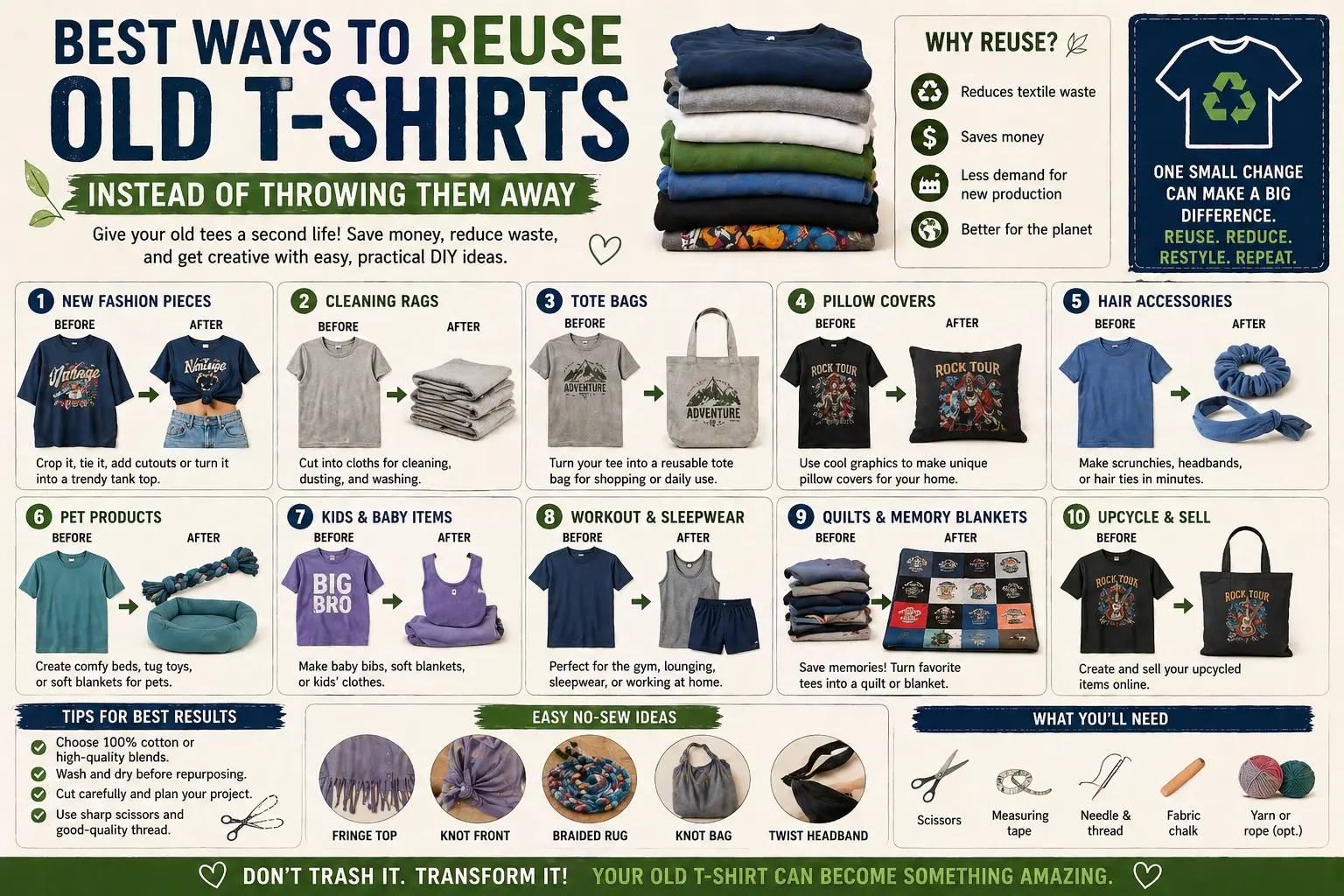
One of the most obvious ways to reuse old t-shirts is by transforming them into new wearable clothing. Many oversized shirts can be cropped into modern silhouettes that align with current fashion trends. However, successful cropping requires restraint. Many beginners cut too aggressively and create pieces that feel unwearable. Measuring carefully and testing proportions before making permanent cuts helps create stronger outcomes.
Oversized graphic tees can also be transformed into shirt dresses, especially when paired with belts, jackets, or layered accessories. Vintage band shirts, sports shirts, and older promotional shirts often perform particularly well because their graphics may feel retro rather than outdated.
Some shirts can be converted into sleeveless workout tops, lounge wear, or summer tank tops. These transformations are especially useful when the lower portion of a shirt is damaged but the upper section remains in good condition.
Tie-dye techniques have also become increasingly popular for refreshing faded white shirts. Rather than throwing away shirts that appear dull, consumers can completely reinvent them through color transformations.
Creating Cleaning Rags
One of the most practical uses for old t-shirts is converting them into reusable cleaning cloths. Cotton t-shirts are highly absorbent and work well for household cleaning tasks.
Instead of purchasing disposable cleaning wipes or paper towels repeatedly, many households cut old shirts into smaller cloth sections for cleaning mirrors, furniture, vehicles, windows, and kitchen surfaces.
This approach saves money while reducing waste.
Automotive enthusiasts often use old cotton shirts for waxing, detailing, and interior cleaning because soft cotton materials reduce scratching risks.
Turning T-Shirts Into Tote Bags
Old t-shirts can be transformed into reusable tote bags with minimal effort. This has become increasingly popular as more consumers move away from disposable plastic bags.
Large shirts often provide enough material for grocery bags, casual shopping totes, gym bags, or beach bags.
No-sew methods exist for beginners, while advanced users may create more durable stitched versions.
Customized tote bags can also become sellable handmade products.
Making Pillow Covers and Home Decor
Old t-shirts featuring sentimental graphics, concert logos, sports teams, or travel memories can be repurposed into home decor products.
Many people turn meaningful shirts into decorative pillow covers that preserve memories without keeping unworn clothing in storage.
Graphic collections can also be transformed into quilts, blankets, and wall art.
This is especially common with graduation shirts, sports uniforms, and concert memorabilia.
Creating Hair Accessories
Soft cotton fabric works well for hair accessories.
Scrunchies
Headbands
Hair wraps
Bandanas
These products require minimal material and can be made from shirts with damaged areas.
This creates value from clothing that might otherwise be discarded.
Pet Products
Many pet owners repurpose old t-shirts into pet bedding, chew toys, and blankets.
Soft cotton fabrics often work well for animal comfort.
Braided fabric strips can create simple pet toys.
This offers practical reuse without requiring advanced crafting skills.
Kids Clothing and Baby Products
Parents often reuse adult shirts to create children’s clothing because smaller garments require less fabric.
Baby bibs, soft blankets, and play clothing can be created from old cotton materials.
Children outgrow clothing quickly, making this especially practical.
Workout and Sleepwear
Not every shirt needs dramatic transformation.
Older shirts can become workout clothing, pajamas, gardening wear, painting clothes, or travel sleepwear.
This extends useful life before full repurposing becomes necessary.
Selling Upcycled T-Shirt Products
Many entrepreneurs create businesses around reused t-shirt products.
Platforms such as Etsy allow sellers to market tote bags, quilts, pet products, and custom fashion pieces.
Vintage graphic shirts may also be resold directly on Depop.
Strong branding can create surprising profitability.
Common Mistakes
Many people discard shirts too quickly.
Others repurpose low-quality fabric that will not last.
Some create projects they never actually use.
Practicality matters.
Environmental Benefits
Reusing old shirts reduces textile waste.
It lowers demand for new production.
It promotes more intentional consumption habits.
This aligns with growing sustainability values across Canada.
Final Thoughts
Old t-shirts often contain far more value than people realize. Whether transformed into fashion pieces, household products, accessories, or resale items, they can continue serving practical purposes long after their original role ends.
The most sustainable clothing item is often the one you already own. Before throwing away an old t-shirt, consider how many additional uses it may still offer.
