
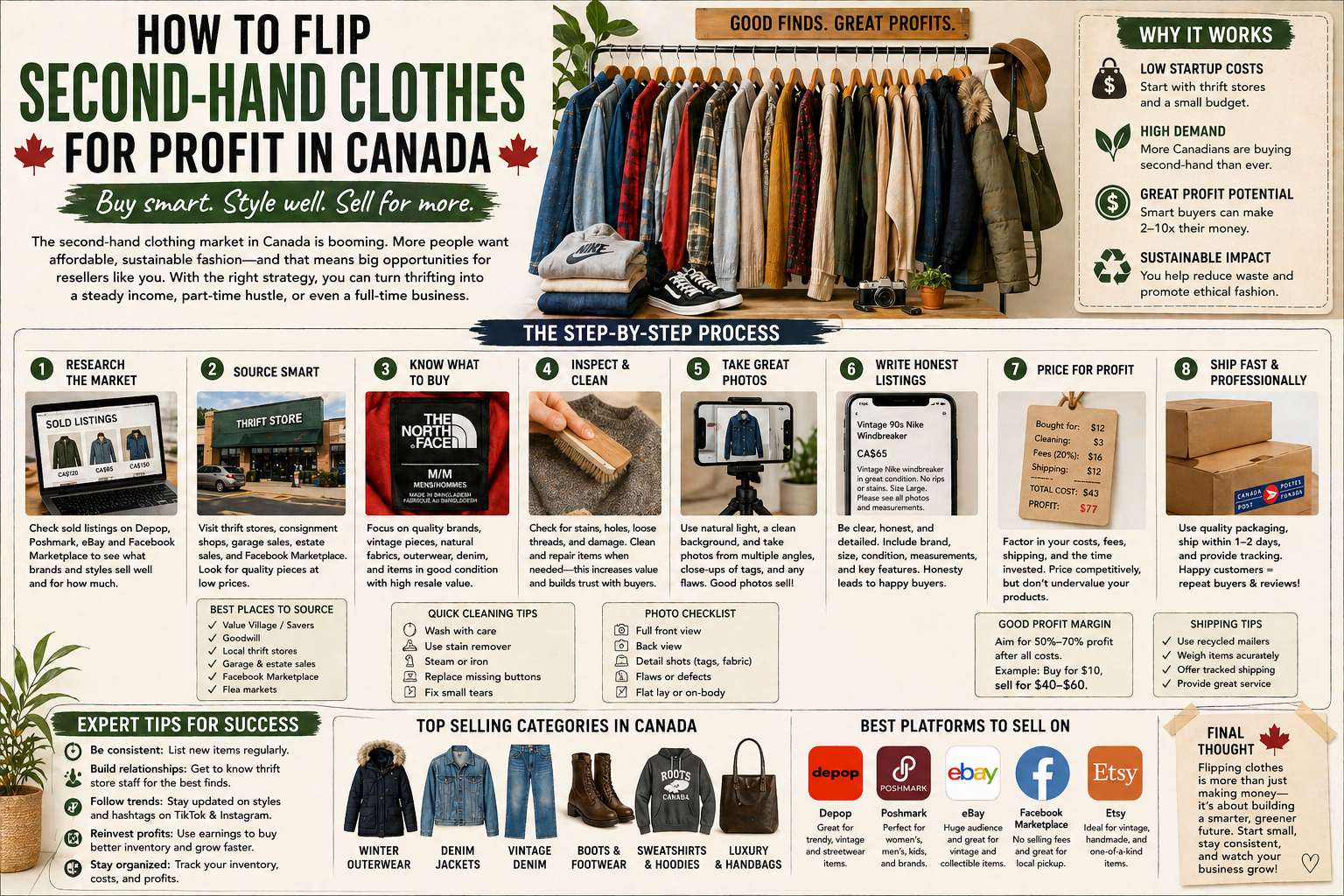
Flipping second-hand clothing for profit has evolved into one of the most accessible business models in modern retail, and across Canada, more people are entering this market every year. What was once viewed as a small side hustle built around occasional garage sale finds has transformed into a serious opportunity fueled by rising clothing prices, sustainability trends, social media influence, and growing consumer interest in unique fashion pieces. Many buyers are actively moving away from mass-produced retail clothing because they want better prices, higher-quality materials, vintage designs, and products that feel more original than what they find in shopping malls. This shift has created a strong opportunity for individuals who understand how to identify undervalued clothing and resell it strategically.
The appeal of clothing flipping is obvious. Compared to many businesses, startup costs can be relatively low. A new reseller does not need a physical storefront, expensive equipment, or large teams of employees. Many people begin with a few hundred dollars, a smartphone camera, internet access, and enough storage space to manage inventory. Platforms such as Depop, Poshmark, eBay, Facebook Marketplace, and Etsy have made it possible for nearly anyone to start selling online. Social media platforms such as TikTok, Instagram, and YouTube have further accelerated interest by showcasing thrift hauls, transformation videos, and reseller success stories that make the business appear highly profitable.
However, this visibility has also created unrealistic expectations. Many social media creators highlight dramatic flips where a $10 jacket sells for hundreds of dollars, but they rarely show the slow-moving inventory, operational mistakes, shipping complications, unsold products, and financial losses that many beginners experience. The reality is that clothing flipping is a business built on margins, consistency, operational efficiency, and discipline. Success depends far less on occasional lucky finds and far more on understanding consumer demand, sourcing inventory intelligently, controlling expenses, and building repeatable systems.
Canada offers unique advantages for clothing flippers that many international sellers do not have. Seasonal weather patterns create strong demand for categories that often maintain high resale value. Premium winter jackets, insulated boots, technical outdoor gear, wool coats, and layered winter apparel frequently sell well because replacing these items at retail prices can be extremely expensive. Brands such as Canada Goose, Arc’teryx, Patagonia, The North Face, and Columbia often maintain strong demand in the resale market because many consumers want quality products without paying full retail prices.
At the same time, Canada’s large geographic size creates operational challenges. Shipping between provinces can be expensive. Weather can delay deliveries. Inventory access varies significantly depending on where sellers live. Someone sourcing in Toronto may have very different opportunities compared to someone living in smaller rural communities. Understanding regional advantages becomes extremely important as sellers scale.
Understanding Where Profitable Inventory Comes From
One of the biggest misconceptions beginners have is believing profitable inventory only comes from major thrift chains. While stores like Value Village and Goodwill Industries remain popular sourcing options, experienced resellers often build far more diverse inventory pipelines.
Independent thrift stores can be highly profitable because they often face less competition from experienced resellers. Many smaller shops may not have sophisticated pricing systems, which creates opportunities for buyers who understand brand value and market demand. Estate sales can also be highly profitable, especially when families are focused on quickly liquidating clothing collections. These environments often contain vintage garments, luxury items, leather products, and high-quality outerwear that may be significantly underpriced.
Garage sales can produce excellent margins because sellers are often motivated by convenience rather than maximizing profit. Facebook local listings can also generate opportunities when individuals sell large clothing lots. Some advanced resellers even build relationships with local donation centers, vintage collectors, and liquidation businesses to secure inventory before it reaches traditional retail environments.
The most successful clothing flippers rarely depend on a single inventory source because competition eventually increases.
Why Product Knowledge Creates Higher Margins
Many beginners focus too heavily on famous brand names while ignoring other indicators of value. Brand recognition matters, but it is only one part of successful sourcing.
Fabric quality often reveals hidden opportunities. Wool, leather, cashmere, high-quality denim, and premium outdoor materials frequently retain strong resale demand. Construction quality also matters significantly. Durable stitching, premium zippers, lined interiors, and high-end hardware often signal stronger long-term value.
Vintage clothing can be particularly profitable because scarcity increases buyer interest. Older sportswear, vintage denim, discontinued product lines, and unique designs often command premium pricing because buyers cannot easily find identical replacements.
Learning product knowledge takes time, but it dramatically improves sourcing decisions.
Researching Demand Before Buying Inventory
One of the fastest ways beginners lose money is purchasing products based purely on personal taste. Just because you like a jacket does not mean buyers want it.
Successful resellers spend time researching completed sales on eBay, Poshmark, and Depop to understand real demand.
They study pricing trends, seasonal fluctuations, and product saturation. They learn which categories sell quickly and which products sit for months.
This research prevents emotional purchasing.
Cleaning and Restoring Inventory
Many profitable products are overlooked because they require minor repairs.
A stained jacket may only need professional cleaning.
Missing buttons can be replaced.
Wrinkled garments can be steamed.
Minor repairs often create major value increases.
These improvements separate professionals from casual sellers.
Photography and Presentation
A high-quality product can still fail if listings look unprofessional.
Buyers want clear photos, accurate descriptions, and honest communication.
Strong presentation improves trust and conversion rates.
Managing Shipping Challenges
Shipping costs in Canada can significantly reduce margins if ignored.
Sellers must understand carrier pricing, packaging costs, and regional shipping differences.
This becomes especially important for heavy winter items.
Building a Long-Term Brand
Many successful flippers eventually move beyond random inventory.
They specialize in niches such as vintage denim, luxury resale, outdoor gear, or customized fashion.
Specialization builds stronger customer trust.
Common Reasons Sellers Fail
Many beginners overbuy inventory.
Others ignore costs.
Some chase trends blindly.
Many lack patience.
Long-term discipline matters more than short-term excitement.
Final Thoughts
Flipping second-hand clothes for profit in Canada can become a powerful side hustle or full-time business, but it rewards people who treat it seriously.
The most successful resellers do not rely on luck. They build systems, study demand, control costs, and consistently find value where others see ordinary clothing.
