
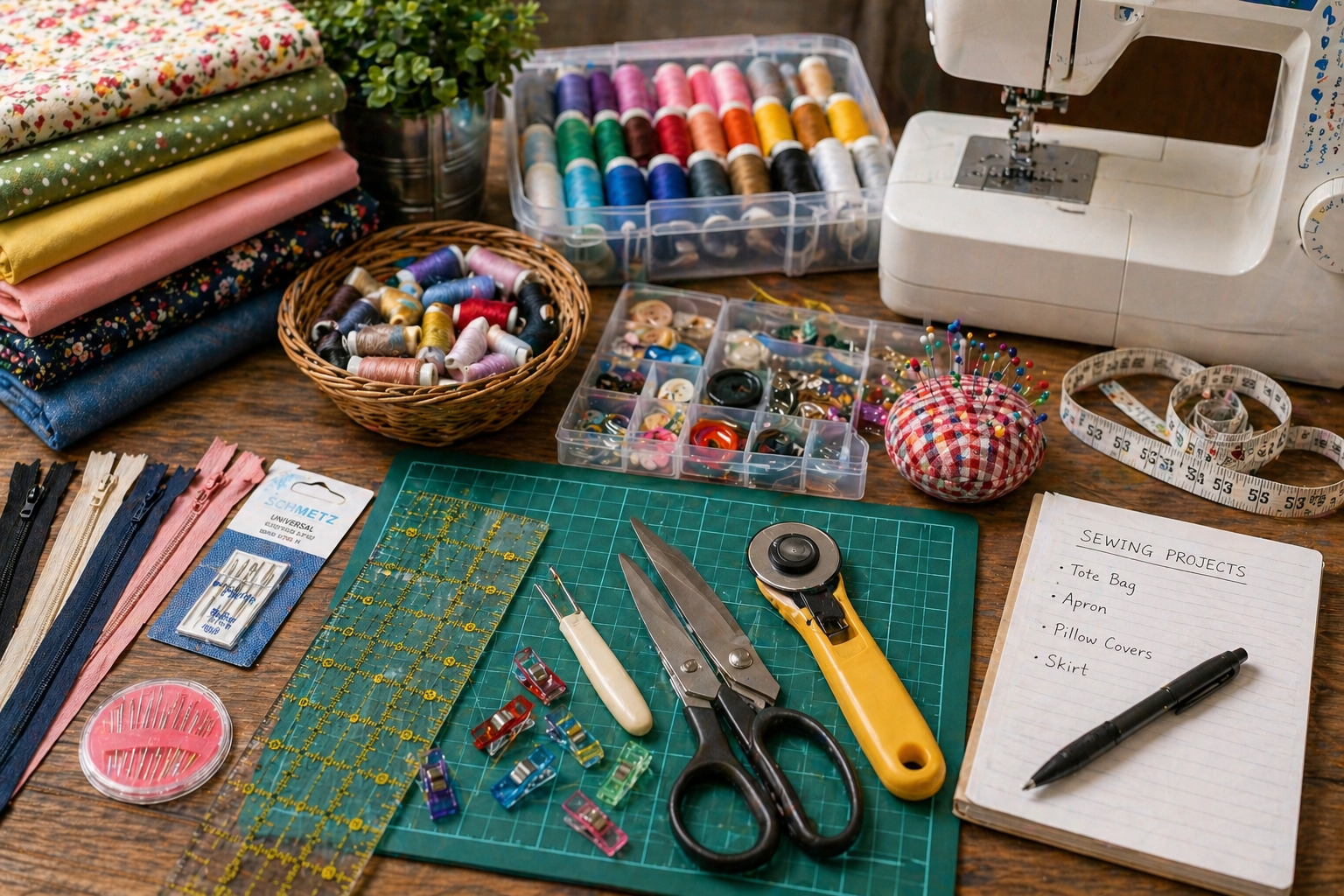
Sewing has experienced a major revival across Canada over the past few years, and this growth is being driven by far more than nostalgia. Rising clothing prices, sustainability concerns, social media influence, and the growth of handmade online businesses have encouraged thousands of Canadians to learn sewing for both personal and financial reasons. Some people want to repair damaged clothing instead of replacing it. Others want to customize thrifted fashion, create handmade gifts, alter clothing for better fit, or build small businesses selling products through platforms such as Etsy, Depop, and Facebook Marketplace. What used to be viewed as a traditional household skill is now increasingly connected to entrepreneurship, sustainability, and creative independence.
At the same time, many beginners quickly discover that sewing can become expensive when supplies are purchased inefficiently. New hobbyists often assume sewing automatically saves money because homemade clothing appears cheaper than buying retail products. In reality, poor purchasing decisions can make the hobby far more expensive than necessary. Beginners frequently buy oversized starter kits filled with tools they never use, premium fabrics before developing basic skills, expensive sewing machines far beyond their needs, and trendy accessories promoted by social media creators. These mistakes create unnecessary financial pressure and can discourage people before they gain enough experience to enjoy the craft.
This issue can feel even more frustrating in Canada because sewing supplies may cost more than they do in the United States. Import duties, shipping fees, exchange rate fluctuations, and limited local inventory can increase costs. Consumers living in major cities such as Toronto, Montreal, Vancouver, and Calgary often have more physical shopping options, while people in smaller towns may rely heavily on online retailers.
The good news is that affordable sewing supplies absolutely exist in Canada. The key is understanding where to shop, what products deserve higher investment, which items can be purchased second-hand, and how to avoid spending money on unnecessary tools.
Why Beginners Often Overspend on Sewing Supplies
One of the biggest mistakes new sewers make is shopping based on excitement rather than practical needs. Many beginners watch sewing tutorials on YouTube, TikTok, and Pinterest and immediately purchase everything they see creators using. This often includes specialty rulers, advanced presser feet, premium cutting tools, expensive mannequins, decorative storage systems, and industrial-level equipment that beginners may not need for years.
Many also overbuy fabric before understanding what materials work best for beginner projects. Buying expensive linen, silk, wool, or designer fabrics early can create unnecessary waste when mistakes happen. Beginners are far better off starting with affordable cotton blends and simpler materials while building confidence.
The most successful hobbyists and small business owners typically grow their supply collections slowly and intentionally.
Fabricland
Fabricland remains one of the most recognized sewing supply retailers in Canada and often serves as the first stop for beginners. The company offers fabrics, thread, zippers, sewing patterns, elastic, needles, buttons, cutting tools, and many other essentials.
One of its biggest advantages is physical accessibility. Being able to feel fabric quality before purchasing can prevent costly online mistakes. Many beginners buy fabric online without fully understanding weight, texture, stretch, or durability. Physical stores help solve that problem.
Fabricland also runs promotions throughout the year, and experienced shoppers often wait for discounts before making larger purchases. Buying at full retail price too frequently can quickly inflate costs.
Walmart
Walmart is often overlooked by serious sewing enthusiasts, but it can be surprisingly useful for beginners working with limited budgets.
Basic thread, needles, measuring tape, starter scissors, storage bins, and simple fabric materials may be available at lower prices than specialty stores.
For someone learning basic repairs or simple customization projects, Walmart can provide a low-risk entry point.
The selection may be limited compared to specialty stores, but affordability can make it valuable.
Amazon
Amazon has become one of the largest sewing supply sources because of convenience.
Canadian buyers frequently purchase rotary cutters, cutting mats, specialty feet, thread bundles, sewing organizers, mannequins, and niche accessories through the platform.
However, quality varies dramatically.
Many low-cost products look attractive but perform poorly.
Reading detailed reviews and avoiding unknown brands helps reduce risk.
Local Independent Fabric Stores
Small independent fabric stores often provide advantages that major chains cannot match.
Many store owners offer personalized guidance.
They may recommend better alternatives for your projects.
Some carry unique fabrics unavailable through major chains.
Others offer discounted remnants that help beginners practice without overspending.
These businesses are often overlooked but can provide excellent value.
Thrift Stores and Second-Hand Sources
Value Village and Goodwill Industries can be excellent places to find sewing supplies.
Many people donate unused thread, buttons, fabric, patterns, and even sewing machines after losing interest in the hobby.
Vintage sewing kits can also offer surprising value.
This requires patience but can dramatically lower startup costs.
Facebook Marketplace
Facebook Marketplace has become one of the best places to buy second-hand sewing machines and bulk supplies.
Many people sell complete sewing setups after abandoning projects.
These packages often include multiple tools at steep discounts.
However, buyers should test machines when possible before purchasing.
Buying Fabric Remnants
Fabric remnants remain one of the smartest ways beginners save money.
These leftover cuts are often heavily discounted because stores want to clear inventory.
They work perfectly for learning techniques, small projects, patchwork, and testing patterns.
Many beginners waste money buying full rolls for projects that require very little material.
Seasonal Sales and Timing Purchases
Timing can dramatically affect costs.
Holiday sales, Black Friday promotions, clearance events, and seasonal inventory changes often create major savings opportunities.
Experienced buyers frequently plan purchases around these periods.
Buying everything immediately often leads to unnecessary spending.
Avoiding Social Media Shopping Traps
Many creators online promote tools that look exciting but offer little real value.
Trending gadgets often create unnecessary clutter.
Beginners should focus on mastering foundational tools before purchasing advanced accessories.
Building Supplies for Small Businesses
People selling handmade products often need more strategic purchasing habits.
Buying in bulk too early can create waste if demand remains inconsistent.
Successful small sellers typically scale inventory gradually as sales become predictable.
Final Thoughts
Affordable sewing supplies in Canada are far easier to find than many beginners realize. The biggest difference between people who overspend and those who build sustainable sewing habits often comes down to patience, discipline, and research.
The goal should not be owning every tool immediately. It should be building a practical supply system that supports your creativity without damaging your budget.
