
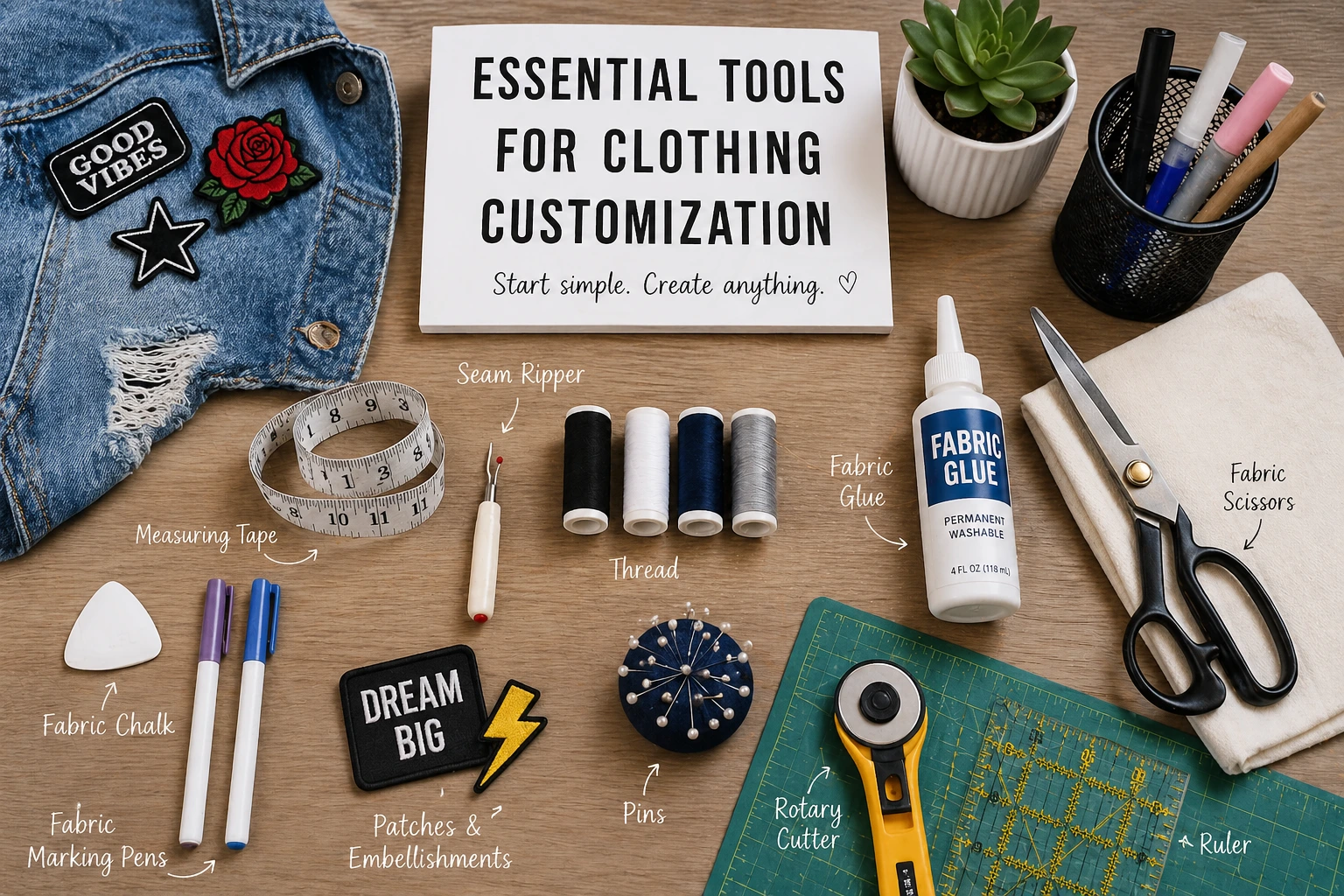
Clothing customization has grown from a niche hobby into a popular creative activity for people who want to express personal style, save money, and make fashion more sustainable. Instead of constantly buying new clothes, many individuals are learning how to transform old garments into something fresh and unique. A basic denim jacket can become a statement piece, plain sneakers can be redesigned with custom artwork, and outdated jeans can be refreshed with modern details.
For beginners, however, the excitement of starting a DIY fashion project often turns into confusion when they realize how many tools exist on the market. Craft stores, online marketplaces, and sewing suppliers offer countless products, many of which seem essential but are rarely needed by someone just starting out. Buying too many unnecessary supplies can quickly become expensive and overwhelming.
The truth is that successful clothing customization does not require a professional fashion studio filled with expensive equipment. Most beginners can complete impressive projects using a small collection of practical tools that help with measuring, cutting, sewing, decorating, and protecting fabrics. Starting with the right essentials allows new creators to build confidence while avoiding clutter and wasted money.
Understanding what each tool does and when to use it can make the learning process far smoother. Whether your goal is adding patches to jackets, painting custom designs on shirts, distressing denim, or altering old garments, these foundational tools will help you begin your clothing customization journey with better results.
Fabric scissors are more important than most beginners realize
Many beginners make the mistake of using regular household scissors for fabric projects. While kitchen or office scissors may seem convenient, they often create uneven cuts, frayed edges, and damaged materials.
Fabric scissors are specifically designed to cut textiles cleanly without pulling threads or creating jagged edges. High-quality scissors allow for smoother cutting when working with denim, cotton, polyester blends, and delicate fabrics.
When cutting fabric for alterations, patch placement, or decorative additions, precision matters. Poor cutting can make even the most creative project look messy. Investing in one reliable pair of fabric scissors early can improve nearly every project you attempt.
It is also important to reserve fabric scissors exclusively for textiles. Using them on paper, plastic, or cardboard can dull the blades much faster.
Measuring tools help prevent expensive mistakes
Accurate measurements are critical when modifying clothing. Cutting too much fabric or placing decorations unevenly can permanently ruin garments.
A flexible measuring tape is one of the most useful tools for beginners because it allows accurate body measurements and garment sizing adjustments. It helps when shortening sleeves, hemming pants, resizing shirts, or placing symmetrical decorations.
Fabric rulers are also helpful when creating straight lines for cutting or marking design placements. For beginners working on denim distressing or symmetrical patch layouts, these simple measuring tools prevent frustrating errors.
Without proper measuring tools, many customization projects rely on guesswork, which rarely leads to professional-looking results.
Sewing needles and thread remain essential
Even beginners who prefer fabric glue should own basic hand-sewing supplies. Certain repairs and customizations require stitching for durability that glue alone cannot provide.
A small sewing kit with needles in multiple sizes gives beginners flexibility when working with lightweight cotton fabrics or thicker materials like denim.
Thread selection also matters. Neutral colors such as black, white, gray, and navy tend to match a wide range of garments and are useful for early projects.
Learning basic stitches by hand can dramatically expand customization possibilities. Small repairs, patch attachments, hemming, and decorative stitching become much easier with these simple tools.
Hand sewing may feel intimidating at first, but beginners often discover that basic repairs are easier than expected after a little practice.
Fabric chalk and marking pens improve precision
One common beginner mistake is drawing directly on clothing with permanent markers or pens not designed for fabric.
Fabric chalk allows creators to mark cutting lines, placement areas, and design guides without permanently damaging garments. The markings can usually be brushed away or washed out after the project is complete.
Washable fabric pens serve a similar purpose for more detailed work. They are particularly helpful when sketching embroidery patterns or outlining painted designs.
These tools help beginners work more confidently because they can plan their designs before making permanent changes.
Seam rippers save projects from becoming disasters
Mistakes happen frequently when beginners first experiment with clothing customization. Seams may be sewn incorrectly, patches may need repositioning, or alterations may not fit properly.
A seam ripper allows users to remove stitches carefully without damaging fabric. It can quickly undo sewing errors and help beginners recover from mistakes that might otherwise ruin a garment.
Many experienced designers consider seam rippers one of the most valuable tools in their workspace because errors are part of the creative process.
Beginners often underestimate how frequently they may need this tool until they make their first stitching mistake.
Fabric glue expands creative possibilities
Although sewing offers durability, fabric glue remains extremely useful for beginners who want fast and simple customization options.
It works well for attaching lightweight embellishments such as rhinestones, decorative trims, small patches, and beads.
Fabric glue can also temporarily hold materials in place before permanent sewing.
For beginners who are not yet comfortable using needles or sewing machines, fabric glue offers an accessible way to start experimenting with fashion customization.
Choosing a washable, flexible fabric glue helps improve long-term durability.
Cutting mats and rotary cutters create cleaner results
Beginners who plan to work frequently with fabric may benefit from cutting mats and rotary cutters.
Rotary cutters allow cleaner straight cuts than traditional scissors in certain projects, especially when cutting large fabric sections.
A cutting mat protects tables and work surfaces from blade damage while providing measurement guides.
These tools are especially useful for people creating larger alterations or working with repeated fabric patterns.
While not mandatory for everyone, they can improve efficiency for frequent DIY creators.
Protective supplies are often overlooked
Many beginners focus only on creative tools while ignoring workspace protection.
Disposable gloves protect hands from fabric dye, paint, and adhesives. Aprons help protect clothing during messy projects.
Plastic table covers or dedicated crafting surfaces prevent accidental stains on furniture.
Ventilation is also important when using strong adhesives, paints, or sprays.
Protecting both yourself and your workspace helps create a safer and more enjoyable customization environment.
Start small before buying advanced equipment
Many beginners feel pressured to buy sewing machines, embroidery equipment, heat presses, and expensive crafting tools immediately.
In reality, most successful beginners start with basic supplies and gradually upgrade as their skills improve.
A simple toolkit often produces better results than purchasing advanced equipment without understanding how to use it properly.
As your customization projects become more ambitious, you can expand your workspace with more specialized tools.
Building confidence through the right tools
The right tools do more than improve technical results. They help beginners feel prepared and motivated to keep learning.
Clothing customization is a skill that develops over time through experimentation, mistakes, and creative exploration. Starting with practical essentials allows beginners to focus on creativity instead of frustration.
Rather than buying every trendy tool online, focus on versatile items that solve real problems and support multiple project types.
With a small collection of reliable tools and consistent practice, beginners can transform ordinary clothing into personalized fashion pieces that reflect their creativity and style.
