
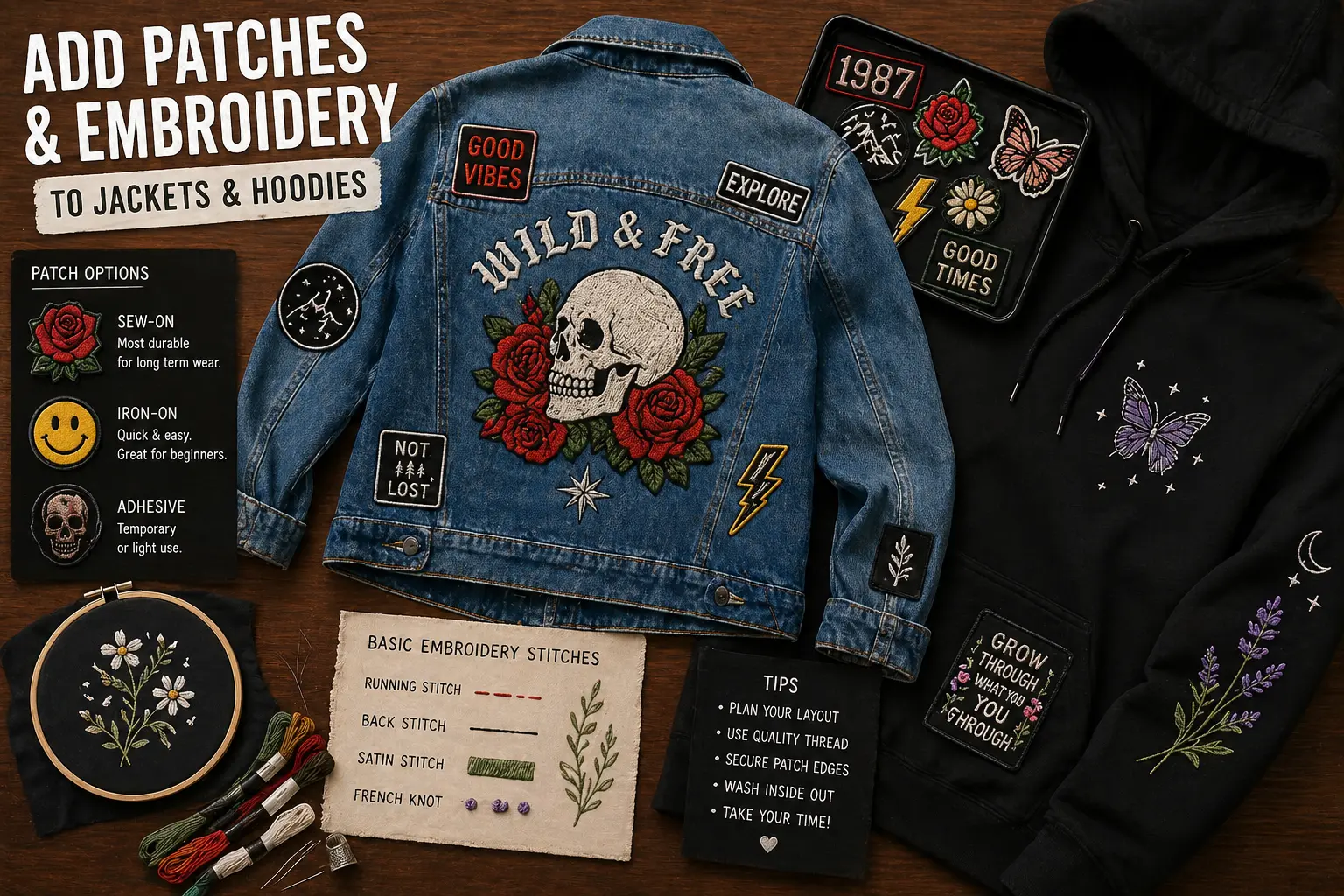
Fashion customization has shifted dramatically over the last decade. Consumers are becoming increasingly selective about what they buy, and many are moving away from disposable fast fashion in favor of personalized clothing that feels original. Across Canada, one of the fastest-growing DIY fashion trends involves customizing jackets and hoodies with patches and embroidery.
This trend has become especially popular because jackets and hoodies naturally serve as statement pieces. Unlike basic t-shirts that are often layered beneath other garments, outerwear attracts immediate attention. A customized denim jacket, oversized hoodie, bomber jacket, or winter coat can instantly communicate personal style, hobbies, music preferences, artistic identity, or even political beliefs.
Patches and embroidery offer two of the most versatile customization methods because they can either repair damaged garments or completely transform basic pieces into premium-looking fashion items. A plain hoodie purchased from Walmart or a thrifted denim jacket found in Canada can be turned into something that looks boutique-level when customized correctly.
However, many beginners underestimate the planning required for professional-looking results. Poor patch placement, weak stitching techniques, low-quality materials, and rushed embroidery often create garments that look messy rather than stylish. This guide explores how to properly customize jackets and hoodies using patches and embroidery while creating durable pieces that can last for years.
Why Jackets and Hoodies Are Ideal for Customization
Outerwear offers larger surfaces than smaller garments.
Back panels on denim jackets provide space for large artistic designs.
Sleeves can showcase subtle embroidery details.
Hood pockets create opportunities for smaller decorative elements.
The thicker material found in jackets and hoodies also handles stitching better than thinner fabrics.
Unlike lightweight shirts that may wrinkle heavily around embroidery, hoodies and jackets often maintain better structure.
These garments also tend to stay in wardrobes longer because outerwear is generally more expensive to replace.
Customization increases their lifespan even further.
Understanding the Difference Between Patches and Embroidery
Although often grouped together, patches and embroidery serve different purposes.
Patches involve attaching pre-made decorative pieces to clothing.
These may be iron-on, adhesive-backed, or sew-on.
Embroidery involves stitching designs directly into fabric using thread.
Patches tend to be faster and easier for beginners.
Embroidery allows for deeper personalization but requires more patience.
Many advanced customizers combine both techniques for layered designs.
For example, a denim jacket may feature a large embroidered back design alongside smaller sleeve patches.
Choosing the Right Jacket or Hoodie
Not every garment works equally well.
Denim jackets remain one of the most popular customization choices because denim offers durability and structure.
Bomber jackets also work well.
Heavy cotton hoodies are ideal for embroidery.
Canvas jackets provide excellent support for larger patches.
Avoid extremely thin materials that may tear.
Waterproof winter coats require special care because needles can compromise weather-resistant layers.
In colder regions of Canada, many people customize older winter jackets instead of replacing them.
Choosing High-Quality Patches
Patch quality varies significantly.
Cheap patches may peel after a few washes.
High-quality embroidered patches maintain stronger stitching and better visual detail.
Popular patch styles include:
music-inspired patches
anime designs
vintage logos
nature artwork
minimalist symbols
sports references
Many Canadians purchase patches through Amazon, Etsy, and local craft stores such as Michaels.
Planning Patch Placement
One of the biggest mistakes beginners make is randomly attaching patches.
Take time to test layouts before permanent attachment.
Place patches on the garment while wearing it or lay the item flat.
Symmetry matters for certain styles.
Streetwear often embraces asymmetrical placement.
Minimalist fashion usually works better with fewer patches.
Large back patches can create statement pieces, while smaller chest patches create subtle customization.
Take photos of placement options before deciding.
Iron-On vs Sew-On Patches
Iron-on patches are convenient but less durable.
Repeated washing can weaken adhesive backing.
Sew-on patches require more effort but provide stronger long-term performance.
Many experienced customizers use both methods.
They temporarily iron patches into position before permanently sewing edges.
This creates better durability.
Beginner Embroidery Tools
Embroidery does not require expensive machines.
Basic tools include:
embroidery needles
thread
fabric stabilizer
scissors
embroidery hoops
fabric pencils
Many supplies are widely available through Michaels.
Beginners should start with simple designs before attempting highly detailed artwork.
Easy Embroidery Designs for Beginners
Simple designs help build confidence.
Popular beginner projects include:
small flowers
initials
stars
minimalist symbols
hearts
simple line art
Pocket corners and sleeve cuffs are ideal starting areas.
Large back embroidery projects require significantly more experience.
Hand Embroidery Techniques
Basic stitches form the foundation of embroidery.
Running stitches create outlines.
Satin stitches fill larger spaces.
Backstitch techniques create clean lines.
French knots add texture.
Tension control matters.
Pulling thread too tightly can distort fabric.
Working slowly produces cleaner results.
Combining Patches and Embroidery
This combination creates premium-looking garments.
For example, a vintage patch can be surrounded by custom embroidered flowers.
A hoodie logo can be enhanced with stitched details.
Layered customization helps garments feel truly unique.
This approach often stands out in online marketplaces.
Repairing Damaged Jackets With Patches
Patches are also highly practical.
Elbows, sleeves, and worn pockets often experience heavy wear.
Instead of discarding damaged clothing, decorative patches can cover imperfections.
This sustainability benefit appeals to many consumers across Canada.
Washing Customized Outerwear
Always follow garment care instructions.
Turn items inside out before washing.
Use gentle cycles.
Avoid excessive dryer heat.
Hand washing may be best for heavily embroidered garments.
Proper care extends customization longevity.
Selling Customized Jackets
Custom outerwear can become highly profitable.
Vintage denim jackets with custom artwork often sell well on Etsy.
Social media platforms like Instagram and TikTok help creators attract buyers.
Limited-edition designs often perform better than generic products.
Common Mistakes to Avoid
Overcrowding designs is a major problem.
Too many patches can make garments look chaotic.
Low-quality thread may break.
Skipping planning often leads to regret.
Poor stitching causes patches to fall off.
Patience remains essential.
Sustainability and Long-Term Value
Customization reduces waste.
Older jackets gain new life.
Consumers avoid unnecessary purchases.
This aligns with growing sustainable fashion trends throughout Canada.
Final Thoughts
Adding patches and embroidery to jackets and hoodies is one of the most effective ways to create personalized fashion without buying expensive designer pieces.
It allows creativity, repair, sustainability, and even business opportunities to exist within a single skill.
When done properly, customized outerwear becomes far more meaningful than mass-produced clothing because it reflects individual identity.
With careful planning, quality materials, and patience, anyone can transform ordinary jackets and hoodies into wearable pieces of art.
