
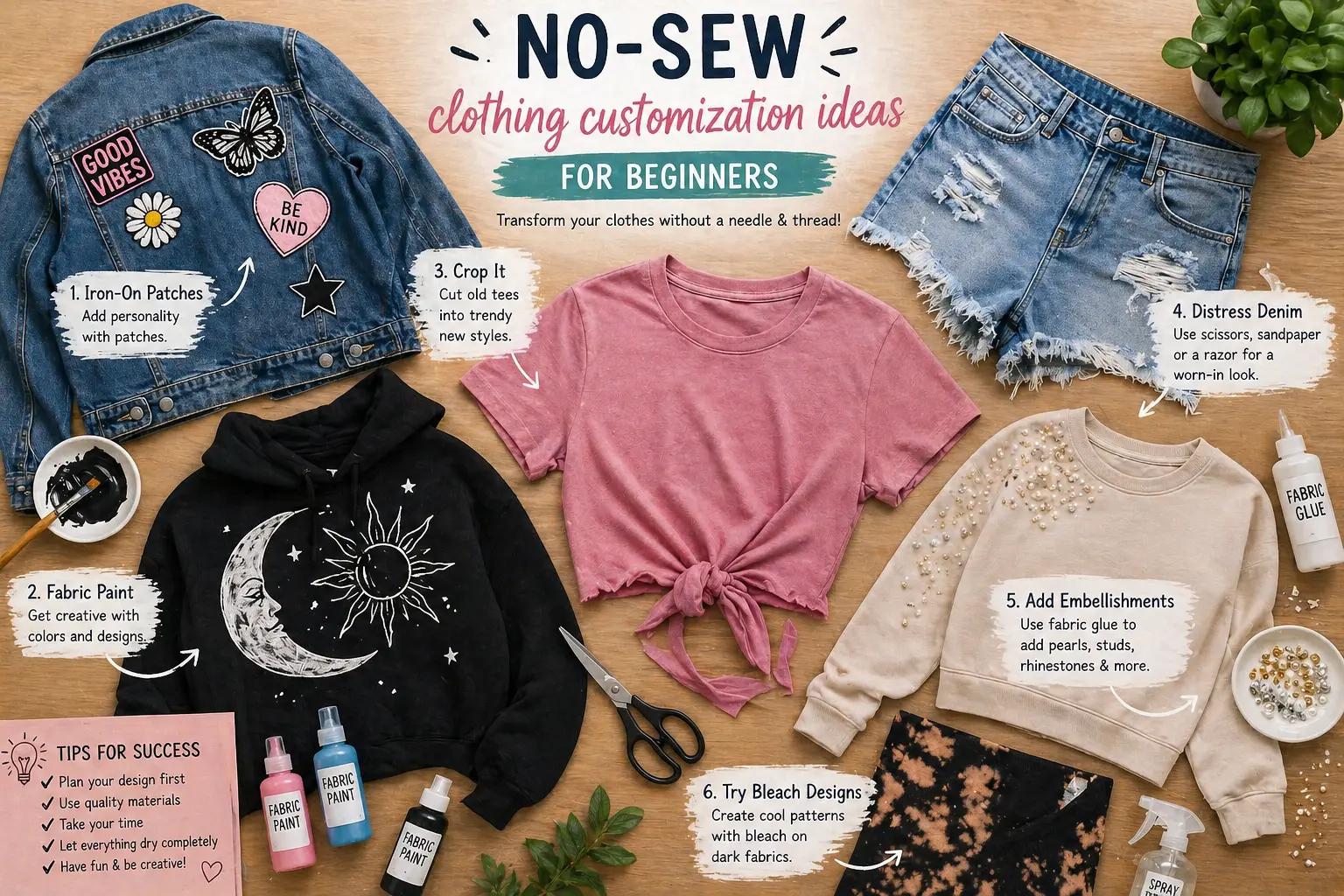
The fashion industry has changed dramatically in recent years, and one of the biggest shifts has been the growing rejection of disposable clothing culture. Many consumers across Canada are becoming increasingly frustrated with fast fashion because of rising prices, lower garment quality, and the environmental consequences associated with constant overconsumption. At the same time, social media has created a new generation of consumers who want clothing that feels personal, creative, and unique. People no longer want to wear the exact same outfits being sold in every major retail chain. They want pieces that reflect their own personality, lifestyle, and creativity. However, many beginners feel discouraged when they explore clothing customization because most online tutorials focus heavily on sewing techniques, complex alterations, and expensive equipment. They assume that without a sewing machine or tailoring experience, meaningful customization is impossible. In reality, no-sew clothing customization has become one of the fastest-growing areas within DIY fashion because it allows complete beginners to transform clothing using simple tools, affordable materials, and techniques that require very little technical expertise.
One of the reasons no-sew customization continues growing is accessibility. Many people live in apartments, dorm rooms, or small homes where storing sewing machines and large crafting equipment is unrealistic. Others simply do not want to spend hundreds of dollars learning a hobby they may only explore casually. No-sew methods remove those barriers while still allowing impressive transformations. A plain hoodie can become a personalized statement piece, old jeans can be modernized, oversized shirts can be reshaped into trendy silhouettes, and outdated jackets can be completely refreshed without touching a sewing machine. This makes no-sew customization particularly attractive to students, young professionals, parents, and people looking for creative side hustles. It also aligns perfectly with sustainability trends because it encourages people to reuse clothing they already own rather than continuously buying new garments.
Another major factor driving interest in no-sew fashion is the influence of platforms such as TikTok, Instagram, and Pinterest, where creators regularly showcase dramatic clothing transformations using simple techniques. These platforms have helped normalize the idea that anyone can redesign clothing at home. However, many short-form videos simplify the process too much, making projects appear easier than they actually are. Beginners often rush into customization projects without understanding proper materials, planning techniques, or garment limitations. That frequently leads to ruined clothing. This guide takes a more realistic approach by explaining how beginners can successfully customize clothing without sewing while creating polished, wearable results that look intentional rather than amateur.
Understanding Which Clothes Work Best for No-Sew Customization
One of the biggest mistakes beginners make is attempting to customize every type of garment the same way. Different fabrics behave differently, and understanding this before starting can save significant frustration. Cotton remains one of the easiest materials to work with because it responds well to fabric paint, cutting, patch applications, bleaching, and decorative adhesives. Denim is another excellent option because its thick structure makes it durable enough for distressing, patch applications, and hardware additions. Hoodies made from cotton blends also perform well because they provide enough structure for customization while remaining comfortable and versatile.
By contrast, slippery fabrics such as satin, silk, or heavily synthetic athletic materials often create major challenges for beginners. These fabrics may resist adhesives, react poorly to bleach, or fray unpredictably when cut. Waterproof winter jackets may also be difficult to customize because puncturing them with certain decorative methods can damage their functionality. Beginners should start with inexpensive garments they no longer wear regularly. Older t-shirts, basic sweatshirts, outdated denim pieces, and thrifted jackets often provide ideal learning opportunities because mistakes feel less financially painful.
Thrift shopping has become especially popular among Canadian DIY creators because it offers affordable experimentation opportunities. Stores throughout Canada frequently provide low-cost clothing that can be transformed into higher-value pieces. Many creators specifically search for oversized hoodies, plain denim jackets, and neutral-colored shirts because they provide blank canvases for future customization projects.
Using Fabric Glue for Long-Term Customization
Fabric glue has become one of the most valuable tools in no-sew fashion. High-quality adhesives allow beginners to make permanent changes without needing technical sewing skills. Decorative lace can be attached to sleeves, rhinestones can be added to denim jackets, pearls can transform plain sweaters, and patches can be secured with strong textile adhesives. Fabric glue is widely available through retailers such as Amazon, Walmart, and Michaels.
The key to successful fabric glue projects is moderation. Many beginners assume more glue creates stronger results, but excessive glue often creates stiff areas, visible residue, and unattractive textures. Smaller, carefully controlled applications usually create cleaner and more professional finishes. Drying time also matters significantly. Rushing projects before adhesives fully cure often ruins customization work.
Transforming Oversized Clothing Into Modern Styles
Oversized clothing often sits unused because it feels outdated or unflattering. However, these garments are often perfect for no-sew customization. Large t-shirts can be cropped into modern silhouettes, oversized sweatshirts can be reshaped into off-shoulder styles, and long sleeves can be modified into sleeveless designs.
The biggest risk with cutting projects is impatience. Beginners frequently remove too much fabric too quickly. Measuring multiple times and making gradual adjustments creates significantly better outcomes. Fashion trends may influence design choices, but comfort and wearability should remain priorities. A customized piece should fit your lifestyle rather than simply imitate social media trends.
Fabric Painting as a No-Sew Option
Fabric painting remains one of the most creative forms of no-sew customization because it allows complete artistic freedom without altering garment structure. Plain shirts, tote bags, hoodies, and denim pieces can be transformed through hand-painted designs that reflect personal style.
Minimalist designs often produce the most wearable results. Large, chaotic artwork may feel exciting initially but can become difficult to style. Many successful creators focus on floral themes, typography, abstract patterns, or small personalized illustrations.
Using proper fabric paint rather than standard craft paint improves long-term durability and washing resistance.
Distressing Denim Without Sewing
Old jeans are frequently discarded because they feel outdated, but distressing offers a simple way to modernize them. Sandpaper, razors, and tweezers can create controlled wear patterns that mimic premium distressed denim sold by major brands.
The best distressed denim usually looks natural. Overly aggressive cuts can weaken garment structure and make jeans unwearable. Strategic distressing around knees, pockets, and hems tends to create more balanced results.
Adding Accessories Instead of Permanent Alterations
Not every customization needs to be permanent. Chains, removable pins, decorative clips, and detachable accessories allow experimentation without long-term commitment. This approach works especially well for people who enjoy changing their style frequently.
Temporary customization also preserves resale value, which can be important for higher-quality garments.
Reverse Tie Dye Projects
Reverse tie dye has become increasingly popular because it transforms dark clothing using bleach rather than traditional dyes. Black hoodies and dark t-shirts often produce dramatic effects through this method.
Proper safety precautions are essential. Ventilation matters, particularly during Canadian winters when many projects happen indoors.
Common Beginner Mistakes
Many beginners rush projects because social media makes customization appear instant. They overcrowd garments with decorations, use low-quality materials, or fail to test ideas before making permanent changes.
Successful customization requires patience, planning, and restraint. Often, subtle changes create the most stylish outcomes.
Can No-Sew Customization Become a Business?
Many creators have turned no-sew customization into profitable businesses by selling products through Etsy, local craft markets, and social media platforms. Consumers increasingly value handmade fashion that feels personal and sustainable.
Even simple customizations can generate strong demand when branding and quality are consistent.
Final Thoughts
No-sew clothing customization proves that creativity matters far more than technical complexity. You do not need professional sewing skills to create clothing that feels unique, modern, and personal. With thoughtful planning, quality materials, and realistic expectations, beginners can transform forgotten clothing into wearable fashion pieces that feel completely new.
For many people, no-sew customization becomes more than a hobby. It becomes a sustainable habit, a creative outlet, and sometimes even the foundation of a future business.
